Ortho-K: The Overnight Contact Lenses That Let Your Child See Clearly All Day Without Glasses

Imagine if your 10-year-old could wake up every morning with perfect vision – no glasses to put on, no contacts to insert, no squinting at the board from the middle row. They could swim, play sports, and go about their day seeing clearly without any visual aids whatsoever.
And imagine if, at the same time, you could dramatically slow the progression of their myopia, potentially saving them from thick glasses and serious eye disease risks later in life.
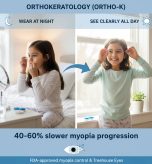
This isn’t science fiction. It’s orthokeratology – Ortho-K for short – and it’s one of the most effective tools we have for both vision correction and myopia control in children. At Eye Care Center, through our partnership with Treehouse Eyes, we’ve helped hundreds of children in Addison, Burbank, and Willowbrook achieve clear daytime vision while slowing their myopia progression by 40-60%.
Let me explain exactly how Ortho-K works, who it’s right for, what to expect, and why it might be the solution your family has been looking for.
What Is Orthokeratology (Ortho-K)?
Orthokeratology – commonly called Ortho-K or corneal reshaping therapy (CRT) – uses specially designed rigid gas permeable contact lenses worn overnight to gently reshape the cornea (the clear front surface of the eye). When your child removes the lenses in the morning, their cornea retains this new shape throughout the day, providing clear vision without glasses or daytime contacts.
Think of it like orthodontic braces for your eyes. Just as braces gradually reshape teeth over time, Ortho-K lenses gradually reshape the cornea. But unlike braces, the corneal reshaping is temporary and reversible – if your child stops wearing the lenses, their cornea returns to its original shape within a few weeks.
FDA-Approved and Extensively Studied
Ortho-K has been FDA-approved since 2002 and has been used internationally for decades. It’s not experimental – it’s a well-established treatment with extensive research backing both its safety and effectiveness.
Studies consistently show:
- Vision correction: Most patients achieve 20/20 or better vision during the day
- Myopia control: 40-60% reduction in myopia progression compared to glasses
- Safety: Comparable safety profile to daily contact lens wear when proper hygiene is maintained
- Reversibility: Effects are completely reversible if treatment is discontinued
How Ortho-K Actually Works (The Science Made Simple)

The cornea is responsible for about 70% of your eye’s focusing power. In myopia (nearsightedness), the cornea is too steep or the eye is too long, causing light to focus in front of the retina instead of directly on it.
Here’s what happens with Ortho-K:
During the Night (While Your Child Sleeps)
The Ortho-K lens has a unique reverse geometry design. The center of the lens is flatter than a regular contact lens, and there are specific zones that create gentle, controlled pressure on the cornea.
As your child sleeps (6-8 hours), the lens:
- Flattens the central cornea: The center becomes slightly less steep
- Redistributes corneal cells: Epithelial cells (the outermost corneal layer) shift slightly – thinning in the center, thickening in the mid-periphery
- Changes the corneal contour: The overall shape becomes more appropriate for clear focus
This happens at the cellular level – we’re talking about changes measured in microns (thousandths of a millimeter). It’s gentle, controlled, and completely safe.
During the Day (After Lens Removal)
When your child removes the lenses in the morning, the cornea maintains this new shape for 18-24 hours. Light now focuses correctly on the retina, providing clear vision all day without any correction.
The reshaping is temporary because corneal cells naturally regenerate. This is why the lenses need to be worn every night – to maintain the effect. But this temporary nature is also a safety feature: if you decide Ortho-K isn’t right for your child, you simply stop wearing the lenses and the cornea returns to its original shape.
The Full Correction Timeline
Most children don’t achieve full correction after just one night. The typical progression:
- Night 1-2: 30-50% improvement in vision
- Week 1: 70-80% improvement
- Week 2-4: 90-100% correction achieved
- After stabilization: Consistent clear vision throughout the day
During the initial weeks, we may prescribe temporary glasses for any remaining blur. Once full correction is achieved, most children maintain 20/20 or better vision all day.
Why Ortho-K Slows Myopia Progression (This Is the Game-Changer)

Here’s where Ortho-K becomes more than just a convenient alternative to glasses – it’s a genuine medical intervention that can change your child’s long-term eye health trajectory.
Multiple studies have demonstrated that Ortho-K slows myopia progression by 40-60% compared to wearing glasses. Let me explain what this means in practical terms:
The Math That Matters
Without myopia control, a child who develops myopia typically progresses -0.50 to -1.00 diopters per year. Let’s say your 8-year-old starts at -1.50 D and progresses -0.75 D/year until age 16:
Without myopia control:
-1.50 + (-0.75 × 8 years) = -7.50 D by age 16
With Ortho-K (50% reduction):
-1.50 + (-0.375 × 8 years) = -4.50 D by age 16
That’s a 3-diopter difference. And that difference is massive when it comes to eye disease risk:
- At -4.50 D: Moderate myopia, manageable risks
- At -7.50 D: High myopia, dramatically elevated risks of retinal detachment, glaucoma, cataracts, and myopic maculopathy
How Does Ortho-K Slow Progression?
The mechanism is related to something called peripheral defocus. In simple terms:
With regular glasses: Light focuses correctly on the central retina but falls behind the peripheral retina. This creates a signal that tells the eye to grow longer, worsening myopia.
With Ortho-K: The corneal reshaping creates relative myopic defocus in the periphery – meaning peripheral light focuses in front of the retina. This signals the eye to slow its elongation.
It’s the same principle behind specialty myopia control contact lenses and DIMS spectacle lenses. The difference is that Ortho-K provides this peripheral defocus benefit while also giving your child freedom from daytime correction.
The Earlier, The Better
Myopia control is most effective when started early – ideally as soon as myopia develops. The younger the child when treatment begins, the more years of slowed progression they benefit from, and the lower their final prescription will be.
At Eye Care Center, through our Treehouse Eyes partnership, we can start Ortho-K as young as age 7-8 for motivated children with good parental supervision.
Is Your Child a Good Candidate for Ortho-K?

Ortho-K works beautifully for many children, but it’s not right for everyone. Here’s how we determine if your child is a good candidate:
Age Considerations
Ideal age range: 8-18 years
We can fit Ortho-K as young as 7-8 years old, but the child needs to be:
- Mature enough to understand the importance of lens care
- Cooperative during the fitting process
- Able to communicate if something feels wrong
Parents must be willing to supervise lens handling, especially in younger children. As children mature (typically by age 12-14), they can take on more independence with lens care.
Prescription Requirements
Best results: -1.00 D to -6.00 D of myopia
Ortho-K works across a range of prescriptions, but we see the most predictable results and easiest initial adaptation in this range. Higher prescriptions (beyond -6.00 D) can still be treated but may require longer adaptation times and more frequent lens wear.
Astigmatism: Up to -1.50 D of astigmatism can typically be corrected. Higher amounts may require specialized designs.
Lifestyle Factors
Ortho-K is particularly excellent for children who:
- Play sports: No glasses to break, no contacts to lose during games
- Swim frequently: Ortho-K eliminates the challenge of contacts in water
- Are active outdoors: No worrying about glasses during play
- Are self-conscious about glasses: Provides confidence without daytime correction
- Find daytime contacts uncomfortable or inconvenient
Motivation and Commitment
Critical requirements:
Child must be motivated: Ortho-K requires nightly lens wear and careful hygiene. A child who’s resistant or uncooperative will struggle. The best candidates are children who want this option and understand the commitment.
Parents must be supportive: Especially during the initial learning phase, parents need to supervise lens handling, monitor hygiene, and ensure compliance.
Good hygiene habits: If your child struggles with basic hygiene (tooth brushing, hand washing), address those habits before starting Ortho-K.
Eye Health Requirements
Your child’s eyes must be:
- Healthy with no active infections or inflammation
- Free of significant dry eye (though mild dryness is manageable)
- Anatomically suitable (we evaluate corneal shape and diameter)
- Without conditions that contraindicate contact lens wear
Who Is NOT a Good Candidate?
Ortho-K may not be appropriate if your child:
- Is under age 7-8 and not developmentally ready
- Has severe anxiety about things touching their eyes
- Has active eye disease or chronic inflammation
- Has severe allergies causing chronic eye irritation
- Has very steep or very flat corneas (outside treatable range)
- Lives in a household where hygiene supervision isn’t possible
The Ortho-K Fitting Process (What to Expect)
Fitting Ortho-K lenses is more complex than fitting regular contacts. It requires specialized equipment, expertise, and typically 3-4 visits to achieve optimal results. Here’s the complete journey:
Visit 1: Comprehensive Evaluation (60-90 minutes)
During this initial appointment at Eye Care Center, we:
- Measure everything: Prescription, corneal topography (detailed 3D map of corneal shape), pupil size, corneal diameter
- Assess eye health: Thorough examination of corneal health, tear film quality, eyelid condition
- Evaluate candidacy: Determine if Ortho-K is appropriate and likely to succeed
- Discuss expectations: Timeline, costs, care requirements, and what success looks like
- Teach lens handling: Your child practices inserting and removing fitting lenses (or trial lenses if available)
If everything looks good, we order custom lenses designed specifically for your child’s unique corneal topography.
Visit 2: Lens Dispensing (45-60 minutes)
About 1-2 weeks later, the custom lenses arrive:
- Initial fitting check: We evaluate how the lenses fit on your child’s eyes
- Detailed care training: Cleaning, disinfecting, storage, insertion, removal – we cover everything multiple times
- Practice insertion and removal: Your child practices until comfortable (parents learn too)
- Take-home instructions: Written guidelines, care products, emergency contacts
- First night instructions: Wear lenses for 6-8 hours while sleeping
That night, your child wears the lenses to bed for the first time. It’s normal to feel some awareness of the lenses initially, but most children adapt quickly.
Visit 3: Morning-After Check (30 minutes)
The morning after the first night of wear:
- Evaluate overnight effect: Check vision improvement and corneal response
- Assess lens fit: Make sure lenses are working as intended
- Address any concerns: Troubleshoot discomfort, insertion difficulties, or questions
- Adjust expectations: Remind families that full correction takes 1-2 weeks
We typically see 30-50% improvement in vision after just one night. This validates that the process is working and motivates continued wear.
Visit 4: One-Week Follow-Up (30 minutes)
After one week of nightly wear:
- Vision assessment: Most children are at 70-80% correction by this point
- Corneal topography: Map the cornea to confirm appropriate reshaping
- Lens evaluation: Check for deposits, damage, or fit issues
- Address challenges: Troubleshoot any adaptation issues
If the lenses need adjustments (different curvature, diameter, or design), we order modified lenses. This is normal – about 20-30% of initial fittings require refinement.
Visit 5: One-Month Check (30 minutes)
At the one-month mark:
- Stability assessment: Confirm vision is stable and consistently clear all day
- Long-term monitoring plan: Establish schedule for ongoing care
- Myopia progression tracking: Baseline measurements for future comparison
After this, follow-ups typically occur every 3 months for the first year, then every 6 months once stable.
What the Daily Routine Looks Like (Real-Life Practicality)

Let’s talk real-world practicality. What does Ortho-K actually look like in daily life once you’re past the initial learning curve?
Morning Routine (2-3 minutes)
Upon waking:
- Wash hands thoroughly
- Remove lenses (takes about 30 seconds once proficient)
- Rinse lenses with saline
- Store in clean case with fresh solution
That’s it. Your child then goes about their day with clear vision – no glasses, no daytime contacts. They can shower, swim, play sports, or do anything else without worrying about eyewear.
Daytime (Free from Visual Aids)
This is the beauty of Ortho-K: the entire day is glasses-free and contact-free. Your child experiences:
- No glasses to clean, adjust, or break
- No daytime contact lens discomfort or dryness
- No restrictions on activities
- No self-consciousness about appearance
Vision remains sharp for 18-24 hours after lens removal. Some children notice slight blur late in the evening (especially on days when they woke up very early), but this is rare once treatment stabilizes.
Evening Routine (5-7 minutes)
About 30-60 minutes before bed:
- Wash hands thoroughly
- Clean lenses with approved cleaning solution
- Rinse thoroughly with saline
- Insert lenses
- Go to sleep
The lenses work while your child sleeps. Six to eight hours of wear maintains the corneal reshaping effect.
Total Time Commitment
Realistically: 10 minutes per day once your child is proficient. That’s less time than many kids spend looking for lost glasses or dealing with daytime contact lens discomfort.
What About Travel, Sleepovers, and Irregular Schedules?
Occasional missed nights: Missing one night is usually fine – vision may be slightly blurry the next day but still functional. Missing 2-3 nights in a row will result in noticeable vision regression.
Travel: Ortho-K travels easily. Pack lenses, solution, and lens case. The routine remains the same regardless of time zone.
Sleepovers: Absolutely doable. Your child brings their lens case, solution, and follows their normal routine. Most kids become comfortable with this by age 10-12.
Late nights/early mornings: Flexibility exists. If your child sleeps only 5-6 hours occasionally, they may notice slightly less sharp vision, but it’s manageable. Consistent 6-8 hours is ideal.
When Will We See Results? (Managing Expectations)
One of the most common questions parents ask: “How quickly will my child see clearly?” Here’s the realistic timeline:
Night 1: The First Glimpse
After the first night of wear, most children experience 30-50% improvement in vision. If your child was -3.00 D before treatment, they might wake up at -1.50 D – better, but still blurry. This validates the process is working.
Week 1: Substantial Improvement
By day 7, most children are at 70-80% correction. Vision is functional but may still be slightly blurry, especially later in the day. Some children need temporary glasses for distance activities (driving, sports) during this phase.
Weeks 2-4: Stabilization
Between weeks 2-4, most children achieve 90-100% correction and maintain it throughout the day. By the one-month mark, vision is typically stable at 20/20 or better all day long.
Beyond Month 1: Maintenance and Monitoring
Once stable, the goal is maintaining this correction while monitoring for myopia progression. We track changes over time, comparing to expected progression if they were wearing glasses.
Variables That Affect Timeline
- Initial prescription: Lower prescriptions (-1.00 to -3.00 D) typically stabilize faster than higher prescriptions
- Corneal shape: More symmetrical, regular corneas respond more predictably
- Compliance: Consistent nightly wear is critical – skipping nights slows progress
- Individual variation: Some children’s corneas reshape faster than others
What If Vision Isn’t Perfect After a Month?
If vision hasn’t stabilized by 4-6 weeks, we typically:
- Evaluate lens fit and modify if needed
- Check wear time (ensure full 6-8 hours nightly)
- Review cleaning technique (deposits can affect performance)
- Consider prescription changes or design adjustments
With appropriate troubleshooting, the vast majority of children achieve excellent vision correction.
Safety and Proper Care (The Non-Negotiables)
Let’s address the safety question directly: Ortho-K is safe when proper hygiene and care protocols are followed. The risk profile is comparable to daily soft contact lens wear.
The Main Risk: Infection
The primary concern with any contact lens wear – including Ortho-K – is infection, particularly microbial keratitis (a corneal infection). The risk is approximately 1-2 per 10,000 patient-years, similar to daily soft contact lenses.
This risk is minimized through:
- Rigorous hygiene: Proper hand washing before every lens handling
- Appropriate cleaning: Using approved solutions and following protocols
- Daily lens case replacement: Never reusing solution, replacing cases monthly
- Regular follow-ups: Professional monitoring to catch issues early
Non-Negotiable Hygiene Rules
1. Always wash hands before handling lenses
Use soap and water, dry with a clean towel. Every. Single. Time. No exceptions.
2. Never use tap water on lenses
Tap water contains microorganisms that can cause serious infections. Only use approved solutions.
3. Replace solution daily
Never “top off” old solution. Empty, rinse, and refill the case with fresh solution daily.
4. Replace lens case monthly
Cases harbor bacteria. Replace monthly without fail.
5. No swimming or showering in lenses
Water exposure (even chlorinated pools) increases infection risk. Remove lenses before water activities.
6. Follow the replacement schedule
Ortho-K lenses typically last 1-2 years with proper care. Replace them on schedule regardless of appearance.
Warning Signs to Never Ignore
Call Eye Care Center immediately if your child experiences:
- Eye pain (not just slight discomfort)
- Sudden vision loss or significant blur
- Redness that worsens or doesn’t resolve quickly
- Light sensitivity
- Discharge or unusual tearing
- Foreign body sensation that doesn’t resolve after lens removal
We provide 24/7 emergency contact for all Ortho-K patients. When in doubt, call. We’d rather see your child for a false alarm than miss something serious.
Teaching Responsibility
Ortho-K can be an excellent tool for teaching older children and teens responsibility. The daily care routine, when done properly, reinforces:
- Personal hygiene habits
- Following procedures carefully
- Understanding consequences of shortcuts
- Taking ownership of their health
Many parents report that their children become more responsible overall after successfully managing Ortho-K.
Cost and Value (The Investment Perspective)

Let’s talk honestly about cost. Ortho-K is more expensive upfront than glasses or regular contacts. But the full value proposition includes myopia control, which changes the calculus significantly.
Ortho-K Cost Breakdown
Initial costs (Year 1):
- Comprehensive evaluation and fitting: $300-500
- Custom lenses (typically 2 pairs – wearing pair and backup): $1,200-2,000
- Care supplies: $100-150
- Follow-up visits (included in first year): $0
- Total Year 1: $1,600-2,650
Ongoing costs (Years 2+):
- Annual exams: $150-250
- Lens replacement (every 1-2 years): $600-1,000/pair
- Care supplies: $100-150/year
- Average annual cost after Year 1: $400-700
Comparing to Alternatives (5-Year Analysis)
Glasses (with annual updates):
- New glasses annually: $300-500/year
- Backup pair: $200-300
- 5-year total: $1,500-2,500
Daytime contact lenses:
- Annual supply: $400-800
- Solutions: $150-250/year
- Annual exams: $150-250
- 5-year total: $3,500-6,500
Ortho-K (with myopia control):
- Year 1: $1,600-2,650
- Years 2-5: $1,600-2,800
- 5-year total: $3,200-5,450
The Myopia Control Value
Here’s where the calculation changes: Ortho-K is the only option that includes myopia control. What’s that worth?
If Ortho-K slows progression from -7.50 D (high myopia) to -4.50 D (moderate myopia), your child avoids:
- Thicker, heavier, more expensive glasses for life
- More expensive contact lenses (high prescriptions cost more)
- Dramatically reduced risk of retinal detachment, glaucoma, and other complications
- Potential need for treatment of those complications (thousands to tens of thousands of dollars)
Conservative estimate: Effective myopia control saves $10,000-30,000+ in lifetime vision-related costs, not counting the immeasurable value of reduced disease risk.
Insurance and FSA/HSA
Insurance coverage: Most vision insurance plans do not cover Ortho-K as it’s considered elective. However, some medical insurance plans may cover the evaluation and fitting fees if medically necessary for myopia control.
FSA/HSA eligible: Ortho-K expenses are typically FSA/HSA eligible. Save receipts and check with your plan administrator.
Payment Plans
At Eye Care Center, through our Treehouse Eyes partnership, we offer flexible payment options to make Ortho-K more accessible. Ask about monthly payment plans during your consultation.
Getting Started with Ortho-K at Eye Care Center
If you’re interested in exploring Ortho-K for your child, here’s how to begin:
Step 1: Schedule a Consultation
Call any of our three Illinois locations to schedule a comprehensive Ortho-K evaluation:
- Addison: 1250 W Lake St #19c, (630) 543-0607
- Burbank: 8525 S Harlem Ave, (708) 599-0050
- Willowbrook: 6300 Kingery Hwy #116, (630) 969-2807
Mention you’re interested in Ortho-K when you call. This ensures we schedule adequate time for the comprehensive evaluation.
Step 2: Attend the Comprehensive Evaluation
Bring your child and expect to spend 60-90 minutes. We’ll:
- Assess candidacy thoroughly
- Answer all your questions
- Provide detailed cost information
- Let your child practice with trial lenses if appropriate
There’s no pressure to commit. This evaluation is about education and determining if Ortho-K is right for your family.
Step 3: Make an Informed Decision
After the evaluation, take time to:
- Discuss with your child – ensure they’re on board
- Review financial considerations
- Ask any follow-up questions
- Decide if you want to move forward
Step 4: Begin Treatment
If you decide to proceed, we’ll order custom lenses and schedule your fitting appointment. From there, you’ll follow the process outlined earlier in this article.
Our Treehouse Eyes Partnership
Eye Care Center is proud to partner with Treehouse Eyes, a leading provider of myopia management services. This partnership ensures:
- Access to the latest Ortho-K lens designs
- Comprehensive myopia progression tracking
- Standardized protocols for optimal outcomes
- Ongoing support and education for families
The Bottom Line
Ortho-K offers something unique: the freedom of perfect daytime vision without glasses or contacts, combined with proven myopia control that can dramatically impact your child’s long-term eye health.
It’s not right for every child. It requires commitment, maturity, and excellent hygiene habits. But for motivated children with supportive parents, Ortho-K can be genuinely life-changing.
Imagine your child waking up every morning seeing clearly, playing sports without visual aids, and – most importantly – knowing that you’re actively slowing their myopia progression and reducing their lifetime risk of serious eye disease.
That’s the promise of Ortho-K. And at Eye Care Center, we’ve helped hundreds of children in the Chicago area achieve exactly that.
Let’s talk about whether Ortho-K is right for your child.
Dr. Albina
Frequently Asked Questions About Ortho-K
Is Ortho-K safe for children?
Yes, Ortho-K is safe for children when proper hygiene protocols are followed. The safety profile is comparable to daily soft contact lens wear, with infection risk of approximately 1-2 per 10,000 patient-years. Ortho-K has been FDA-approved since 2002 and is extensively studied. Proper hand washing, cleaning routines, and regular follow-ups minimize risks. Eye Care Center provides comprehensive training and 24/7 emergency support for all Ortho-K patients.
What age can children start Ortho-K?
Children can start Ortho-K as young as 7-8 years old if they’re mature enough to understand lens care and cooperate with fitting procedures. The ideal age range is 8-18 years. Success depends more on maturity, motivation, and parental supervision than specific age. At Eye Care Center, we evaluate each child individually to determine if they’re developmentally ready for Ortho-K treatment.
How long does it take for Ortho-K to work?
Most children see 30-50% improvement after the first night, 70-80% improvement after one week, and achieve full 20/20 vision within 2-4 weeks. Lower prescriptions (-1.00 to -3.00 D) typically stabilize faster than higher prescriptions. Once stable, consistent nightly wear maintains clear daytime vision. Individual response varies based on prescription strength, corneal shape, and compliance.
Does Ortho-K actually slow myopia progression?
Yes, multiple clinical studies demonstrate that Ortho-K slows myopia progression by 40-60% compared to wearing glasses. This reduction can mean the difference between moderate myopia (-4.50 D) and high myopia (-7.50 D), significantly reducing lifetime risks of retinal detachment, glaucoma, and macular degeneration. The earlier treatment begins, the greater the cumulative benefit over the childhood years.
What happens if my child stops wearing Ortho-K lenses?
Ortho-K effects are completely reversible. If your child stops wearing the lenses, their cornea gradually returns to its original shape over 2-3 weeks. Vision will return to what it was before starting treatment, and they’ll need glasses or daytime contacts again. This reversibility is actually a safety feature – there’s no permanent change to the eye structure. If treatment is discontinued, myopia may resume progressing at normal rates.
How much does Ortho-K cost?
First-year costs typically range from $1,600-2,650 including comprehensive evaluation, custom lens fitting, lenses, and follow-up care. Annual maintenance costs are $400-700 for exams, supplies, and periodic lens replacement. While more expensive upfront than glasses, Ortho-K includes myopia control benefits that can save $10,000-30,000+ in lifetime vision costs by preventing high myopia complications. FSA/HSA funds can typically be used for Ortho-K expenses.
Can children with astigmatism use Ortho-K?
Yes, Ortho-K can correct up to approximately -1.50 D of astigmatism in addition to myopia. Higher amounts of astigmatism may require specialized lens designs or may not be fully correctable. During your comprehensive evaluation at Eye Care Center, we’ll determine if your child’s specific prescription and corneal shape are suitable for Ortho-K treatment.
What if my child misses a night of wearing Ortho-K lenses?
Missing one night occasionally is usually manageable – vision may be slightly blurry the next day but still functional. Missing 2-3 consecutive nights will result in noticeable vision regression. For best results, consistent nightly wear (6-8 hours) is important. If your child frequently misses nights due to sleepovers, travel, or other activities, discuss this during your consultation to ensure Ortho-K fits your lifestyle.
References & Further Reading
- Charm J, Cho P. High myopia-partial reduction ortho-k: a 2-year randomized study. Optometry and Vision Science. 2013;90(6):530-539.
- Cho P, Cheung SW. Retardation of myopia in Orthokeratology (ROMIO) study: a 2-year randomized clinical trial. Investigative Ophthalmology & Visual Science. 2012;53(11):7077-7085.
- Hiraoka T, Kakita T, Okamoto F, et al. Long-term effect of overnight orthokeratology on axial length elongation in childhood myopia: a 5-year follow-up study. Investigative Ophthalmology & Visual Science. 2012;53(7):3913-3919.
- American Academy of Ophthalmology. Orthokeratology. 2024. https://www.aao.org/eye-health/treatments/orthokeratology
- Bullimore MA, Sinnott LT, Jones-Jordan LA. The risk of microbial keratitis with overnight corneal reshaping lenses. Optometry and Vision Science. 2013;90(9):937-944.
- Santodomingo-Rubido J, Villa-Collar C, Gilmartin B, Gutierrez-Ortega R. Myopia control with orthokeratology contact lenses in Spain: refractive and biometric changes. Investigative Ophthalmology & Visual Science. 2012;53(8):5060-5065.