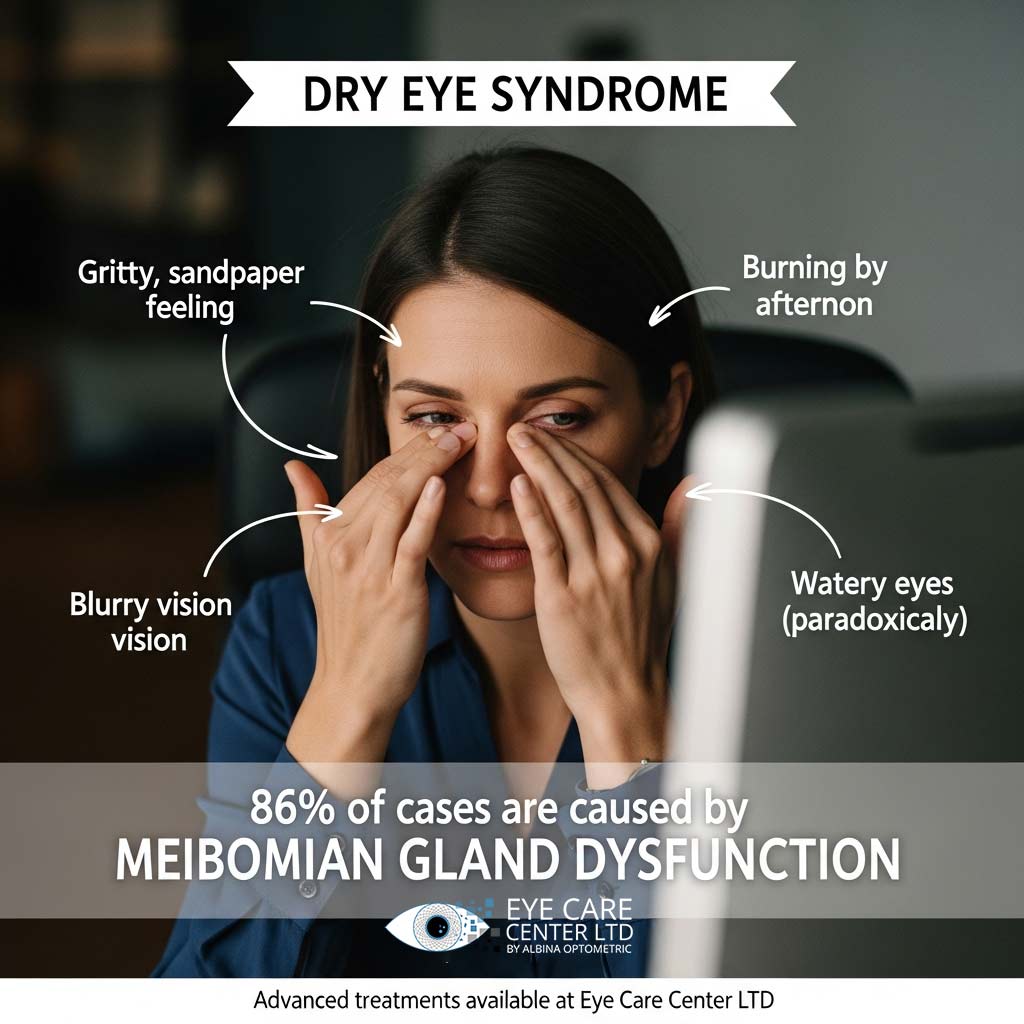
It starts around 2 PM. Your eyes feel scratchy, like someone sprinkled sand under your eyelids. By 3 PM, they’re burning. You blink more frequently, rub them when no one’s looking, and wonder why your vision keeps blurring even though you just got new glasses.
You’ve tried every eye drop at Walgreens. Some help for 10 minutes, then it’s back to sandpaper. Your eye doctor says “dry eye” and hands you another sample bottle of artificial tears. But nobody’s explaining why this is happening or mentioning the advanced treatments that could actually fix the problem.
Here at Eye Care Center in Addison, Burbank, and Willowbrook, we see this frustration daily. And I’m going to tell you something most eye care practices don’t: if you’ve been using eye drops for more than a few weeks without real relief, the drops aren’t the solution. You need to treat the underlying cause, and that requires technology most people have never heard of.
Let me explain what’s really going on with your eyes, and introduce you to treatments that sound like science fiction but are backed by solid research and FDA approval.
What’s Actually Happening to Your Eyes
Your tears aren’t just water. They’re a complex three-layer system:
- Mucin layer (innermost): Helps tears stick to your eye surface
- Aqueous layer (middle): The watery part that hydrates
- Lipid layer (outer): An oily film that prevents evaporation
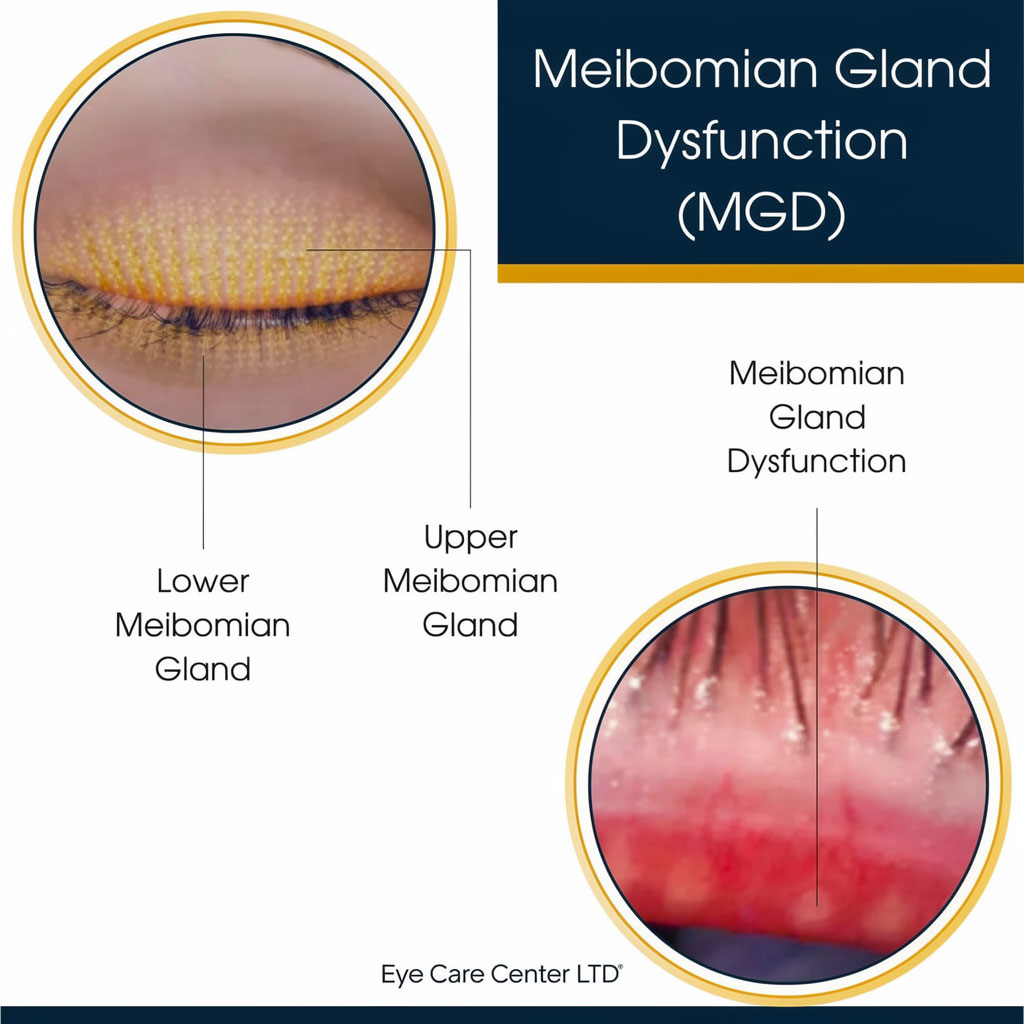
That outer lipid layer is produced by meibomian glands – tiny oil glands along your eyelid margins. You have about 30-40 of these glands in your upper lid and 20-30 in your lower lid. When they’re working properly, they secrete clear oil every time you blink, coating your tears and keeping them from evaporating too quickly.
But here’s the problem: 86% of dry eye cases are caused by meibomian gland dysfunction (MGD). Your oil glands get clogged, inflamed, or stop producing quality oil. Without that protective lipid layer, your tears evaporate 4-16 times faster than they should.
Why This Happens
Multiple factors contribute to MGD:
- Age: Gland function naturally declines with age, especially after 40
- Screen time: Reduced blink rate (from 15-20 blinks/min to 5-7 blinks/min) means less oil distribution
- Environmental factors: Fans, HVAC, low humidity, wind – all accelerate tear evaporation
- Makeup and skincare: Products can block gland openings along the lash line
- Contact lens wear: Disrupts the tear film and can cause chronic irritation
- Systemic conditions: Rosacea, diabetes, thyroid disease, hormonal changes
Once MGD starts, it creates a vicious cycle. Glands get blocked → inflammation increases → more gland damage → worse symptoms. Eye drops might temporarily add moisture, but they don’t fix the underlying gland dysfunction.
Why Eye Drops Aren’t Enough
Don’t get me wrong – artificial tears have their place. For mild, occasional dryness, they’re fine. But if you’re using drops multiple times daily and still struggling, you’re treating the symptom (lack of moisture) without addressing the cause (dysfunctional oil glands).
Think of it this way: if your bathtub drain is wide open, adding more water doesn’t solve the problem. You need to close the drain. Eye drops are adding more water. The advanced treatments I’m about to describe actually fix the drain – they restore your meibomian gland function so your natural tears stay on your eye longer.
The Limitations of Drops
- Temporary relief only: Most drops provide 10-30 minutes of comfort at best
- Doesn’t address the root cause: Clogged glands stay clogged
- Expensive over time: Quality preservative-free drops cost $15-30/month, forever
- Inconvenient: Having to apply drops every 2-4 hours disrupts your day
- Some make it worse: Preserved drops can cause toxicity with overuse
At Eye Care Center, we see patients who’ve been on the drops treadmill for years – sometimes decades – without anyone explaining there are better options. Let’s talk about what actually works.
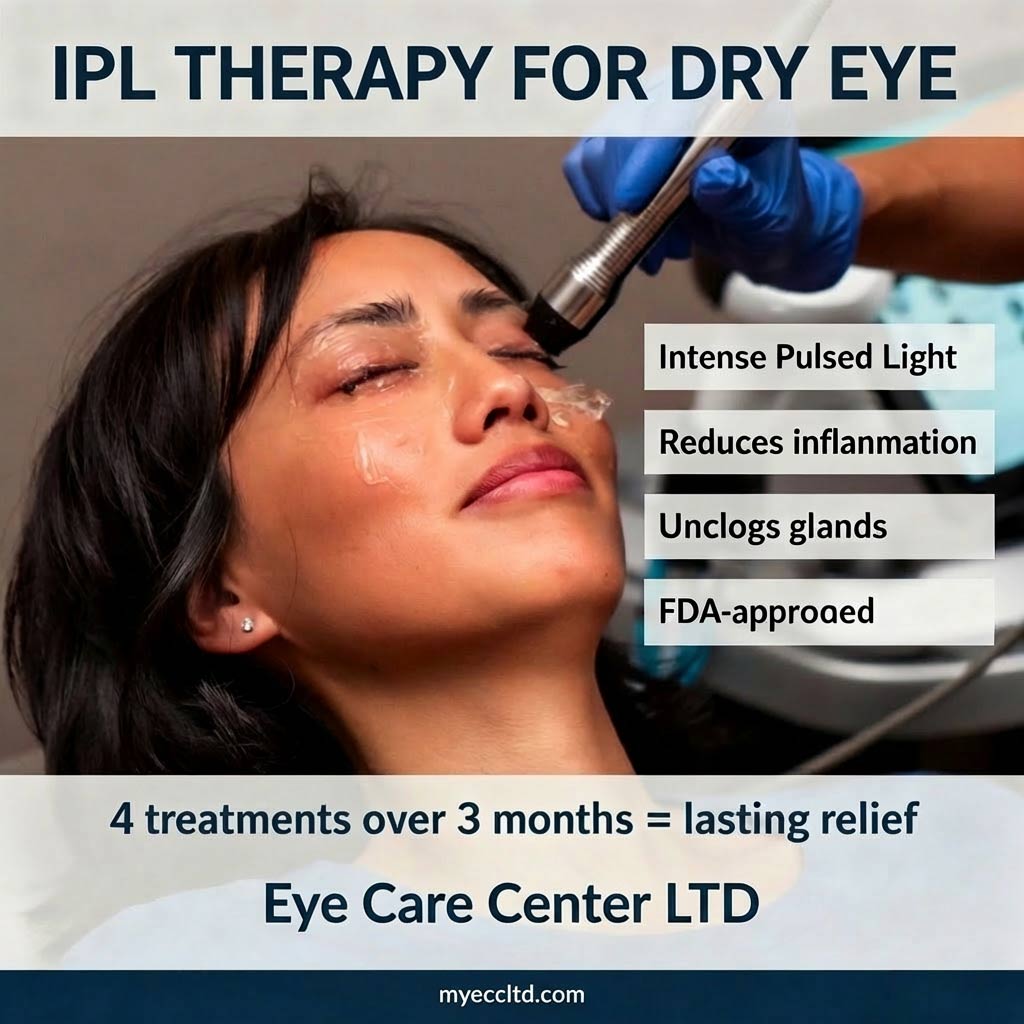
Intense Pulsed Light (IPL) therapy sounds futuristic because it kind of is. Originally developed for dermatology (treating rosacea, spider veins, sun damage), eye care professionals discovered it had remarkable benefits for dry eye disease, particularly when MGD is involved.
How IPL Works
IPL uses controlled pulses of broad-spectrum light delivered to the skin around your eyes. Here’s what happens:
- Reduces inflammation: The light energy decreases inflammatory mediators that damage meibomian glands
- Unclogs glands: The heat from the light pulses melts thickened, solidified oil in blocked glands
- Kills demodex mites: These microscopic mites live in eyelash follicles and contribute to inflammation
- Targets abnormal blood vessels: IPL treats the telangiectasia (tiny dilated blood vessels) that contribute to eyelid inflammation
What to Expect
A typical IPL treatment takes about 15 minutes:
- You’ll wear protective eyewear
- A gel is applied to the treatment area (cheeks and area around eyes)
- The practitioner delivers light pulses – you’ll feel warmth and see bright flashes
- After IPL, we typically perform gland expression to clear out melted oil
Most patients need 4 treatments spaced 2-4 weeks apart for optimal results. Improvement is often noticeable after the second or third treatment, with continued benefits developing over 3-6 months.
Who Benefits Most from IPL
- Patients with ocular rosacea or facial rosacea
- Moderate to severe MGD with thick, paste-like gland secretions
- Chronic inflammation despite other treatments
- Visible blood vessels along the eyelid margins
IPL Limitations
IPL isn’t appropriate for everyone. It doesn’t work well on very dark skin tones (Fitzpatrick skin types V-VI) because the melanin in darker skin can absorb too much light energy. It’s also not recommended during pregnancy or for patients with certain photosensitizing medications.
Cost is another consideration – IPL for dry eye is typically not covered by insurance and runs $300-600 per treatment, so a full series might cost $1,200-2,400.
Radiofrequency Treatment: Heating from Within
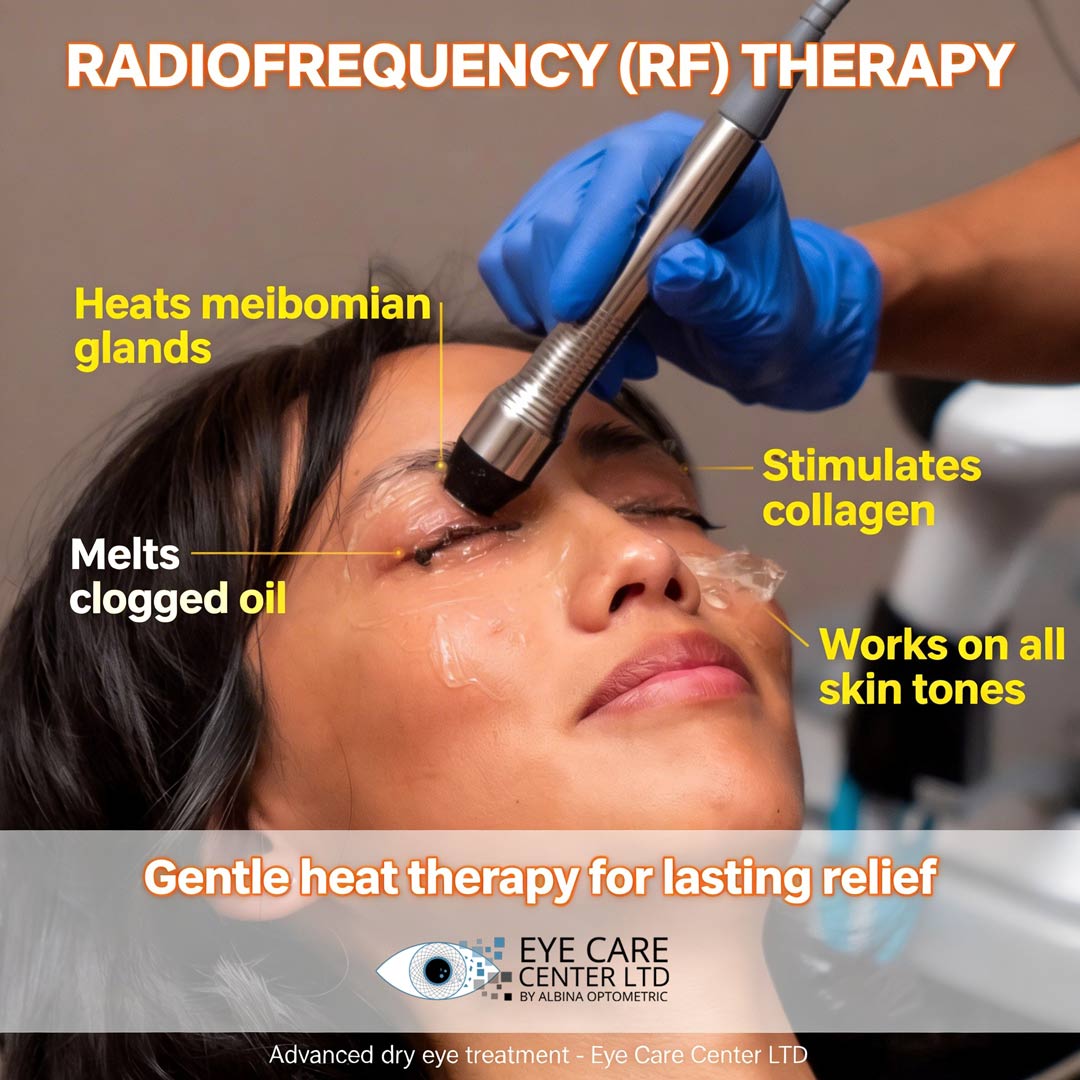
Radiofrequency (RF) treatment takes a different approach than IPL but targets the same underlying problem: dysfunctional meibomian glands that have become clogged with thickened oil.
How RF Works
RF devices use controlled electromagnetic energy to generate heat in the deeper layers of your eyelid skin. Unlike IPL which uses light energy, RF uses electrical current to create therapeutic heating. This has several advantages:
- Precise temperature control: The device monitors skin temperature in real-time, typically targeting 40-45°C (104-113°F)
- Deeper penetration: RF energy reaches the meibomian glands more directly
- Works on all skin tones: Unlike IPL, RF isn’t affected by skin pigmentation
- Stimulates collagen production: May provide some skin tightening benefits around the eyes
The Treatment Experience
RF treatment is comfortable for most patients:
- Treatment takes about 10-15 minutes per session
- You’ll feel gentle warmth – most patients find it relaxing
- The device is applied to your closed eyelids and surrounding skin
- Multiple passes are made to ensure even heating
- After RF, we often perform gland expression
Like IPL, RF typically requires 3-4 treatments spaced several weeks apart. Many patients notice improvement after the first treatment, with progressive benefits over the treatment series.
RF vs. IPL: Which Is Better?
This is the question I get constantly. The honest answer: it depends on your specific situation.
Choose IPL if you have:
- Lighter skin tones (Fitzpatrick I-IV)
- Rosacea or visible blood vessels
- Significant inflammation and redness
Choose RF if you have:
- Darker skin tones (Fitzpatrick IV-VI)
- Pure MGD without much inflammation
- Preference for heat-based treatment
- Contraindications to IPL
Or consider both: Some practices offer combination therapy, using both IPL and RF in the same treatment session. This can provide synergistic benefits by addressing multiple aspects of MGD simultaneously.
TearCare: The Eyelid Spa Treatment
TearCare is FDA-cleared specifically for treating meibomian gland dysfunction. It’s one of the newer technologies in the dry eye treatment arsenal, and many of our Willowbrook, Addison, and Burbank patients have been impressed by the results.
How TearCare Works
TearCare uses flexible, self-adhesive heating pads that conform to your eyelids. These SmartLid devices deliver consistent therapeutic heat (around 45°C/113°F) directly to your meibomian glands for 12-15 minutes.
The key advantage: you can keep your eyes open during treatment. This allows you to blink naturally, which helps distribute the melted oils more effectively than closed-eye systems.
The TearCare Procedure
- Application (2 minutes): The flexible heating devices are adhered to your upper and lower eyelids
- Heating phase (12-15 minutes): You relax while the devices deliver controlled heat. You can read, watch a screen, or close your eyes – whatever’s comfortable
- Expression (3-5 minutes): After heating, we remove the devices and perform meibomian gland expression using specialized tools to clear out the melted oils
The entire procedure takes about 20 minutes total. Most patients find it comfortable – some even describe it as relaxing, like a “spa treatment for your eyelids.”
TearCare Results
Clinical studies show that TearCare significantly improves:
- Meibomian gland secretion quality
- Tear breakup time (how long tears stay on your eye)
- Symptom scores for dryness, burning, grittiness
- Overall quality of life related to eye comfort
Many patients experience relief after a single treatment, though some need 2-3 treatments spaced a few months apart for optimal results. The effects typically last 3-6 months or longer.
Cost Considerations
TearCare typically costs $500-1,000 per treatment session. It’s usually not covered by insurance, as it’s considered an elective procedure. However, when you compare it to the cost of prescription drops ($200-600/year, indefinitely), the value proposition improves for patients with chronic dry eye.
Which Treatment Is Right for You?
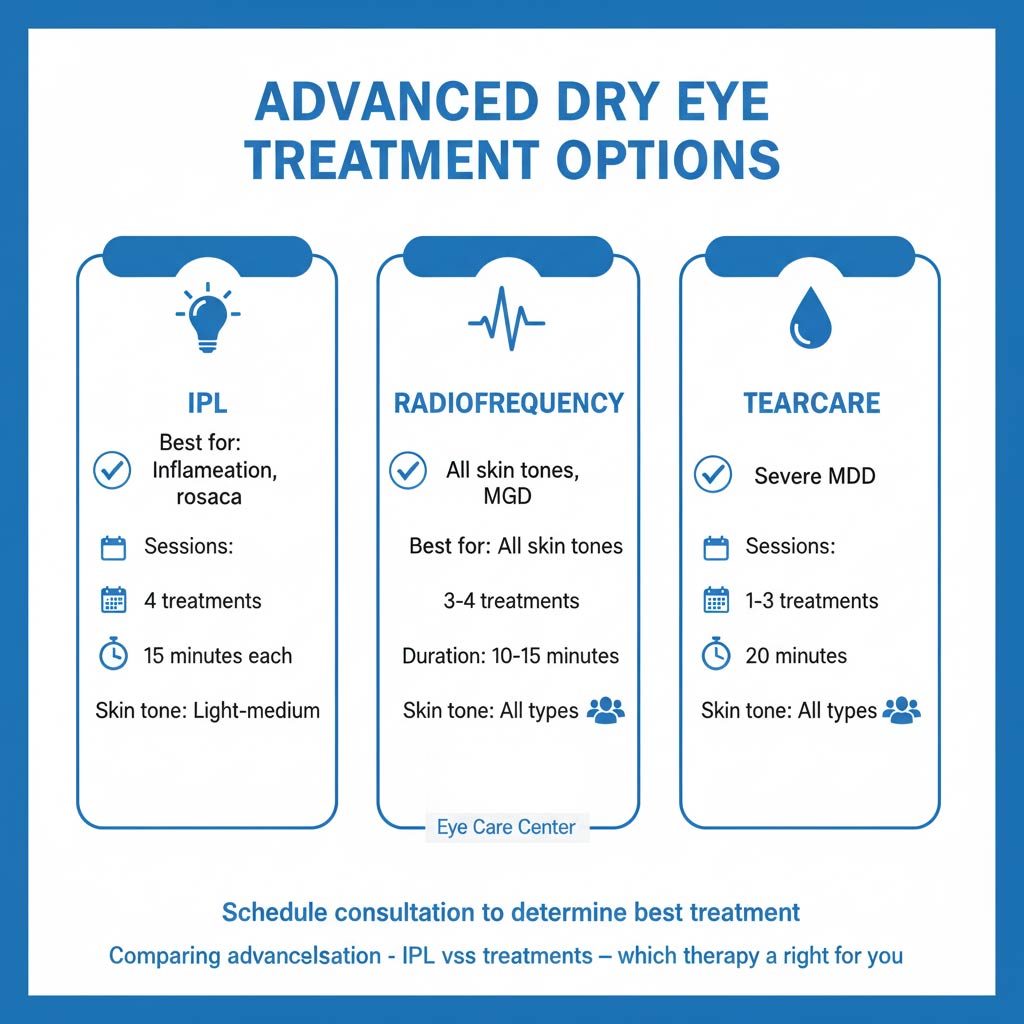
The best treatment depends on several factors. At Eye Care Center, we perform comprehensive dry eye evaluations to determine which approach (or combination) makes the most sense for your specific situation.
Consider IPL if you have:
- Light to medium skin tone
- Rosacea (facial or ocular)
- Visible blood vessels along eyelid margins
- Significant inflammation and redness
- Demodex mite infestation
Consider RF if you have:
- Darker skin tone
- Pure MGD without much inflammation
- Contraindications to IPL (photosensitive medications, certain skin conditions)
- Preference for heat-based therapy
Consider TearCare if you have:
- Severe MGD with significantly clogged glands
- Need for rapid improvement (single-session treatment)
- Preference for open-eye treatment
- Failed response to other heat-based therapies
Consider Combination Therapy if you have:
- Complex dry eye with multiple contributing factors
- Severe symptoms not responding to single-modality treatment
- Both inflammatory and mechanical (MGD) components
Some patients benefit from IPL + RF in the same visit, or TearCare followed by a series of IPL treatments. Your eye care provider can recommend the optimal protocol based on your specific diagnosis.
What to Expect During and After Treatment
During Treatment
Comfort: Most patients find these treatments comfortable. IPL feels like warm rubber band snaps. RF and TearCare feel like gentle, soothing heat. You’re awake and alert throughout – no anesthesia needed, though some practices offer numbing drops for extra comfort.
Time commitment: Plan for 30-45 minutes total per appointment, including prep and post-treatment care. The actual treatment time is shorter (10-20 minutes).
Safety: These are all FDA-approved or FDA-cleared treatments with excellent safety profiles when performed correctly by trained professionals.
After Treatment
Immediate effects: Your eyes may feel slightly warm or look a bit red for an hour or two. Most patients can return to normal activities immediately, though we recommend avoiding eye makeup for 24 hours and skipping intense workouts the day of treatment.
Timeline for improvement:
- Week 1: Some patients notice mild improvement, others need more time
- Weeks 2-4: Progressive improvement as inflammation decreases and gland function improves
- Months 1-3: Continued benefits as treatments accumulate
- Months 3-6: Peak benefits, sustained improvement
Maintenance: Results typically last several months. Many patients return for maintenance treatments 1-2 times per year to sustain benefits.
Realistic Expectations
These treatments are highly effective, but they’re not magic. Most patients experience 60-80% improvement in symptoms – significant but not always complete elimination. You may still need occasional artificial tears, especially in challenging environments (airplanes, dry climates, long screen days).
The goal is to restore your natural tear function so you’re not dependent on drops, not to make you feel like you’re 18 again. For most patients dealing with chronic dry eye, even 70% improvement is life-changing.
Getting Started with Advanced Dry Eye Treatment
If you’re tired of the drops treadmill and ready to address your dry eye at its source, here’s what to do next:
Schedule a Comprehensive Dry Eye Evaluation
This isn’t a regular eye exam. At Eye Care Center, our dry eye evaluations include:
- Symptom assessment: Detailed questionnaires to quantify your discomfort
- Tear film evaluation: Measuring tear breakup time and volume
- Meibomian gland imaging: Specialized photography to assess gland structure and function
- Gland expression: Evaluating the quality of oil secretions
- Inflammation markers: Testing for inflammatory mediators
- Ocular surface evaluation: Checking for damage to the cornea and conjunctiva
This comprehensive evaluation allows us to understand exactly what’s causing your dry eye and which treatments will work best.
Discuss Treatment Options
Based on your evaluation, we’ll recommend a treatment plan. This might be one of the advanced treatments discussed here, or a combination approach. We’ll discuss:
- Which treatment(s) are most appropriate for your condition
- Expected timeline and number of sessions needed
- Cost and payment options
- What you can expect during and after treatment
Start Treatment
Once you decide to move forward, we’ll schedule your treatment sessions. Most patients space treatments 2-4 weeks apart, so you’re looking at a 2-3 month commitment for a full treatment series.
Our Locations
Eye Care Center offers advanced dry eye treatments at all three of our convenient Illinois locations:
- Addison: 1250 W Lake St #19c, (630) 543-0607
- Burbank: 8525 S Harlem Ave, (708) 599-0050
- Willowbrook: 6300 Kingery Hwy #116, (630) 969-2807
Call any location to schedule your comprehensive dry eye evaluation. Stop suffering through the afternoon eye fatigue and start addressing the real problem.
The Bottom Line
If your eyes feel like sandpaper by mid-afternoon and eye drops aren’t cutting it anymore, you’re not stuck with that reality. Advanced treatments like IPL, radiofrequency, and TearCare can actually fix the underlying meibomian gland dysfunction that’s causing your dry eye – not just temporarily mask the symptoms.
These aren’t experimental treatments. They’re FDA-approved or cleared, backed by clinical research, and delivering real relief to thousands of patients with chronic dry eye. The technology exists, the evidence supports it, and at Eye Care Center, we have the expertise and equipment to provide these treatments.
Yes, they cost more upfront than a bottle of artificial tears. But when you calculate the long-term cost of drops, the impact on your quality of life, and the potential for lasting relief, the value proposition becomes clear.
Your eyes shouldn’t feel like sandpaper. Let’s fix the problem, not just treat the symptom.
Dr. Albina
Frequently Asked Questions About Advanced Dry Eye Treatment
How much do IPL, RF, and TearCare treatments cost?
IPL typically costs $300-600 per treatment with a full series (4 treatments) running $1,200-2,400. Radiofrequency costs similarly at $300-500 per session. TearCare runs $500-1,000 per treatment but often requires fewer sessions (1-3 vs. 4). These treatments are typically not covered by insurance as they’re considered elective procedures.
Does insurance cover advanced dry eye treatments?
Most insurance plans, including vision insurance, do not cover IPL, radiofrequency, or TearCare for dry eye as these are considered elective procedures. However, the comprehensive dry eye evaluation that determines which treatment you need is often partially covered. We can provide detailed receipts that you can submit to your insurance or HSA/FSA for potential reimbursement.
How long do results from IPL or RF treatment last?
Most patients experience lasting improvement for 6-12 months after a complete treatment series. Results vary based on dry eye severity, lifestyle factors, and underlying health conditions. Many patients return for maintenance treatments 1-2 times per year to sustain benefits. The goal is to restore normal gland function, not create lifelong dependency on treatments.
Are IPL and radiofrequency treatments painful?
No, most patients find these treatments comfortable. IPL feels like warm rubber band snaps or camera flashes – surprising but not painful. Radiofrequency and TearCare feel like gentle, soothing heat. Some practices offer numbing drops for extra comfort. The gland expression afterward can cause brief pressure but is generally well-tolerated.
Can I wear contact lenses during dry eye treatment?
You’ll need to avoid contact lenses on treatment days (remove before treatment, wait 24 hours after). During the treatment series, we generally recommend minimizing contact lens wear as much as possible to allow your eyes to heal. Many patients find they can comfortably return to contacts after completing treatment with improved comfort compared to before.
What is meibomian gland dysfunction (MGD)?
Meibomian gland dysfunction (MGD) occurs when the tiny oil glands in your eyelids become blocked or produce poor-quality oil. These glands produce the lipid layer of your tears that prevents evaporation. MGD causes 86% of dry eye cases and leads to rapid tear evaporation, resulting in the gritty, burning sensation most dry eye sufferers experience.
Why don’t eye drops work for my dry eyes?
Eye drops only add moisture temporarily but don’t fix the underlying problem – dysfunctional meibomian glands. If your oil glands aren’t producing quality oil to seal in tears, adding more moisture with drops is like filling a bathtub with the drain open. You need to fix the “drain” (restore gland function) rather than just adding more “water” (artificial tears).
Can dry eye be cured permanently?
Dry eye is typically a chronic condition that can be managed very effectively but rarely “cured” permanently. Advanced treatments like IPL, RF, and TearCare can restore normal gland function and provide lasting relief (6-12 months or longer), dramatically reducing or eliminating the need for daily drops. Periodic maintenance treatments help sustain these benefits long-term.
References & Further Reading
- American Academy of Ophthalmology. Meibomian Gland Dysfunction. 2024. https://www.aao.org/eye-health/diseases/meibomian-gland-dysfunction
- Craig JP, Nichols KK, Akpek EK, et al. TFOS DEWS II Definition and Classification Report. Ocul Surf. 2017;15(3):276-283.
- Toyos R, McGill W, Briscoe D. Intense pulsed light treatment for dry eye disease due to meibomian gland dysfunction; a 3-year retrospective study. Photomed Laser Surg. 2015;33(1):41-46.
- Vora GK, Gupta PK. Intense pulsed light therapy for the treatment of evaporative dry eye disease. Curr Opin Ophthalmol. 2015;26(4):314-318.
- Greiner JV. Long-term (12-month) improvement in meibomian gland function and reduced dry eye symptoms with a single thermal pulsation treatment. Clin Exp Ophthalmol. 2013;41(6):524-530.
- Gupta PK, Stevens MN, Kashyap N, Priestley Y. A randomized clinical trial of radiofrequency treatment of meibomian gland dysfunction. Cornea. 2021;40(7):863-870.