By Dr. Quentin Park, O.D. | The Eye Care Center — Addison, Burbank & Willowbrook, Illinois
I have been an optometrist for over 15 years. And I can tell you — with zero hesitation — that the single most common mistake I see patients make is not skipping their annual exam, not ignoring dry eye symptoms, not even forgetting to clean their contacts. It is walking out the door every single day behind a pair of sunglasses that are actively failing their eyes. Dark lenses. Cheap frames. Zero UV rating. They look fine. They feel fine. And they are doing almost nothing.
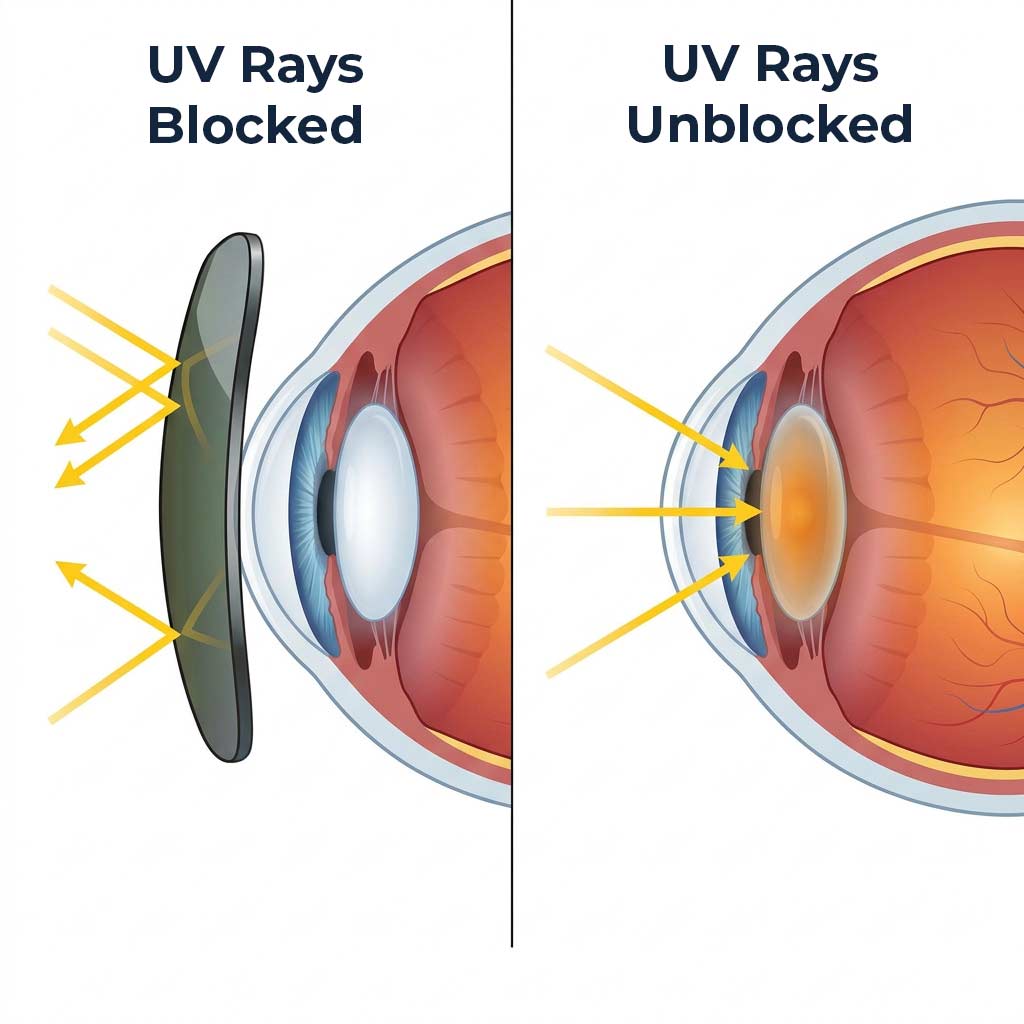
Here is what most people do not know: a dark lens with no UV filter can actually make things worse. Your pupil dilates behind the tinted lens — letting in more light — while the UV radiation passes straight through to your retina unblocked. It is the optical equivalent of sunscreen with no SPF. And by the time the damage shows up — as cataracts, macular degeneration, or pterygium — the window to prevent it has already closed. UV damage is cumulative and irreversible. Every unprotected hour counts.
So I wrote this article, because 2026 is a genuinely fascinating moment in sunglasses. Maui Jim just entered Formula 1. Denon Eyewear is quietly building some of the most stylish independent frames I have seen come across my frame board in years. And Meta’s Ray-Ban smart glasses — with AI, cameras, and open-ear audio built right into the frame — sold over seven million pairs last year alone. The category has never been more interesting, or more in need of a doctor’s perspective. Let me give you mine.
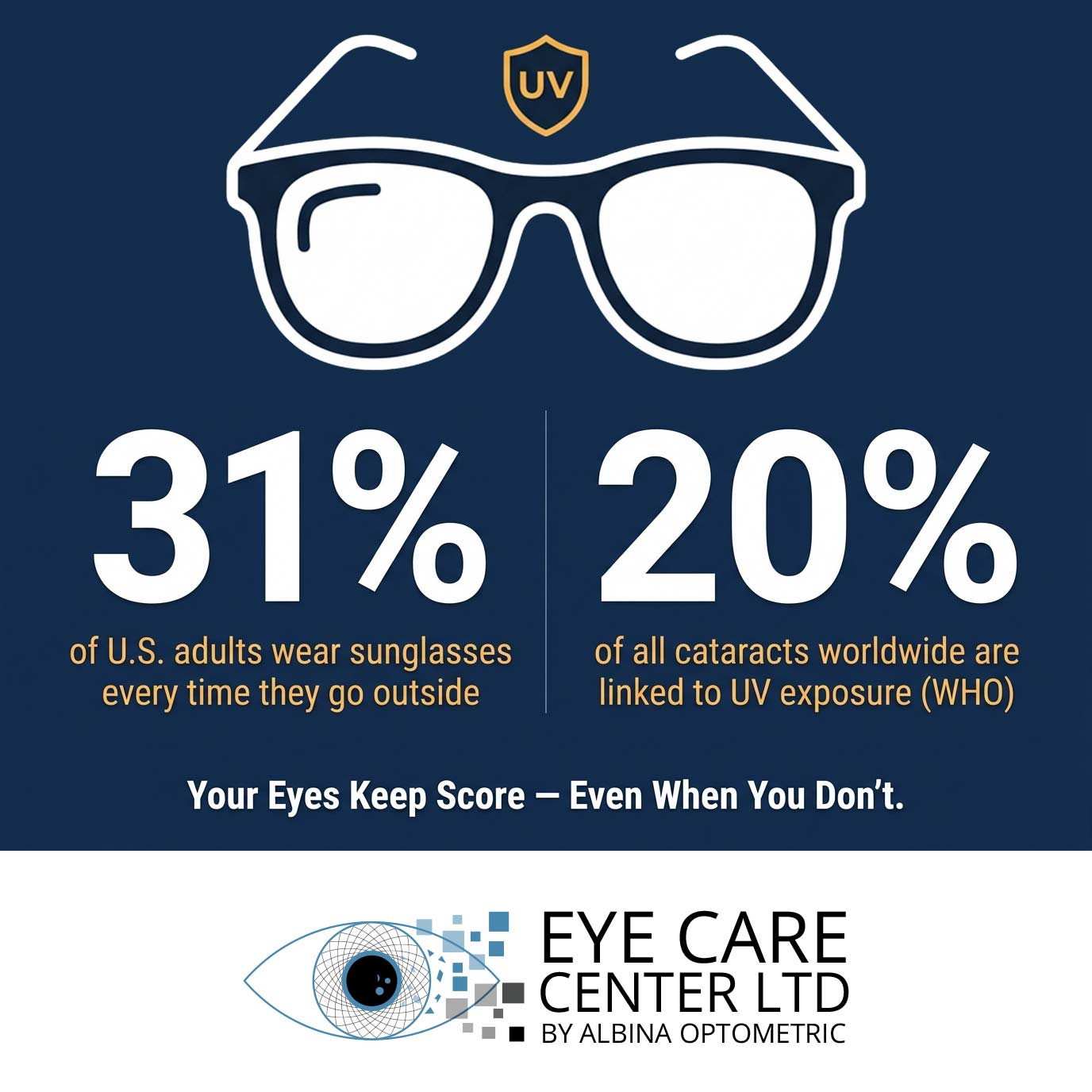
Only about 31% of U.S. adults report wearing sunglasses every time they go outside — and in sunny regions, fewer than 15% of children wear them regularly, even though a child’s clear ocular lens transmits significantly more UV radiation to the retina than an adult’s. Every unprotected hour outdoors is adding to a cumulative account of UV damage your eyes cannot withdraw from later.
— Sources: Vision Center, WHO
The UV Reality: Numbers That Should Change How You Shop
I want to start here because the clinical data is more alarming than most patients realize. According to the World Health Organization, approximately 20% of cataracts worldwide are linked to UV exposure. Globally, an estimated 15 million people are blind from cataracts, and UV radiation is implicated in roughly 10% of those cases. In the United States alone, approximately 3 million cataract surgeries are performed every year. By age 80, about half of all Americans will have experienced cataracts or undergone cataract surgery.
What makes UV damage so insidious is that it is cumulative and silent. There is no alarm that goes off when your retina absorbs UV radiation on a Tuesday afternoon walk in Addison. The damage accrues over decades — childhood, adolescence, young adulthood — and does not announce itself until conditions like cataracts, age-related macular degeneration, or pterygium begin to surface. Properly rated sunglasses that block 99 to 100% of UV rays can reduce ocular UV exposure by as much as 99%, according to Vision Center research. That is not a small margin. That is the difference between a protected visual system and one that is quietly being compromised over the course of a lifetime.
The other thing I want to address is the “it’s cloudy” rationalization. UV-A and UV-B radiation penetrate cloud cover. They reflect off pavement, car hoods, storefronts, and water. In the Chicago suburbs, where we go from eight months of overcast to sudden, intense spring and summer sun, the whiplash of seasonal UV exposure is real. Your eyes do not get a rest period to recover from summer. They keep that score all year. My recommendation to every patient is the same: sunglasses on, every time you step outside!
Maui Jim: When Optics Are the Point
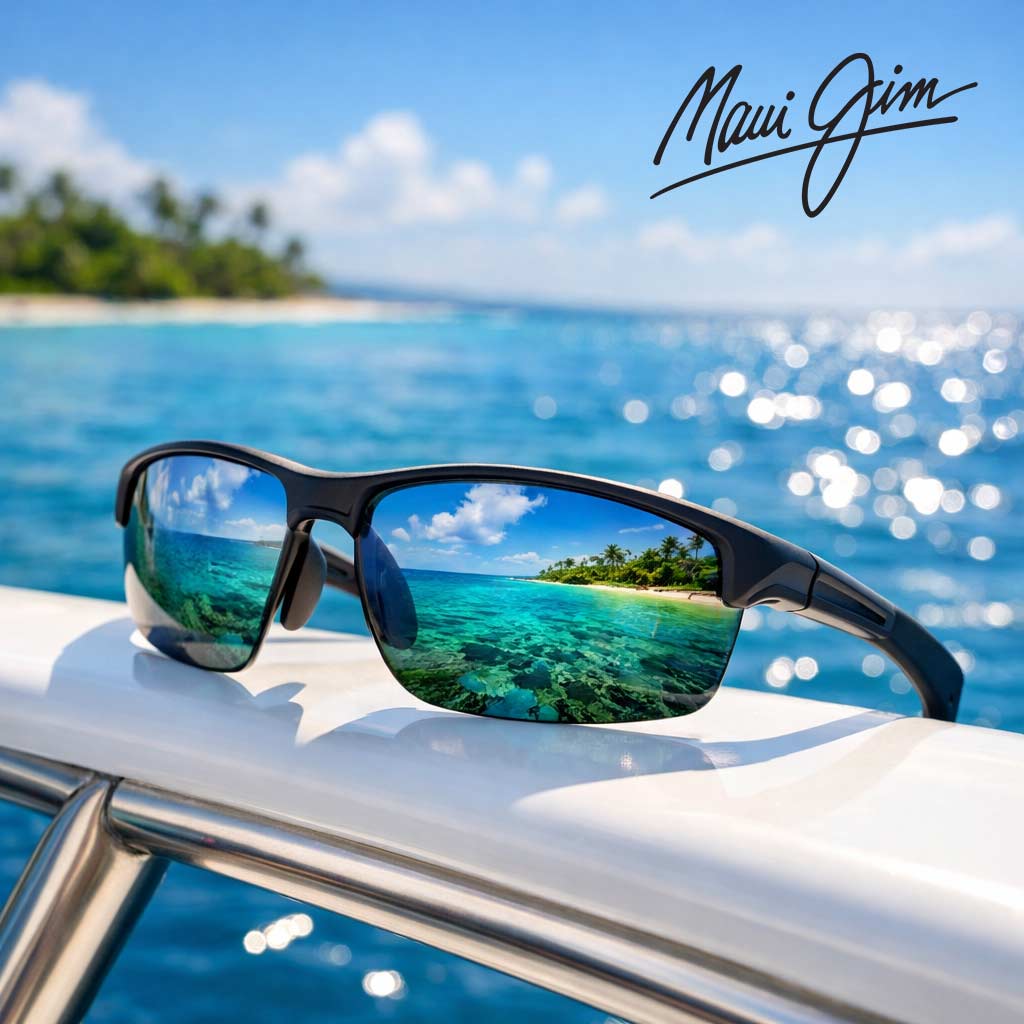
I have recommended Maui Jim sunglasses to patients for years, and the reason is straightforward: their optical engineering is genuinely superior to most of what is on the market. The centerpiece of their entire lens lineup is PolarizedPlus2 technology, which does three things simultaneously — it eliminates horizontal glare through polarization, applies an anti-reflective treatment that reduces residual light scatter, and incorporates a color-enhancing formula that brings out the natural tones of whatever you are looking at without artificial saturation. The result is a visual experience that is noticeably different from standard polarized lenses. Patients who try them in the office often say the world looks “more real,” which is exactly the right description.
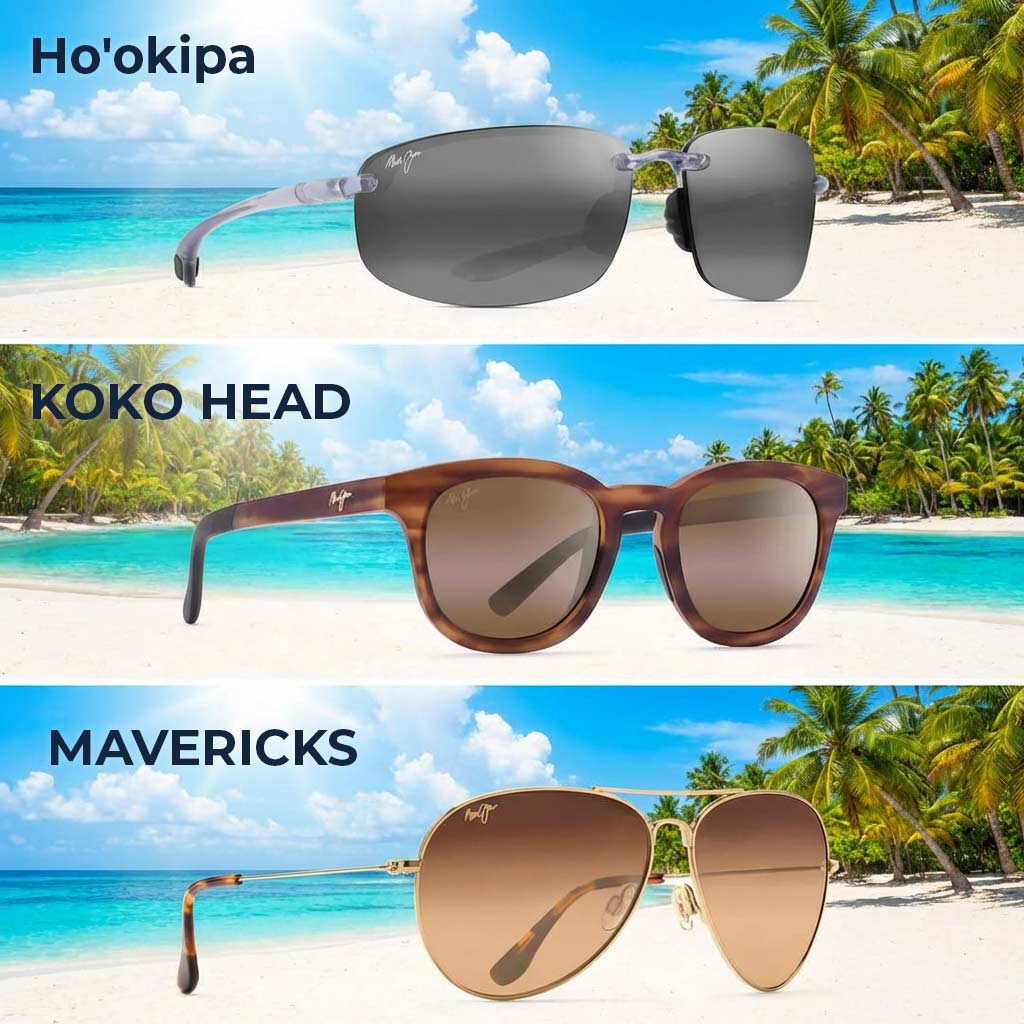
On the new and notable side, Maui Jim has recently introduced the Koko Head — a classic round silhouette named after the O’ahu headland, featuring a keyhole bridge that distributes weight evenly across the nose for extended comfort.


It is a departure from their more overtly sporty designs and positions well for patients who want performance optics in a lifestyle-friendly frame. For men looking for something that transitions from activity to everyday wear, I have also been watching the Laulima and Kenui styles, both of which represent newer additions to their lineup and carry the full PolarizedPlus2 system. Their iconic Ho’okipa rimless frame and the Mavericks aviator remain perennial recommendations for patients who want proven, durable performance. And if you follow motorsport at all — Maui Jim has just entered the world of Formula 1 as the optical partner for Oracle Red Bull Racing heading into the 2026 season, which signals the direction the brand is taking in performance credibility.
From a clinical perspective, what I appreciate most about Maui Jim is their lens material breadth. They offer four distinct frame materials — all enhanced by PolarizedPlus2 — giving us options across lightweight sport builds, titanium for durability-sensitive patients, and combination frames for those who need to balance aesthetics and function. Their lens tint guide is also genuinely useful: HCL Bronze for variable conditions, Neutral Grey for direct sun without color distortion, and Rose/Maui Rose for fast-moving sports. That kind of specificity is what separates an optically engineered product from a fashion accessory. Explore the full Maui Jim collection.
Denon Eyewear: Quiet Luxury with Optical Integrity
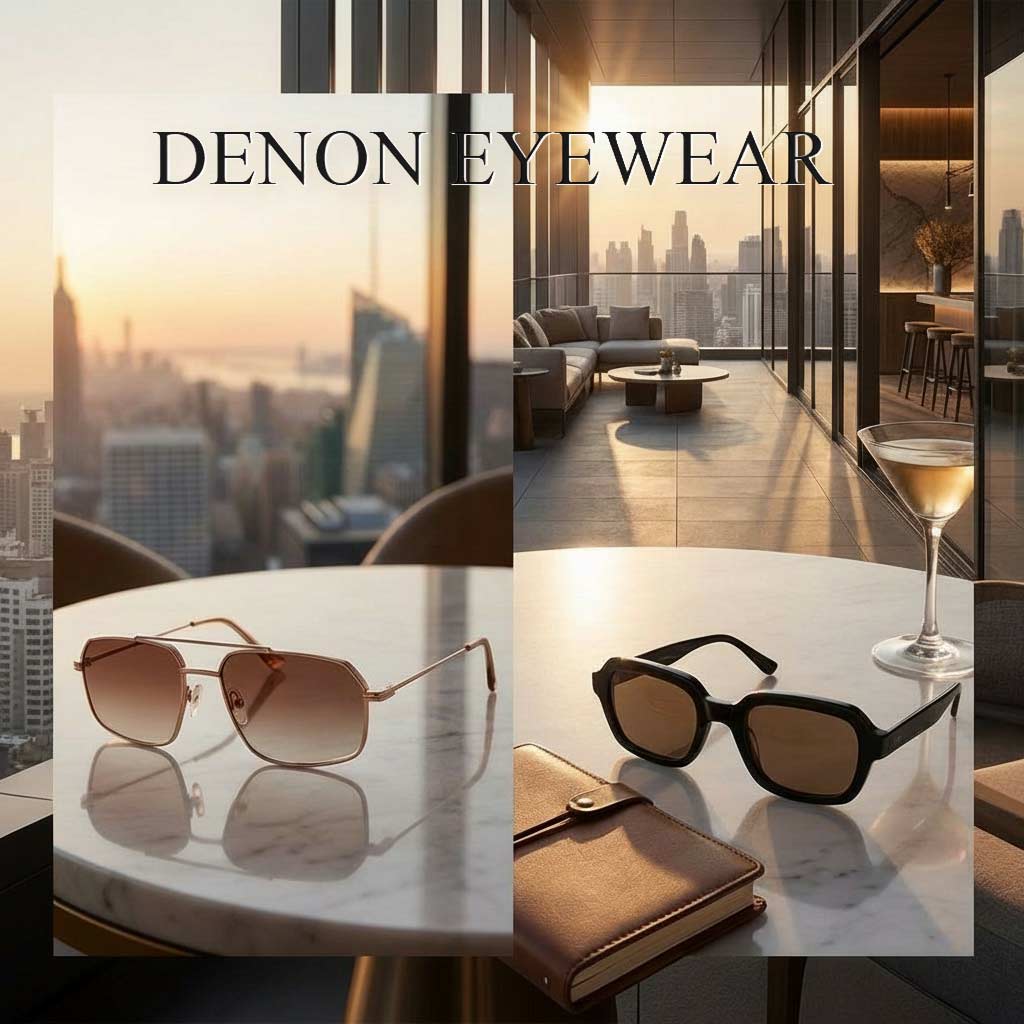
Not every patient needs a high-performance sport lens. Some of my patients spend most of their outdoor time at weekend farmer’s markets, outdoor dining patios, or walking along the Illinois Prairie Path. For those patients, optical performance still matters — UV protection is non-negotiable regardless of activity level — but aesthetics carry more weight in the purchase decision. That is where Denon Eyewear has carved out a genuinely compelling space.
Denon is a New York City-based independent luxury eyewear brand founded in 2020. They design in-house with over 35 years of combined industry expertise, and they describe their aesthetic as “quiet luxury” — which, if you have spent any time on fashion media recently, you know is the dominant sensibility of the moment. Understated, beautifully made, not covered in logos. Their frames are constructed from Italian acetate, stainless steel, and titanium, and they use UV-protected CR-39 lenses. Notable construction details include German working rivet hinges and soft silicone nose pads — the kind of specificity that distinguishes a thoughtfully engineered frame from one that is just well-marketed. They are available at over 300 independent optical practices across the East Coast and Midwest, which tells you something about how the independent optometry community has responded to the brand.
The model I have been watching most closely from a trend standpoint is the Carolyn — an oval silhouette with a subtle cat-eye twist that Denon’s design team built explicitly around the SS2025 runway trend toward slim, retro-nostalgic shapes. The frame is named with a nod to Carolyn Bessette-Kennedy, which tells you everything you need to know about the reference point: understated, effortlessly stylish, built for people who want to be noticed for their taste rather than their spending.


For something with more presence, the Gianna is a square cat-eye that Denon describes as inspired by the golden age of Hollywood — oversized, deliberate, and highly effective for patients who want full coverage alongside their aesthetic statement.


And the Remy — which has been drawing strong word-of-mouth from wearers — is notably lightweight and leaves no nose marks, which is a complaint I hear from patients more often than you might expect.




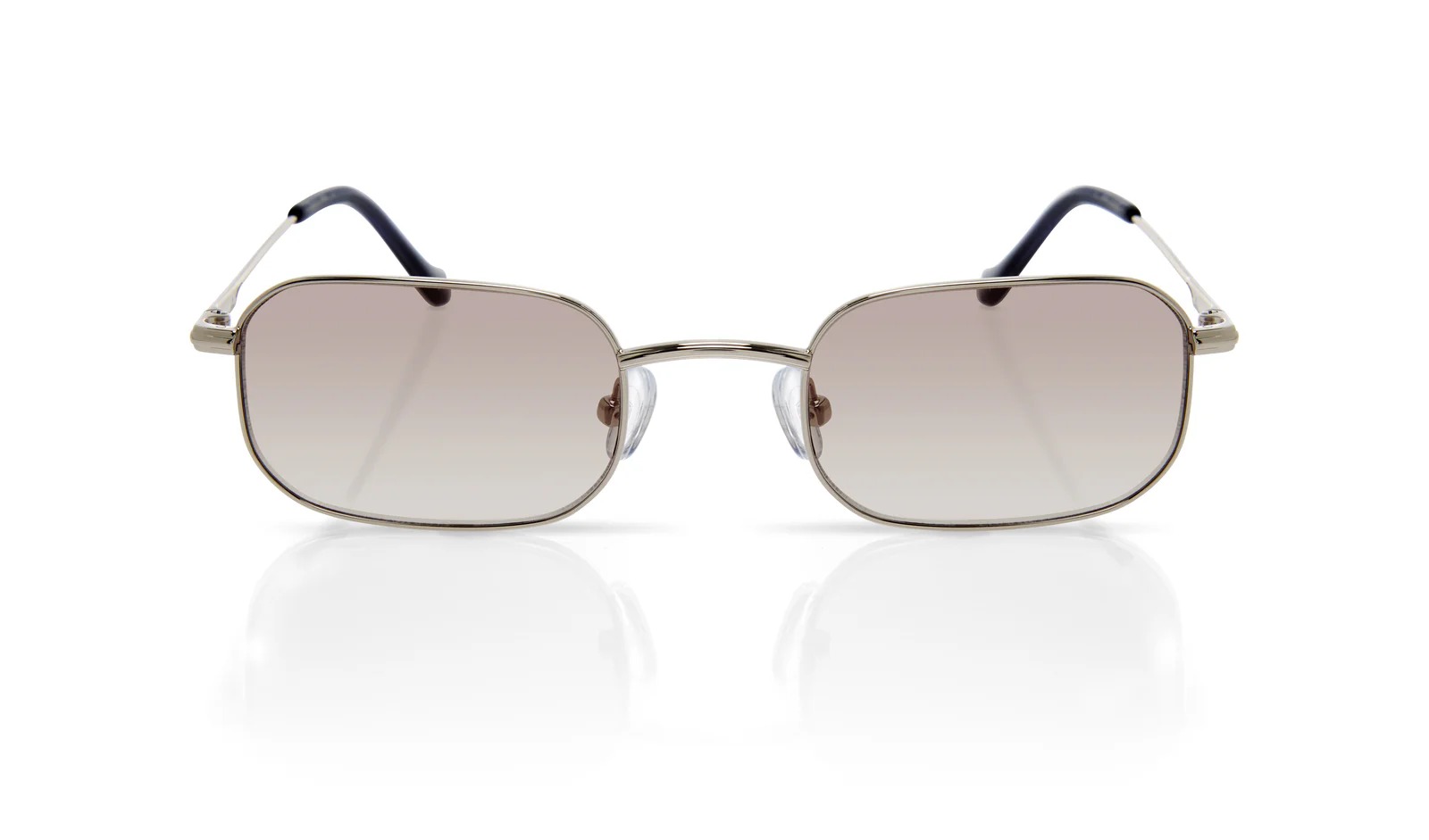
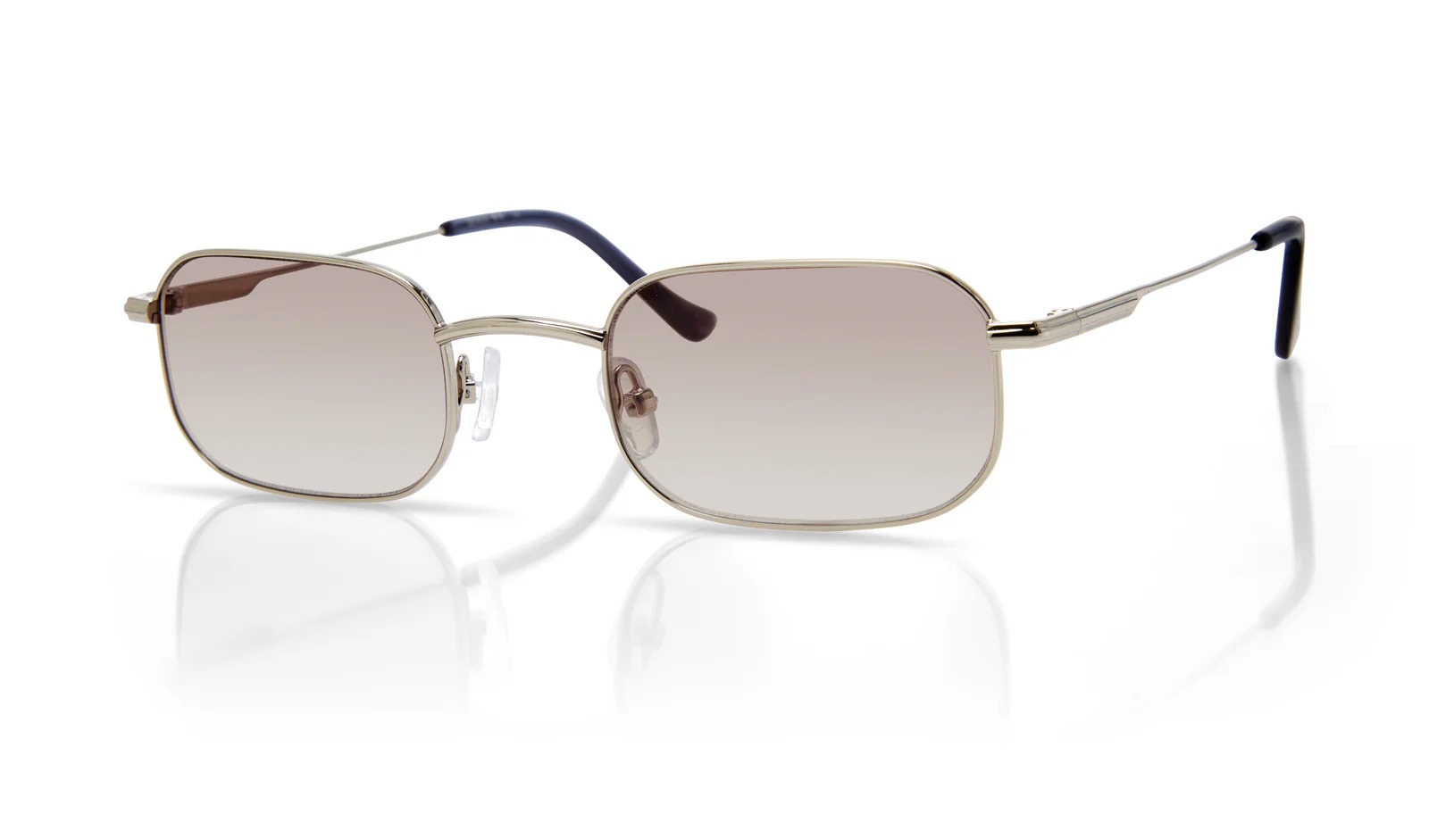
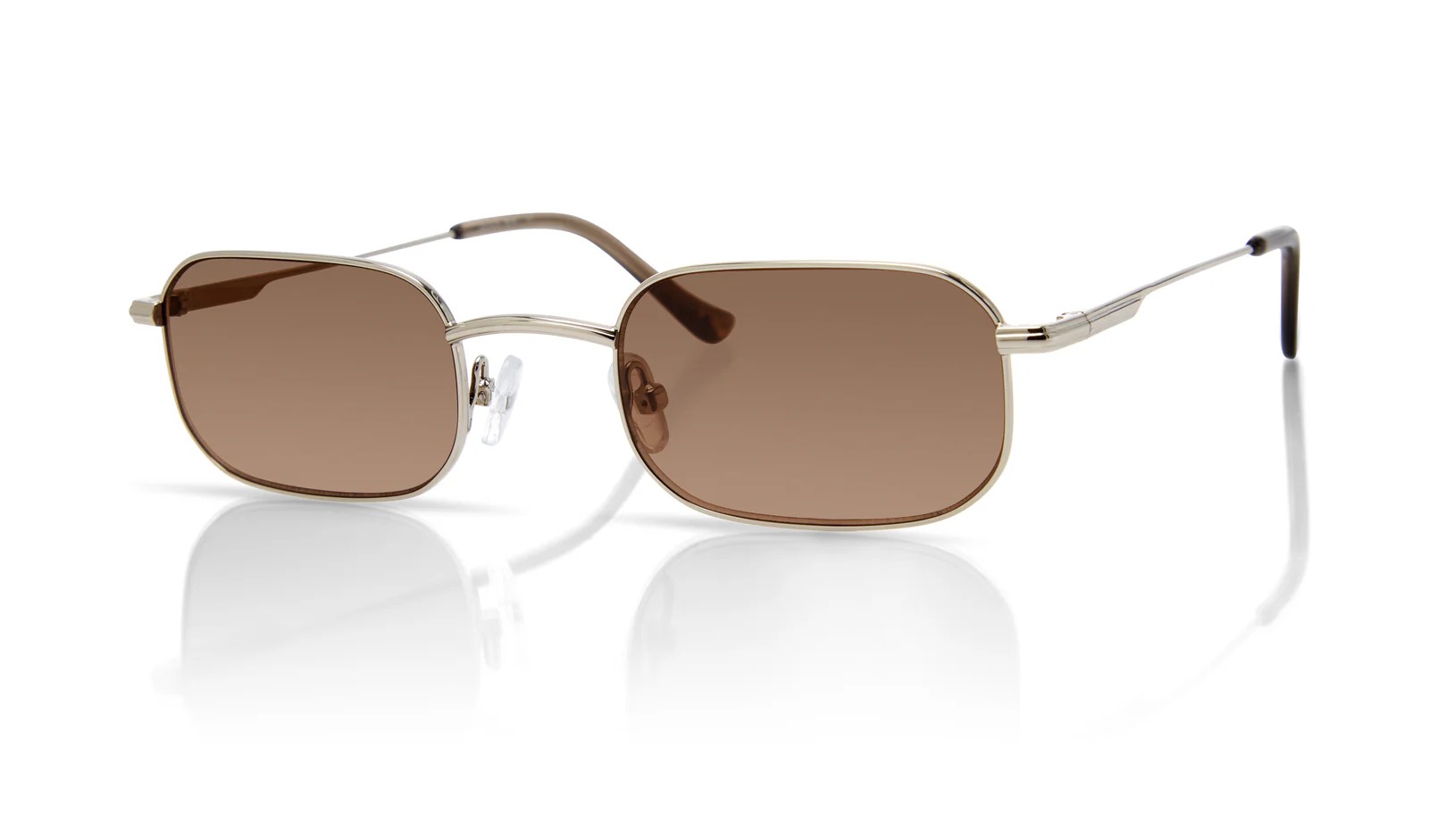
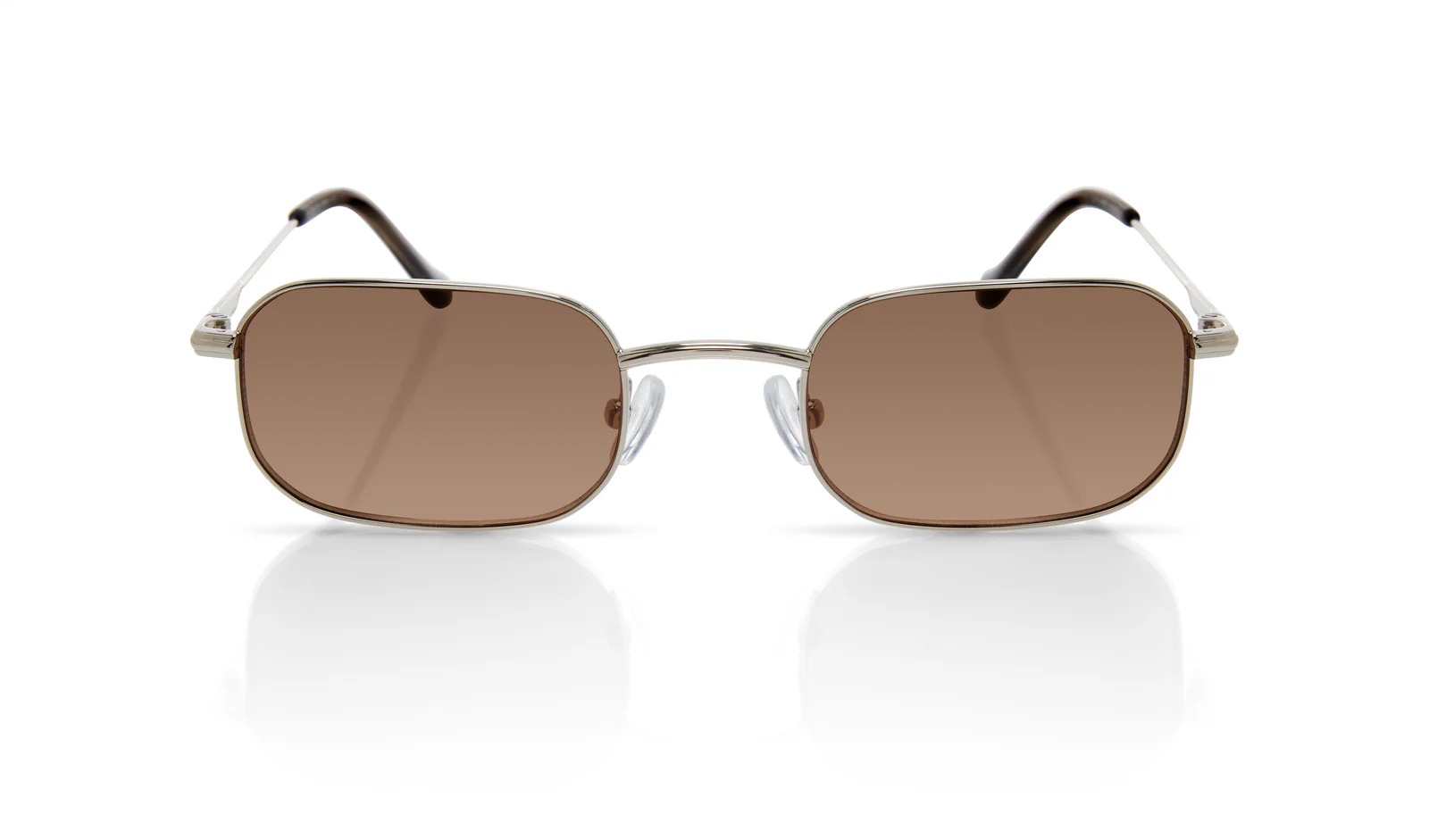
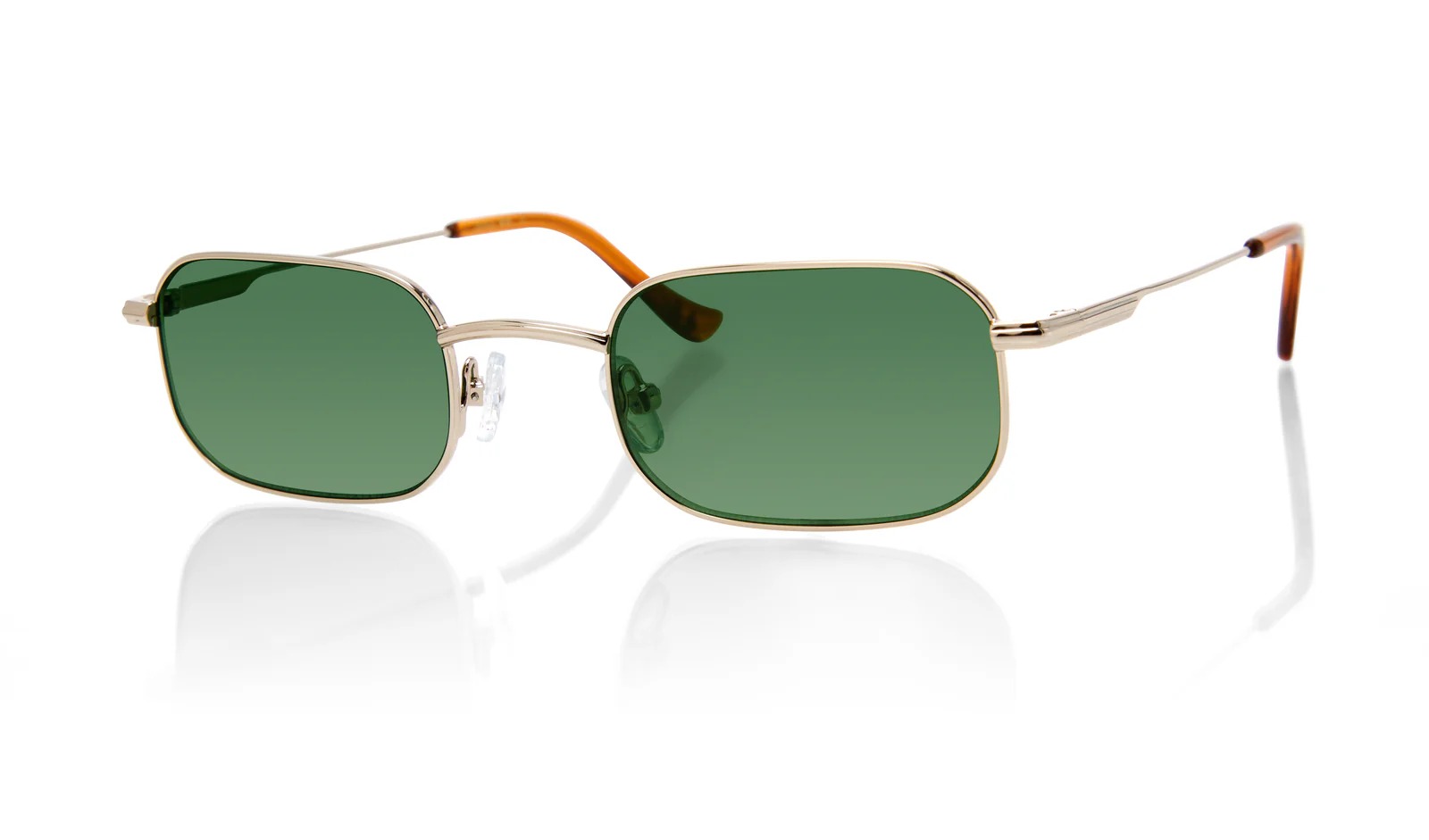
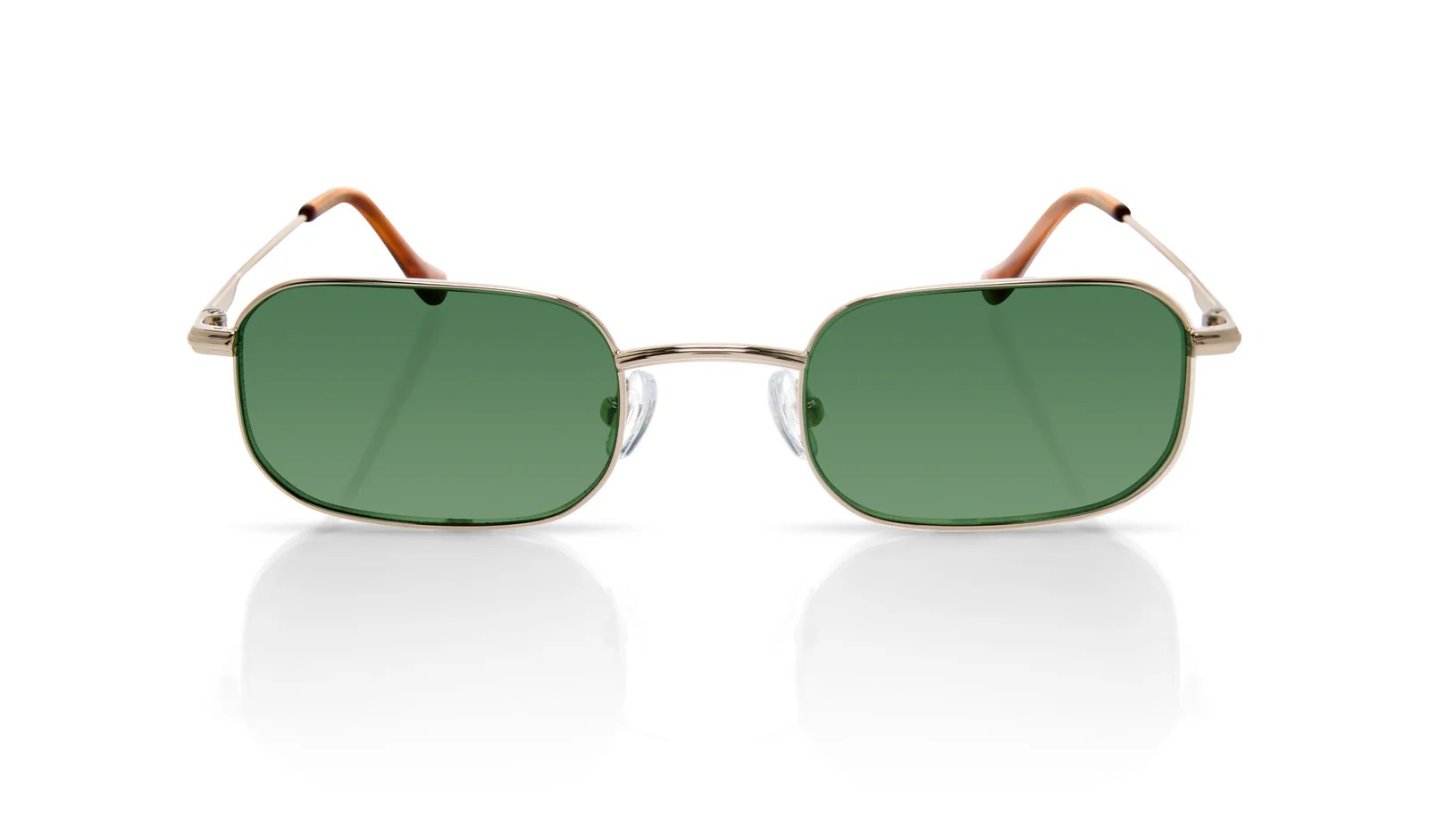
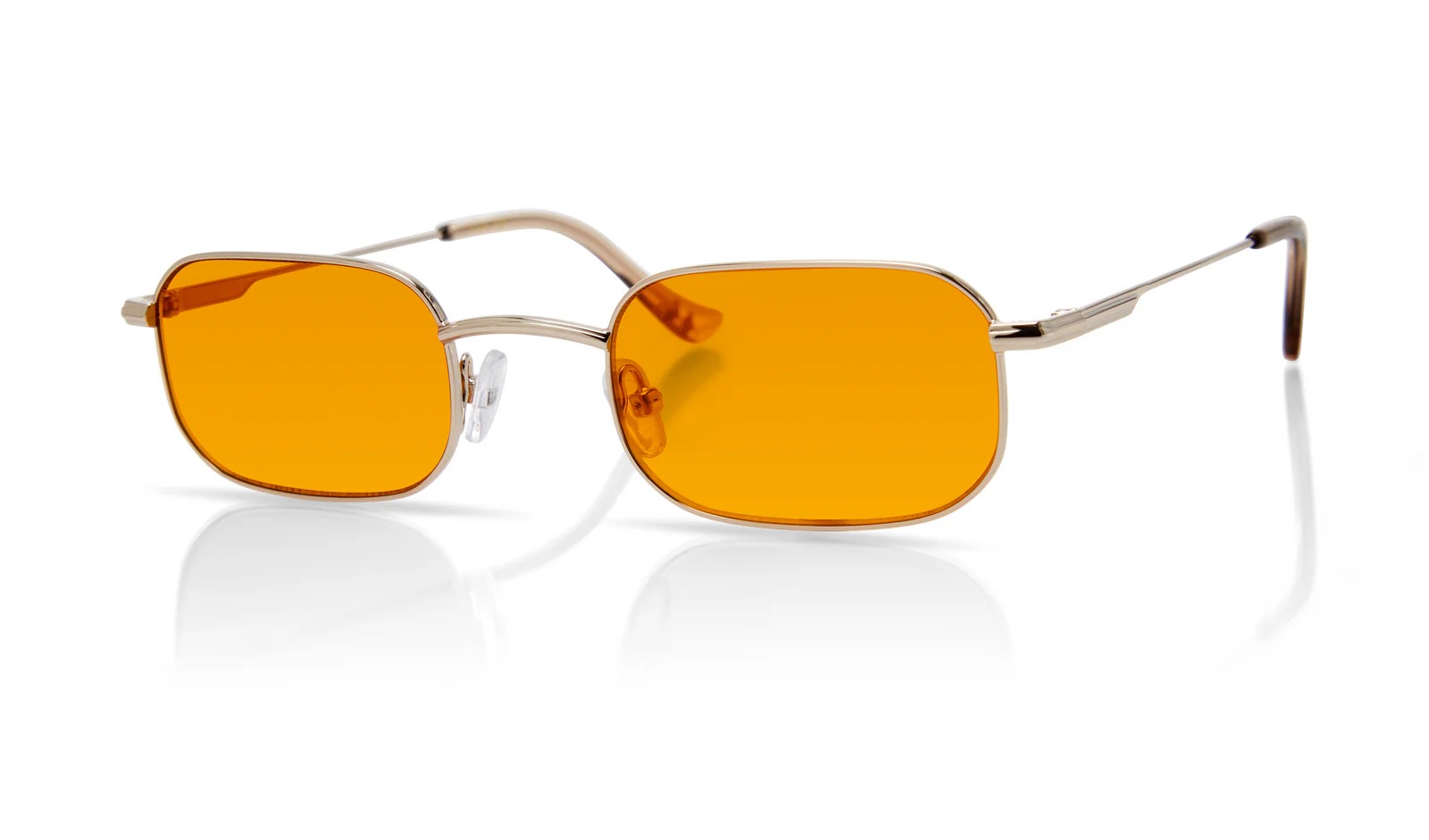
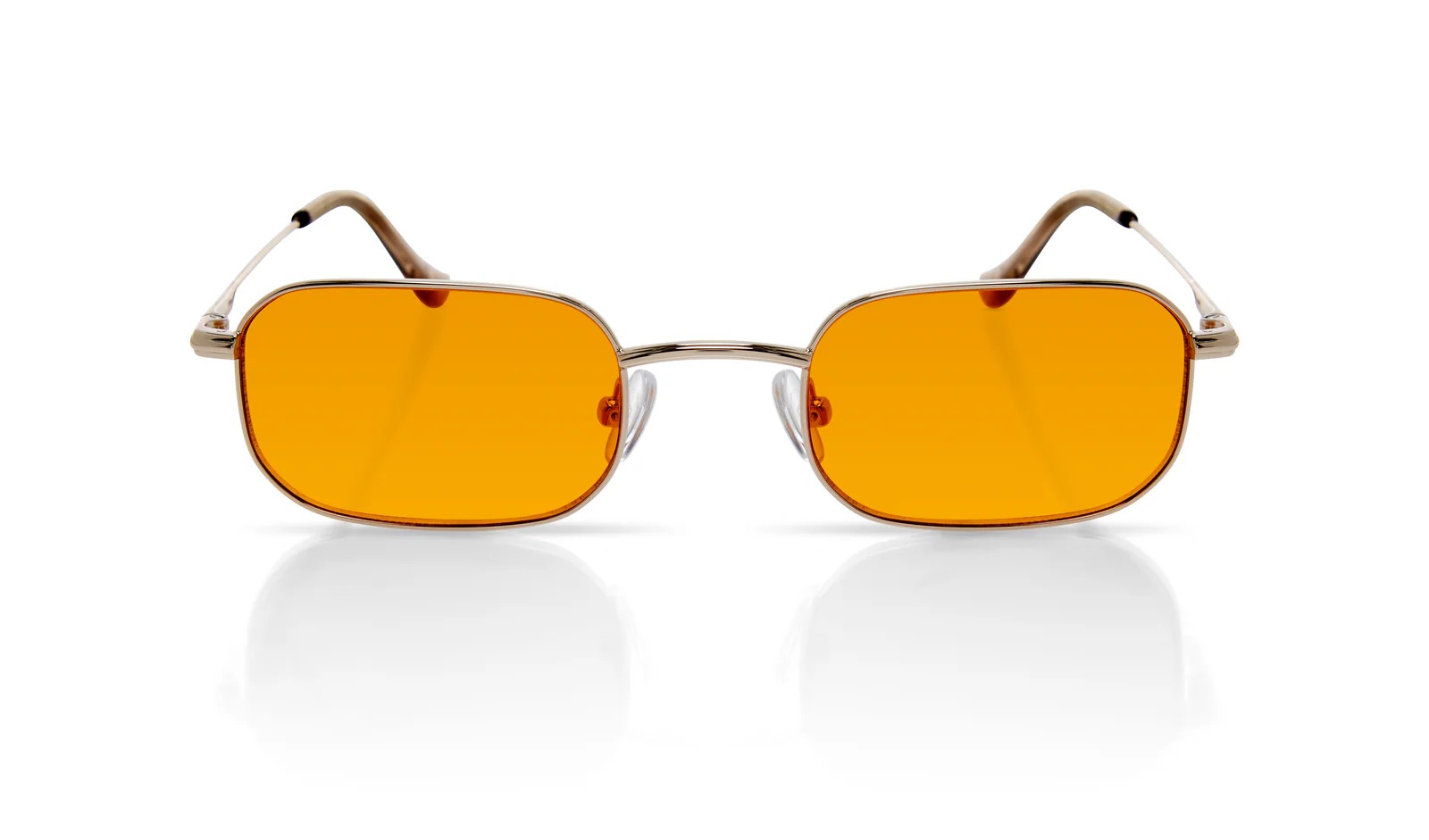
All three are worth a look if you are in our offices and want to see what independent luxury optometry looks like in 2026.
Meta Ray-Ban Smart Glasses: AI in Your Frames Is No Longer a Novelty
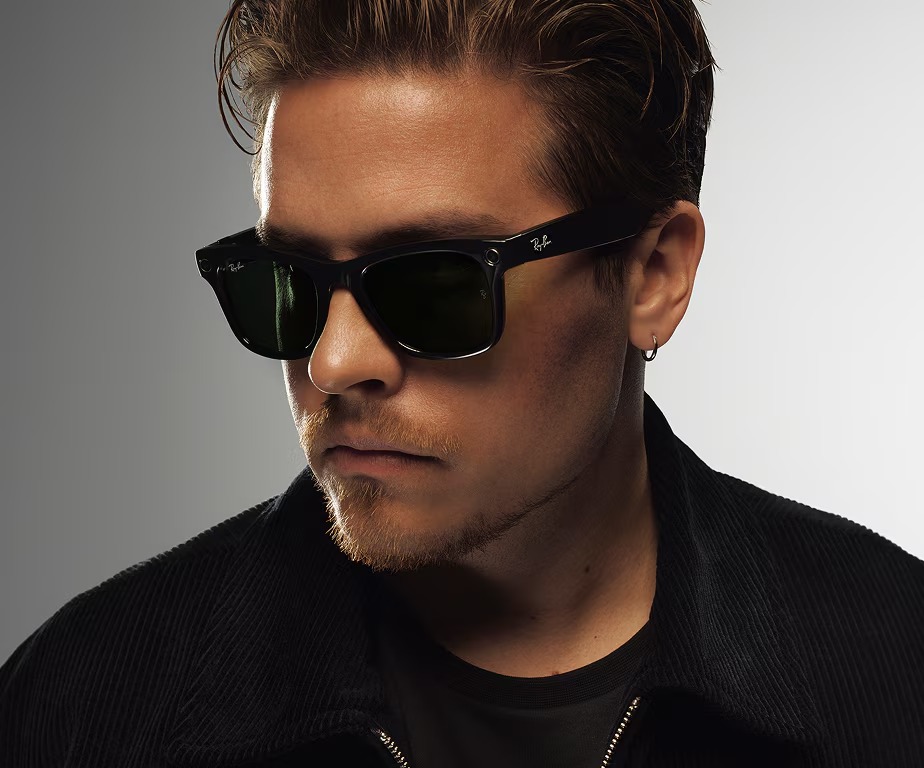
This is the part of the article where I step out of strictly familiar territory. I am an optometrist, not a technology reviewer. But patients are asking me about Meta Ray-Ban glasses with increasing frequency, and I think it is my job to have an informed perspective — including the clinical concerns I carry about this category that most tech reviewers are not positioned to address.
Here is what the landscape looks like right now. Meta’s partnership with EssilorLuxottica (the parent company of Ray-Ban) has produced several generations of smart glasses. The current lineup we carry at The Eye Care Center includes three Gen 2 frames, each built around the same core technology — 12 MP ultrawide camera, open-ear speakers, real-time Meta AI, live translation across six languages, and up to eight hours of battery life — but designed for different wearers. The Meta Wayfarer is the most recognizable of the three — the classic square silhouette that made Ray-Ban iconic, now housing a camera and AI assistant in a frame that looks completely at home on anyone. For patients who want something with a softer, more oval shape that reads decidedly more fashion-forward than tech-forward, the Meta Skyler is the standout — it is currently available in a new Transitions sapphire colorway that I find genuinely striking. And for patients with a wider face or higher nose bridge, the Meta Headliner — available in both standard and low bridge fits — is the one that actually fits. That fit option matters more than most people expect when you are wearing a frame with embedded electronics for eight hours at a time.
-

- Meta Ray Ban Wayfarer

-
- Meta Ray Ban Skyler

-
- Meta Ray Ban Headliner

How to Choose the Right Lens for Your Life
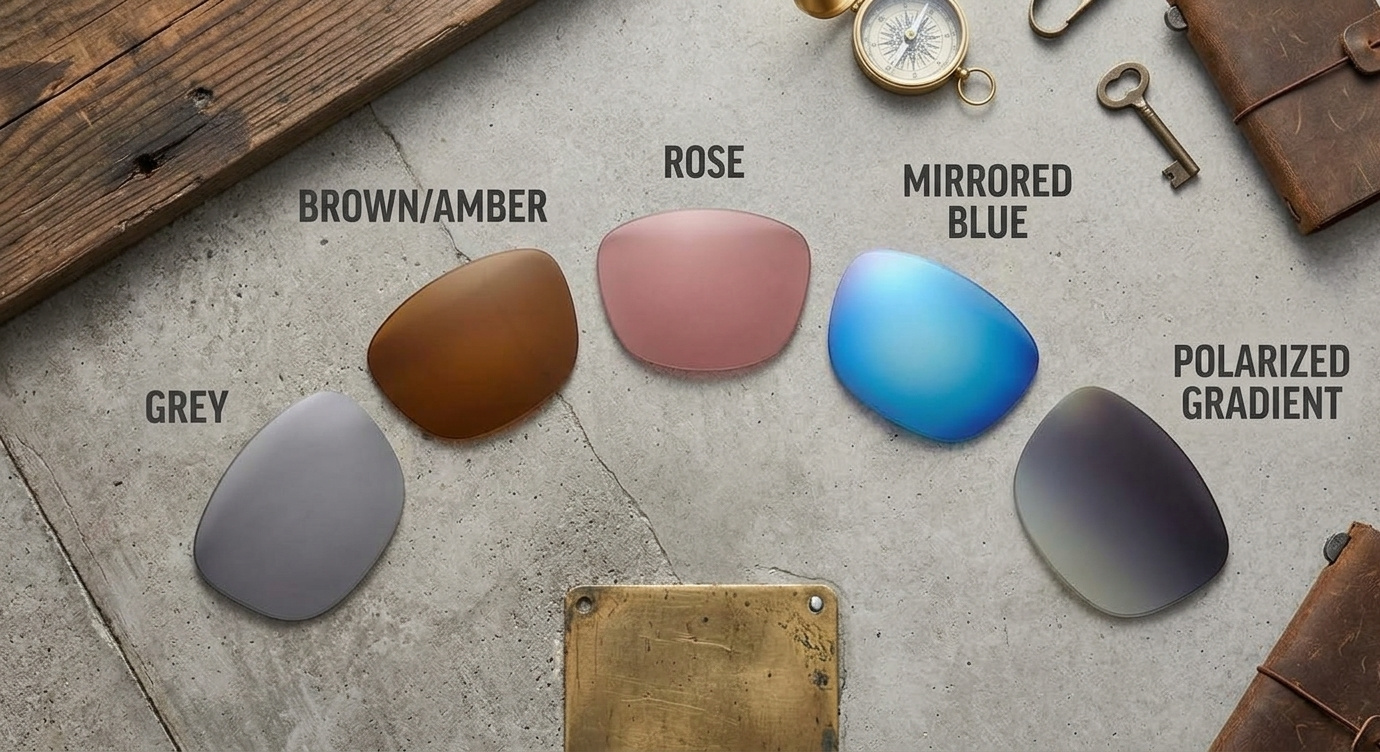
Here is a quick-reference framework I use when walking patients through lens selection, because the choice of tint is not arbitrary — it genuinely affects how your visual system performs in different conditions.
Grey lenses reduce overall brightness without shifting color perception, making them ideal for driving and general daytime use when you need accurate color recognition. Maui Jim’s Neutral Grey lens is an excellent execution of this. Amber and copper lenses — including Maui Jim’s HCL Bronze — enhance contrast and depth perception, which is why they are the go-to for variable conditions, trail sports, and golf. They make the world look “crisper,” which patients love until I explain that it is because the tint is enhancing contrast, not magically improving their acuity. Rose and Maui Rose tints are best for fast-moving sports because they maximize contrast differentiation — useful for tracking a ball or a moving target. Mirrored coatings, like Maui Jim’s Blue Hawaii, are primarily aesthetic but do add a layer of glare reduction at the lens surface in extremely bright conditions. And gradient lenses — darker at the top, lighter at the bottom — are ideal for driving, where you need protection from overhead sunlight while still being able to clearly read the dashboard.
Beyond tint, I always emphasize frame coverage with my patients. Wrap-style frames reduce peripheral UV exposure that a flat, fashion-forward frame simply cannot address. For patients with a history of macular degeneration, existing dry eye, or those who have had LASIK or cataract surgery, wraparound coverage is not optional — it is part of their post-procedure eye care protocol. When you come in for your comprehensive eye exam in Addison, Burbank, or Willowbrook, this is exactly the kind of conversation our team is here to have with you. Getting the right lens is not a luxury — it is part of managing your vision health over a lifetime.
Ready to Find the Right Pair?
Our team at The Eye Care Center carries a curated selection of performance and lifestyle sunglasses across all three Illinois locations. Whether you are looking for Maui Jim’s optical precision, Denon’s quiet luxury aesthetic, or guidance on smart eyewear and UV protection, we will help you make the right call for your eyes — not just your Instagram feed.
Schedule your comprehensive eye exam online or call us at 1-888-899-0816. We have locations in Addison (630-543-0607), Burbank (708-599-0050), and Willowbrook (630-969-2807), and we are open six days a week.
Frequently Asked Questions
What should I look for when buying sunglasses for UV protection?
The non-negotiable is 100% UV-A and UV-B protection, sometimes labeled UV400. Beyond that, I look for adequate frame coverage — wraparound styles are ideal because they prevent UV from entering peripherally. Polarization is a strong add-on for glare reduction, especially for driving and water activities, but it is the UV rating, not the lens darkness or polarization, that determines true eye protection.
Are Maui Jim sunglasses worth the price?
From a clinical and optical standpoint, yes. Maui Jim’s PolarizedPlus2 technology is a meaningful step above standard polarized lenses. The combination of glare elimination, anti-reflective treatment, and color enhancement is well-engineered, and the lens tint options are specific enough to match real lifestyle activities. If you spend significant time driving, on water, or doing outdoor sports, the investment is justified by genuine optical benefit — not just brand prestige.
What is Denon Eyewear and where can I find it?
Denon is a New York City-based independent luxury eyewear brand, founded in 2020, that designs frames blending vintage-inspired shapes with modern “quiet luxury” aesthetics. Their sunglasses use Italian acetate and UV-protected CR-39 lenses, and they are available at over 300 independent optical practices across the Midwest and East Coast, as well as online at denoneyewear.com. Their current standout sunglass models include the Carolyn, Gianna, and Remy.
Are Meta Ray-Ban smart glasses safe for my eyes?
The frames themselves do not pose a direct optical hazard. We currently carry three Gen 2 styles in our offices — the Wayfarer, Skyler, and Headliner — all of which are available with UV-protective sunglass lenses. That said, patients should confirm the lens specifications for whatever configuration they choose, and should not treat smart glasses as a substitute for a properly fitted UV-rated prescription sunglass. If you have specific optical needs — post-LASIK, macular concerns, or an existing prescription — have that conversation with us before purchasing.
Can I get Maui Jim or Denon sunglasses with my prescription?
Yes. Both brands accommodate prescription lenses. Maui Jim has a robust prescription sunglass program, and Denon offers prescription-ready optical frames in their sunglass styles. During your comprehensive eye exam at any of our three Illinois locations, we can walk you through which frame styles are compatible with your prescription and ensure proper optical centering, which matters far more than most patients realize when it comes to visual comfort.
How often should I replace my sunglasses?
The standard guidance is every two to three years, or sooner if you notice scratches on the lens surface, degraded polarization, or changes to the frame fit. Scratched lenses can distort vision in ways that cause subtle but real eye strain over time. If your prescription has changed, your sunglass lenses should be updated alongside your distance correction — wearing an outdated prescription in sunglasses is the same visual liability as wearing it in your regular frames.
Do smart glasses like Meta Ray-Ban work with prescription lenses?
This is an evolving area. The current Ray-Ban Meta lineup does support prescription lens inserts in some configurations, and Meta’s upcoming models — including the anticipated Scriber and Blazer — are expected to target prescription users more directly. However, as of now, the prescription experience in smart glasses is not equivalent to a traditional prescription sunglass fitting. I recommend waiting for broader optometric infrastructure around this category before making a prescription commitment to any smart frame.