
Myopia (nearsightedness) is becoming extremely common in kids, and most parents see the signs right away—your child squints at the board, sits close to the TV or tablet, or tells you things look fuzzy at a distance. The important thing to know is this: We don’t just “wait and see” anymore. We can actually slow myopia progression. That means fewer prescription jumps and healthier eyes long-term.
At Eye Care Ltd, I always start with what works best: Orthokeratology (Ortho-K). For younger children or for kids who aren’t ready to put something in their eye, I use Stellest lenses or low-dose atropine as excellent alternatives.
Quick Navigation
- Introduction
- Why Myopia Control Matters
- Treatment Options
- How We Choose the Right Treatment
- What to Expect at Your Visit
- Frequently Asked Questions
Why Myopia Control Matters
When a child’s prescription increases, it’s because the eye is physically growing longer. A longer eye comes with a higher risk of:
- Retinal tears
- Retinal detachment
- Early cataracts
- Glaucoma
- Myopic macular degeneration
By slowing myopia progression early, we can significantly reduce these long-term risks and protect your child’s vision for life.
Our Treatment Options
1. Ortho-K (Orthokeratology) — My First Choice
How it works: Worn at night, provides clear vision all day.
Best for: Kids ages 8+ who are comfortable with contact lenses
Benefits:
- No glasses or contacts during the day
- Perfect for sports and active lifestyles
- Excellent myopia control results
- Freedom and confidence for your child
2. Stellest Lenses
How it works: Specialty eyeglass lenses designed to slow myopia progression
Best for: Younger kids or those nervous about contact lenses
Benefits:
- Easy to use—just wear like regular glasses
- Effective myopia control
- Parent-friendly option
- No insertion or removal learning curve
3. Low-Dose Atropine
How it works: A simple nightly eye drop that slows myopia progression
Best for: All ages; works great alone or combined with other treatments
Benefits:
- Simple, quick application
- Can be combined with other treatments for enhanced results
- Proven effectiveness in clinical studies
- Minimal side effects at low doses
How We Choose the Right Treatment
Every child is different, and I personalize the approach based on your child’s age, comfort level, and how quickly their myopia is progressing:
Ages 8+ comfortable with lenses → Ortho-K
Younger or lens-averse children → Stellest or Stellest + Atropine
Fast progressors → Combination therapy (e.g., Ortho-K + Atropine or Stellest + Atropine)
What to Expect at Your Visit
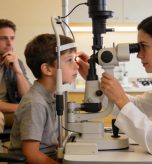
A comprehensive myopia control evaluation at Eye Care Ltd includes:
- Prescription check — Current vision assessment
- Axial length measurement — Measuring eye growth
- Corneal topography — Mapping the cornea surface
- Eye health exam — Complete health evaluation
- Personalized plan — Tailored treatment recommendation
Frequently Asked Questions
What age should my child start myopia control?
The earlier, the better! We can start myopia control as soon as myopia is detected, typically around ages 6-8. Early intervention provides the most benefit because we can slow progression before significant eye lengthening occurs.
Is Ortho-K safe for children?
Yes, when properly fitted and with good hygiene practices, Ortho-K is very safe for children. The lenses are FDA-approved, and we provide thorough training on insertion, removal, and care. Regular follow-up visits ensure everything stays healthy.
How quickly will I see results?
With Ortho-K, clear daytime vision typically occurs within the first week. For myopia control effectiveness, we measure progress over 6-12 months by tracking axial length and prescription changes. Most children show significantly slower progression compared to wearing regular glasses alone.
Can my child still play sports with these treatments?
Absolutely! In fact, Ortho-K is ideal for sports because your child won’t need any vision correction during the day. Stellest lenses are worn like regular glasses, and atropine drops don’t interfere with activities at all.
What if my child’s myopia is already high?
It’s never too late to start! While earlier intervention is ideal, myopia control can still help slow progression even if your child already has a higher prescription. This helps prevent it from getting even worse and reduces future eye health risks.
How much does myopia control cost?
Costs vary depending on the treatment option selected. During your consultation, we’ll discuss all options and associated costs. Many families find it’s a worthwhile investment in their child’s long-term eye health and quality of life.
Do I need to choose just one treatment?
Not necessarily. For children with rapidly progressing myopia, combination therapy (such as Ortho-K with atropine drops, or Stellest lenses with atropine) can provide enhanced control. Dr. Park will recommend the best approach for your child’s specific needs.
Ready to Take Control of Your Child’s Myopia?
Eye Care Ltd serves Addison, Burbank, and Willowbrook
Schedule a myopia control evaluation today.