Your Eye Pressure Number Sounds Normal — Here’s Why That Still Might Not Protect You From Glaucoma
By Dr. Quentin Park, O.D. | The Eye Care Center LTD
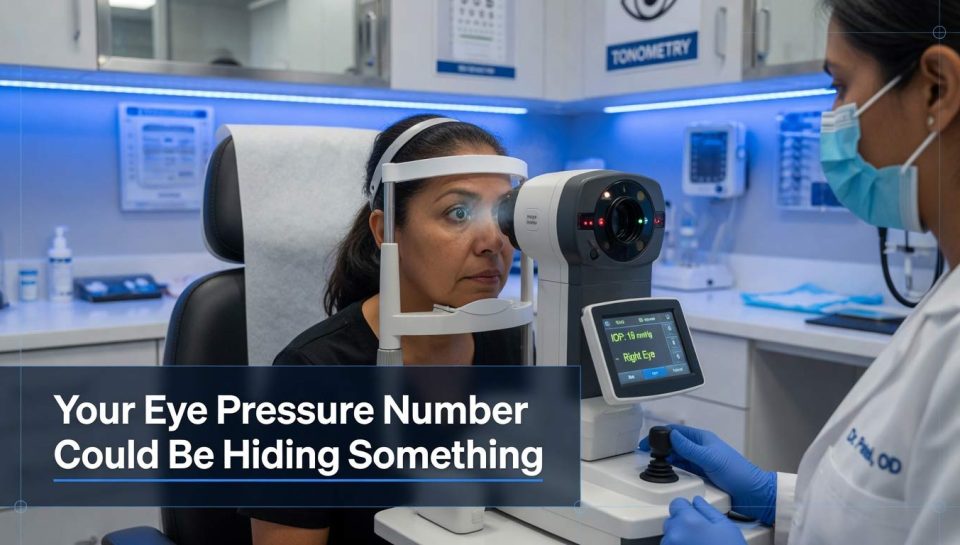
Every single day in my exam lane, I check eye pressure. It takes about two seconds, makes a little puff of air, and produces a number. Patients see that number and assume everything is either fine or not fine. The truth is more complicated than that, and it matters enormously for your long-term vision.
Glaucoma is often called “the silent thief of sight” because it steals your peripheral vision so gradually that most people don’t notice until meaningful, irreversible damage has already occurred. Intraocular pressure, or IOP, is one of the most important risk factors we track, but it is not the whole story. You can have normal eye pressure and still develop glaucoma. You can have elevated eye pressure and never develop it. Understanding what your numbers mean, what else we look at, and why annual eye exams are non-negotiable is the entire point of this article.
I’ve been screening patients across our Addison, Burbank, and Willowbrook locations for years, and the patients who fare best are the ones who understand their own eye health. Let’s walk through everything you need to know about eye pressure, glaucoma risk, and what we can do about it when we catch it early.
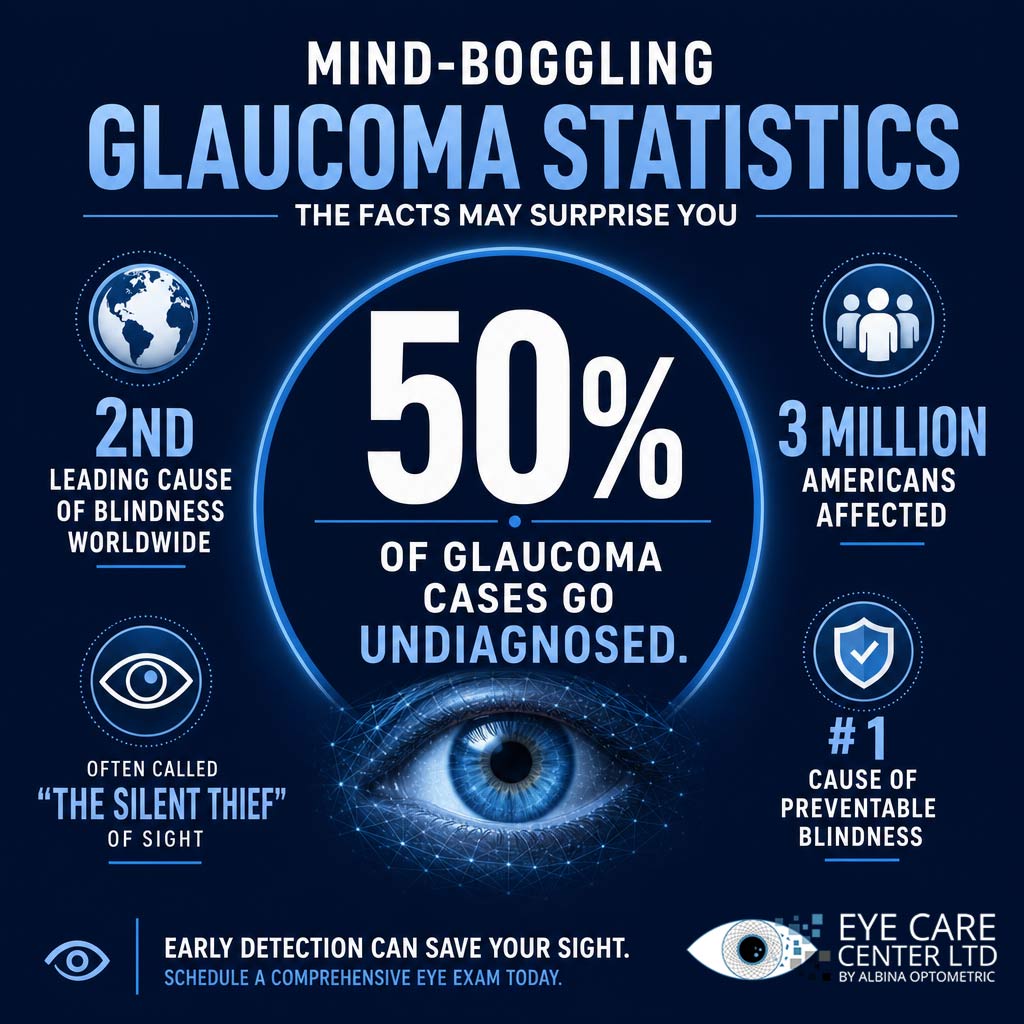
Mind-boggling fact: More than 3 million Americans have glaucoma, but approximately half of them don’t know it. Glaucoma is the second leading cause of blindness worldwide, and by the time most people notice vision changes, up to 40% of their optic nerve fibers may already be permanently damaged.
What is intraocular pressure?
Your eye is not a rigid structure. It’s a pressurized globe that requires a specific internal pressure to maintain its shape, focus light properly, and support healthy optic nerve function. The fluid that creates this pressure is called aqueous humor, a clear liquid produced by the ciliary body inside your eye. It flows through the pupil and drains out through a meshwork structure in the front of the eye called the trabecular meshwork.
When this drainage system works efficiently, the production and outflow of fluid stay balanced, and your intraocular pressure remains stable. When drainage slows for any reason, fluid builds up and pressure rises. Over time, elevated pressure damages the optic nerve, which is the cable connecting your eye to your brain. Once those nerve fibers are gone, they don’t come back.
IOP is measured in millimeters of mercury, or mmHg, the same unit used to measure blood pressure. We take this measurement at virtually every comprehensive exam, and for good reason: it is one of the most actionable early warning signs we have for glaucoma risk.
What your IOP numbers actually mean
The statistical normal range for intraocular pressure is between 10 and 21 mmHg. That said, “normal” is a population average, not a personal guarantee of safety. Here is how we interpret different readings in clinical practice.
A reading below 10 mmHg is considered low and is generally not a concern on its own, though it may warrant investigation if a patient also has vision changes or other symptoms. Readings between 10 and 21 mmHg fall within the statistically normal range, though as I’ll explain shortly, this does not rule out glaucoma for everyone. Readings consistently above 21 mmHg are classified as ocular hypertension, meaning elevated pressure without confirmed glaucomatous damage. This warrants close monitoring and sometimes treatment. Readings above 30 mmHg carry significantly elevated risk and typically require immediate management decisions.
What complicates the picture is that these thresholds are population averages. Some patients tolerate higher pressures without damage because their optic nerves are robust and their drainage is efficient. Others experience significant nerve damage at pressures well within the “normal” range. This is why pressure alone is only one piece of a much larger diagnostic puzzle.
The two main types of glaucoma
Not all glaucoma is the same, and the type matters enormously for how it presents, how it progresses, and how we treat it.
Primary open-angle glaucoma (POAG) is by far the most common form, accounting for roughly 90% of glaucoma cases in the United States. In POAG, the drainage angle between the iris and cornea remains open and anatomically normal, but the trabecular meshwork itself becomes less efficient over time. Fluid drains too slowly, pressure gradually rises, and the optic nerve sustains incremental damage. The critical problem with POAG is that it causes no pain, no obvious symptoms, and no change in central vision until the disease is significantly advanced. Peripheral vision goes first, and because our brains are extraordinarily good at compensating for peripheral losses, most patients don’t notice until they’ve lost a substantial amount of field.
Angle-closure glaucoma is far less common but far more dramatic. In this form, the iris physically blocks the drainage angle, causing a sudden spike in pressure. Acute angle-closure glaucoma is a medical emergency: patients experience severe eye pain, headache, nausea, halos around lights, and blurred vision. This requires immediate treatment to prevent permanent vision loss. Chronic angle-closure glaucoma can develop more slowly and mimic open-angle glaucoma in its symptom-free progression.
There are also secondary glaucomas, which develop as a consequence of other conditions such as eye injuries, prolonged steroid use, inflammation, or advanced cataracts. These require treatment of the underlying cause alongside management of the elevated pressure itself.
Why pressure alone doesn’t tell the whole story
This is the part of glaucoma care that surprises most patients. Normal-tension glaucoma is a real and surprisingly common condition in which patients develop classic glaucomatous optic nerve damage and visual field loss despite having intraocular pressures consistently in the normal range. It is particularly prevalent among people of East Asian descent, and it is one of the main reasons we never rely on a single IOP reading to rule out glaucoma.
On the other side of the equation, ocular hypertension refers to elevated IOP (above 21 mmHg) in the absence of any detectable optic nerve damage or visual field loss. Research from the Ocular Hypertension Treatment Study found that while elevated pressure does increase risk, roughly 90% of people with ocular hypertension never develop glaucoma over a five-year period. Managing this group requires careful, individualized decisions about whether to treat proactively or monitor closely.
The thickness of your cornea also plays a direct role in how we interpret IOP readings. Thicker corneas produce artificially higher pressure readings during tonometry, while thinner corneas produce artificially lower readings. We measure central corneal thickness (CCT) for exactly this reason, and we adjust our clinical interpretation of your IOP accordingly. A patient with a very thin cornea whose pressure reads 18 mmHg may actually have a higher true pressure than the measurement suggests, elevating their risk profile significantly.
What all of this means in practice is that glaucoma diagnosis and risk assessment require a comprehensive evaluation, not just a pressure check. We look at the optic nerve appearance, measure corneal thickness, evaluate the drainage angle, assess visual field, and in many cases use advanced imaging technology to detect structural changes before they manifest as measurable vision loss.
Who is at highest risk?
Several factors significantly elevate the probability that a patient will develop glaucoma or that glaucoma will progress more aggressively once present. Knowing your personal risk profile helps us determine how frequently you need to be seen and whether preventive treatment is appropriate.
Age is among the most significant factors. Glaucoma is relatively rare before age 40 but becomes increasingly common thereafter, affecting roughly 2% to 3% of people over 65. Family history is also a powerful predictor. First-degree relatives of people with glaucoma have a four to nine times higher lifetime risk, which means your parents’ and siblings’ eye health history is information I need to know at your exam.
Race and ethnicity matter significantly. People of African descent develop primary open-angle glaucoma at three to four times the rate of people of European descent, tend to develop it earlier, and experience faster progression on average. Individuals of East Asian descent have a higher prevalence of angle-closure and normal-tension glaucoma. Latino populations also carry elevated risk, particularly later in life.
Medical conditions including type 2 diabetes, cardiovascular disease, and migraines have all been associated with elevated glaucoma risk. High myopia (nearsightedness) is also a risk factor, as is a history of eye injury or prolonged use of corticosteroid medications, whether in eye drop form or systemic use. Patients who have been on steroid inhalers for asthma or oral steroids for conditions like rheumatoid arthritis should specifically mention this at their eye exam so we can monitor them appropriately.
How we test for glaucoma at Eye Care Center
A glaucoma workup at our practice goes well beyond the air puff. Here is what a thorough evaluation includes, and why each component matters.
Tonometry measures intraocular pressure and is typically the first step. We use non-contact tonometry (the air puff) for screening and Goldmann applanation tonometry for more precise measurements when needed. Goldmann is considered the gold standard and involves a gentle probe touching the numbed surface of the eye after anesthetic drops are applied.
Pachymetry measures central corneal thickness. This is a quick, painless test performed with an ultrasonic probe that touches the cornea for a fraction of a second. As described above, this measurement is essential for accurate interpretation of your IOP readings.
Gonioscopy evaluates the drainage angle between your iris and cornea. Using a specialized mirrored lens, we can directly visualize whether your angle is open or narrow or closed, which determines your glaucoma type and guides treatment decisions.
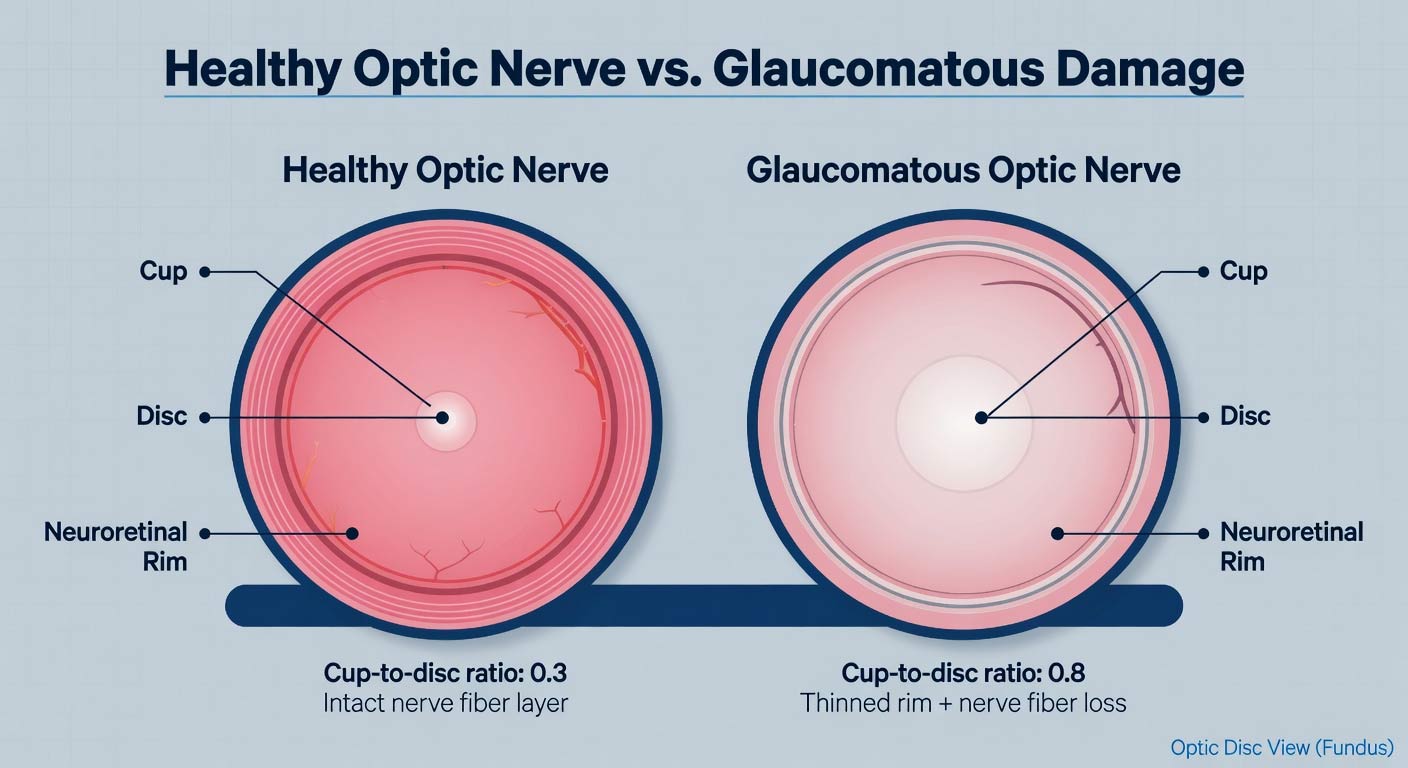
Optic nerve evaluation is performed using a slit lamp with a high-powered lens or a direct ophthalmoscope. We examine the optic disc carefully, assessing the cup-to-disc ratio, neuroretinal rim appearance, disc hemorrhages, and nerve fiber layer integrity. Changes in these structures often precede measurable visual field loss by years.
Visual field testing, or perimetry, maps your peripheral vision to detect the characteristic scotomas (blind spots) associated with glaucomatous nerve damage. This test requires patient participation and takes about five to seven minutes per eye.
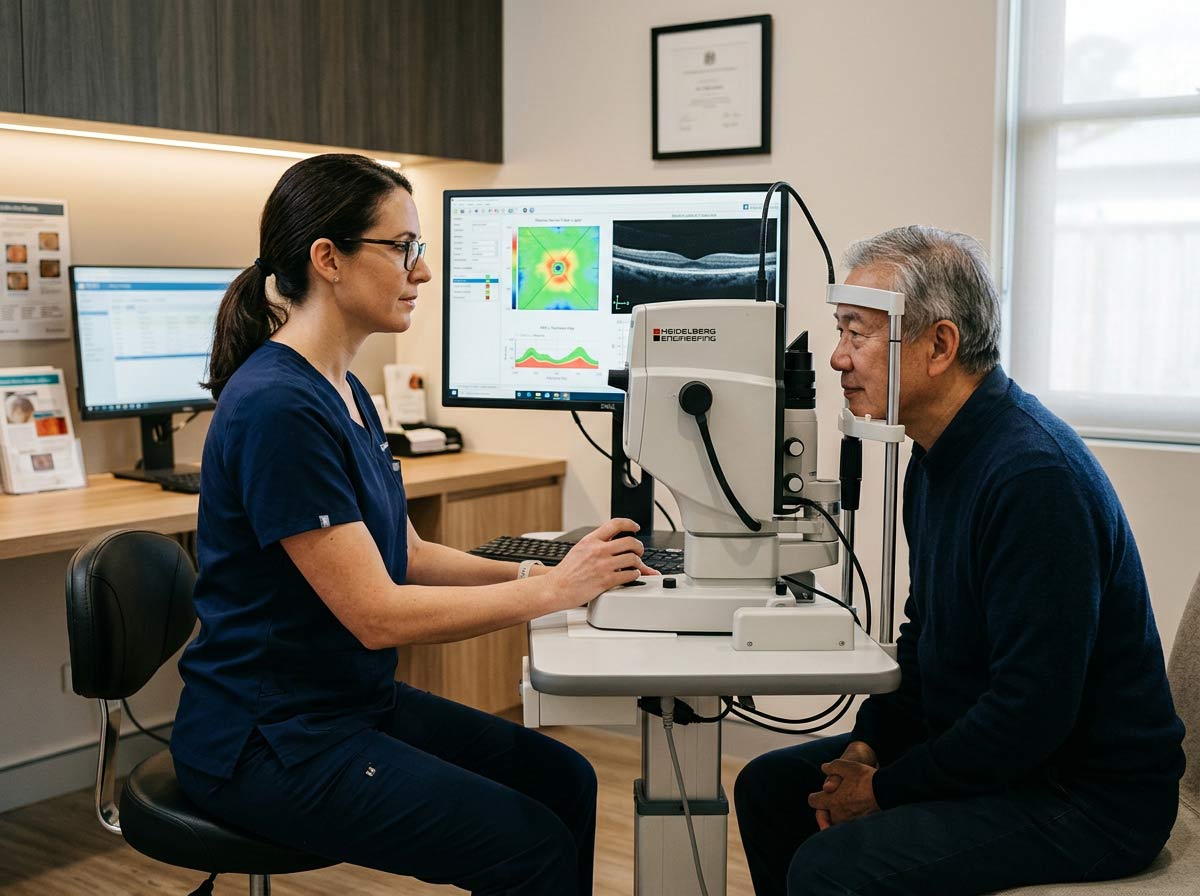
Optical coherence tomography (OCT) of the optic nerve and retinal nerve fiber layer is one of the most powerful tools in glaucoma management. OCT produces high-resolution cross-sectional images of the nerve fiber layer that are sensitive enough to detect structural thinning before it causes detectable visual field changes. We use this imaging routinely for glaucoma suspects and confirmed patients.
Patients in our Addison, Burbank, and Willowbrook locations have access to all of these diagnostic tools under one roof. If you have risk factors for glaucoma or haven’t had a comprehensive exam recently, schedule your evaluation today.
Glaucoma treatment options
There is currently no cure for glaucoma, and no treatment can recover vision that has already been lost. What treatment can do, and do very effectively when started early, is stop or dramatically slow further progression. The goal is to protect the vision you have.
Prescription eye drops are the first-line treatment for most glaucoma patients. These drops work either by reducing aqueous humor production or by improving drainage, both of which lower intraocular pressure. Prostaglandin analogs (such as latanoprost and bimatoprost) are typically the first choice because they are effective, require only once-daily dosing, and have a favorable side effect profile. Beta-blockers, alpha-agonists, and carbonic anhydrase inhibitors are other classes we use either as first-line therapy or in combination.
Laser therapy has become an increasingly important option over the past decade. Selective laser trabeculoplasty (SLT) uses short pulses of laser energy to stimulate the trabecular meshwork to drain more efficiently. It is performed in-office, takes about five minutes per eye, and can lower IOP by 20% to 30% in responsive patients. Because the laser does not damage tissue the way older laser treatments did, SLT can often be repeated. Many clinicians now consider SLT a first-line treatment alongside or even instead of drops in appropriate candidates.
Surgical options including minimally invasive glaucoma surgery (MIGS) and traditional filtering procedures such as trabeculectomy are reserved for cases where drops and laser have not achieved adequate pressure control. These procedures create new drainage pathways to bypass the blocked trabecular meshwork. MIGS procedures are increasingly used at the time of cataract surgery, offering simultaneous vision correction and pressure management with a favorable safety profile.
For patients on our end, the most important thing I can tell you is this: the patients who preserve their vision longest are the ones who show up consistently, take their drops as prescribed, and communicate with us when something changes. Glaucoma management is a lifelong partnership between you and your eye care team. We bring the technology and the clinical judgment; you bring the consistency.
We see patients for glaucoma monitoring at all three of our Illinois locations. Addison patients can reach us at (630) 543-0607, Burbank patients at (708) 599-0050, and Willowbrook patients at (630) 969-2807.
Protect Your Vision Before Glaucoma Gets a Head Start
Glaucoma steals vision silently, without warning, and without pain. The single most powerful thing you can do to protect yourself is get a comprehensive eye exam that includes a glaucoma evaluation. Our team at Eye Care Center LTD provides full glaucoma workups including tonometry, OCT imaging, visual field testing, and optic nerve evaluation at all three Illinois locations.
Schedule Your Glaucoma Evaluation
Addison: (630) 543-0607 | Burbank: (708) 599-0050 | Willowbrook: (630) 969-2807
Monday – Thursday 10am-6pm | Friday 10am-5pm | Saturday 9am-2pm
Want to learn more about protecting your long-term eye health? Read our guide on what happens during a comprehensive eye exam and our article on AMD and retinal disease .
Frequently asked questions about eye pressure and glaucoma
What is a normal eye pressure reading?
The statistical normal range for intraocular pressure is between 10 and 21 mmHg. However, normal for the population is not necessarily safe for every individual. Some people develop glaucoma at pressures well within this range, while others tolerate pressures above 21 mmHg without developing damage. Your optometrist evaluates pressure alongside other factors including optic nerve appearance, corneal thickness, and visual field results to assess your true risk.
Can glaucoma be cured?
There is currently no cure for glaucoma, and vision that has already been lost to glaucoma cannot be recovered. However, with early detection and consistent treatment, the vast majority of patients with glaucoma are able to maintain functional vision for their entire lives. The key is catching it before significant damage occurs, which is why regular comprehensive eye exams are essential.
Does high eye pressure always mean glaucoma?
No. Having intraocular pressure above 21 mmHg is called ocular hypertension, and while it is a risk factor, most people with elevated eye pressure never develop glaucoma. Conversely, a condition called normal-tension glaucoma causes optic nerve damage even in people with pressures in the normal range. Glaucoma diagnosis requires a full evaluation, not just a pressure reading.
What does glaucoma feel like?
Primary open-angle glaucoma, the most common form, causes no pain and no noticeable symptoms in its early and middle stages. Peripheral vision loss occurs gradually, and the brain compensates so effectively that most patients don’t notice anything unusual until the disease is significantly advanced. Acute angle-closure glaucoma is the exception, producing sudden severe eye pain, headache, nausea, and blurred vision, which is a medical emergency requiring immediate care.
How often should I be tested for glaucoma?
For most adults with no significant risk factors, annual comprehensive eye exams that include a glaucoma screening are appropriate. People with elevated risk factors, including family history of glaucoma, African descent, previous elevated IOP readings, or confirmed glaucoma suspects, should be seen more frequently, sometimes every three to six months depending on individual circumstances.
Can I use eye drops to treat glaucoma long term?
Yes, and millions of patients successfully manage glaucoma with daily prescription eye drops for decades. The key is consistent use as prescribed. Missing doses allows pressure to spike and can lead to faster progression. Some patients experience side effects like redness, irritation, or changes in eye or lash color, and there are many different medication options available if one type doesn’t suit you well. Always communicate any side effects to your eye doctor rather than stopping drops on your own.
Is glaucoma hereditary?
Yes. First-degree relatives of people with glaucoma have a significantly higher lifetime risk, estimated at four to nine times higher than the general population. If a parent or sibling has glaucoma, share that information at your eye exams so your doctor can adjust screening frequency and thresholds accordingly. Genetic testing for glaucoma is an active area of research but is not yet standard clinical practice.
What is the difference between an eye pressure check and a glaucoma exam?
An eye pressure check (tonometry) is one component of a glaucoma evaluation, but it is not sufficient on its own to diagnose or rule out glaucoma. A comprehensive glaucoma evaluation also includes assessment of the optic nerve, visual field testing, corneal thickness measurement, and often OCT imaging of the nerve fiber layer. At Eye Care Center, a complete glaucoma workup is incorporated into our comprehensive eye examinations.