The Back-to-School Eye Exam Checklist: Signs Your Child May Have a Vision Problem
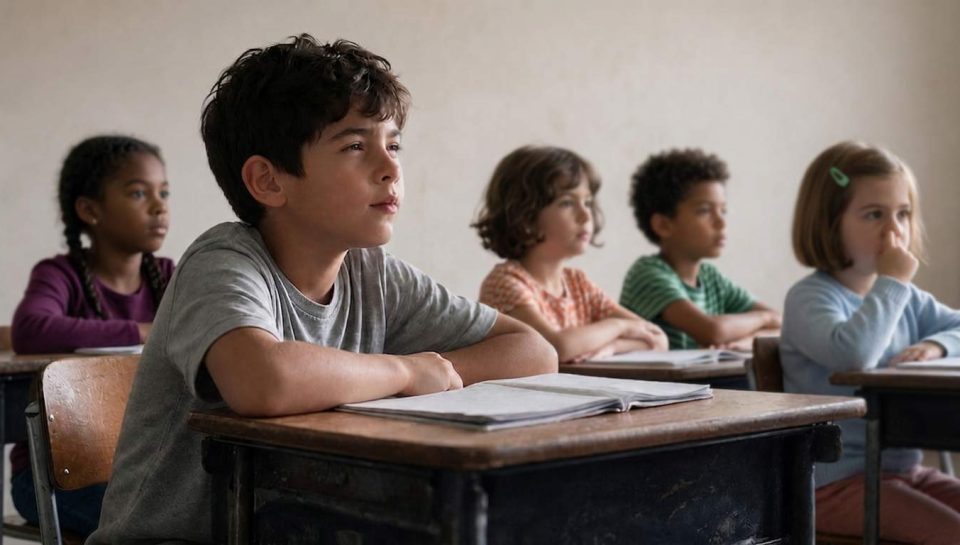
Backpacks are packed, supply lists are checked off, and sports physicals are scheduled. One item that quietly stays off most back-to-school lists is a comprehensive eye exam. Yet a large share of learning happens through a child’s eyes, and when vision is not up to the task, the signs are easy to miss. Children rarely announce that the board looks blurry or that reading gives them a headache. Most assume everyone sees the world the way they do, so they adapt without saying a word.
That is what makes a back-to-school eye exam so valuable. It catches problems a child cannot describe and a busy morning cannot reveal, before those problems start affecting grades, confidence, and how much your child enjoys the school day. This checklist walks through the connection between vision and learning, the signs worth watching for at home, and why a thorough exam finds what a quick screening can miss.
In this article

Why vision and learning are closely connected
Reading, copying from the board, following a lesson on a screen, and finishing homework all depend on more than seeing clearly at a distance. They rely on a set of visual skills working together, including focusing, eye teaming, tracking across a line of text, and depth perception. When one of these skills is off, school starts to feel harder than it should, and the cause is not always obvious.
This is where many parents are surprised. The signs of a vision problem often look like something else entirely. A child who seems distracted, avoids reading, tires quickly during homework, or struggles to concentrate may not have an attention or motivation issue at all. They may simply be working much harder than their classmates to see comfortably. Ruling vision in or out early gives your child the clearest possible path to a good year.
Signs your child may have a vision problem
Children adapt to blurry or uncomfortable vision so smoothly that parents may not notice anything is wrong. Watch for these common signs:
- Sitting close to the screen or holding books near the face – a frequent sign of nearsightedness.
- Squinting or tilting the head to see – an attempt to sharpen a blurry image.
- Frequent eye rubbing or complaints of tired eyes – a signal of eye strain or focusing effort.
- Headaches late in the school day – often tied to sustained near work.
- Losing place while reading or skipping lines – a possible tracking or eye-teaming issue.
- Avoiding reading or homework – sometimes a response to discomfort rather than disinterest.
- Short attention span during close-up tasks – the visual system tiring before the child does.
Any one of these signs on its own does not mean your child has a serious eye condition. What they share is a simple message: it is worth having your child’s eyes checked. Parents often first notice these patterns when homework becomes a nightly struggle or when a teacher mentions a change in focus or reading confidence. A comprehensive exam can confirm whether vision is part of the picture and, if so, address it before it shapes how your child feels about school.
Why a school screening is not enough
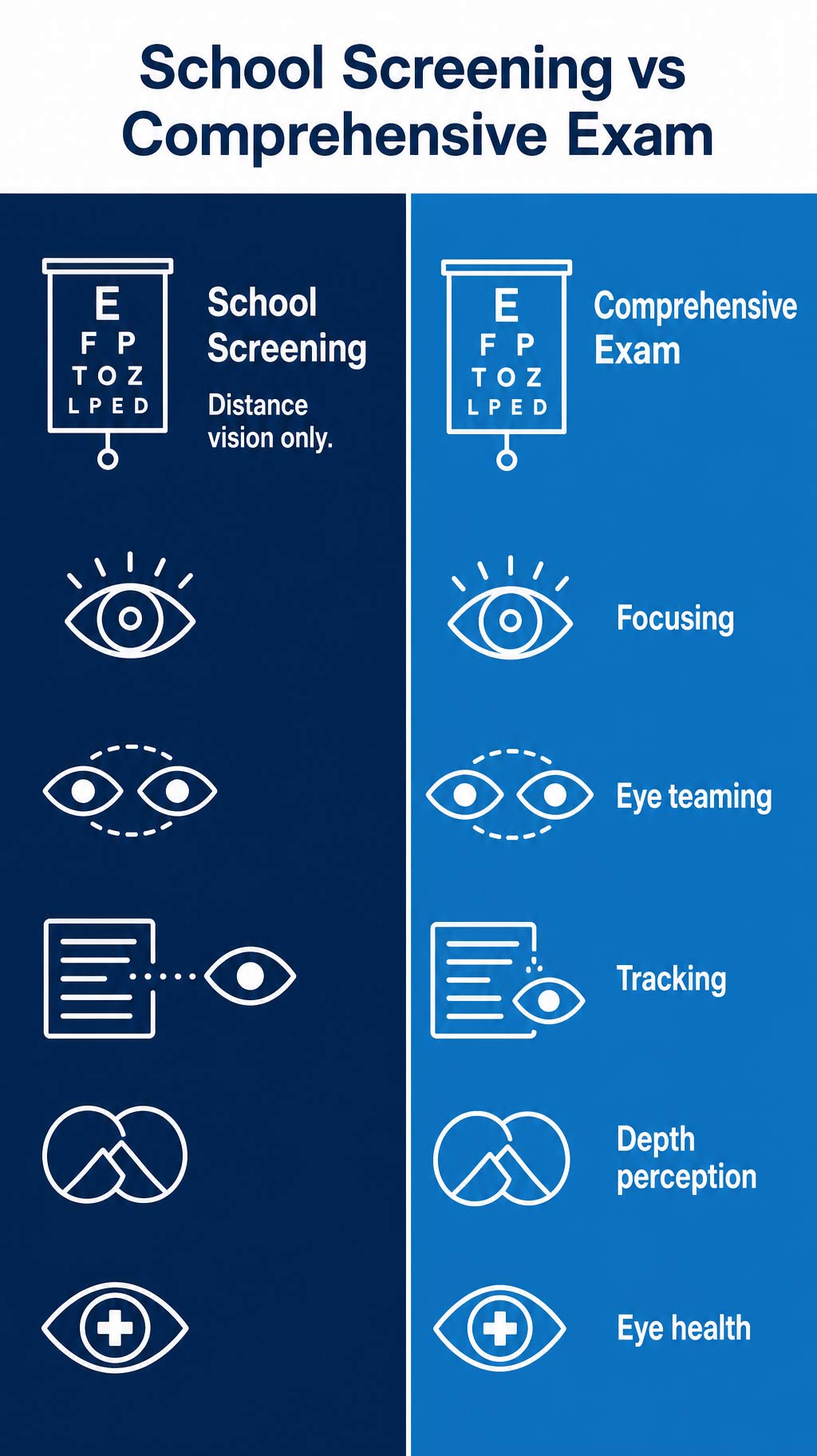
School screenings serve a purpose, but they are designed to be fast, not thorough. A typical screening checks distance vision with a letter chart and little else. A child can pass that check and still have a focusing problem, an eye-teaming issue, uncorrected farsightedness, or early nearsightedness that a chart at one distance will not reveal.
A comprehensive eye exam is a different level of care. Your optometrist evaluates how the eyes focus and work together, how they track across a page, depth perception, and the overall health of the eye, alongside a full check of your child’s prescription needs. That fuller view is how subtle problems get caught, which is why a passed screening is not a reason to skip a real exam. If your child has never had a comprehensive exam, back-to-school season is an ideal time to schedule one.
The link to nearsightedness and why early detection matters
Myopia, or nearsightedness, has become increasingly common among children. A child with myopia usually sees nearby objects clearly but struggles to see the board, presentations, and scoreboards. Because myopia tends to progress as children grow, catching it early gives your optometrist the chance to monitor changes over time rather than reacting after vision has already shifted significantly.
Early detection also opens the door to myopia management, a set of approaches designed to help slow how quickly nearsightedness advances during childhood. At The Eye Care Center, our Little Eyes, Big Smiles program is built around this goal, pairing careful monitoring with treatment options suited to your child. A back-to-school exam is often the moment these conversations begin, well before a small change becomes a larger one.
When to schedule your child’s exam
Families already fold annual physicals and sports forms into their back-to-school routine, and a comprehensive eye exam belongs on that same checklist. Scheduling before the school year settles into full swing means any needed glasses or follow-up care is in place when it matters most, rather than weeks into the term after a child has already been struggling to keep up.
Children can have their eyes examined far earlier than many parents realize, and the exam is tailored to a child’s age and comfort. Your child does not need to know every letter of the alphabet to have their vision checked, because eye doctors use age-appropriate tools and techniques. The goal is simple: clear, comfortable vision that lets your child read, learn, and take part with confidence.
Give your child a clear start to the school year.
Schedule a comprehensive back-to-school eye exam at The Eye Care Center. We welcome families across the Chicagoland area at our three convenient locations, and we are always happy to answer your questions. Se habla espanol.
Book online: Request an appointment
Call us: 1-888-899-0816
Addison: 1250 W Lake St #19c, (630) 543-0607
Burbank: 8525 S Harlem Ave, (708) 599-0050
Willowbrook: 6300 Kingery Hwy #116, (630) 969-2807
Hours: Mon to Thu 10am to 6pm, Fri 10am to 5pm, Sat 9am to 2pm
Frequently asked questions
At what age should my child have their first eye exam?
Children can have comprehensive eye exams much earlier than many parents expect, and exams are adapted to a child’s age and stage of development. If your school-aged child has never had a comprehensive exam, back-to-school season is a great time to schedule one. Your optometrist can recommend the right ongoing schedule based on your child’s needs.
How is a comprehensive eye exam different from a school vision screening?
A school screening is a quick check of distance vision, usually with a letter chart. A comprehensive exam goes much further, evaluating focusing, eye teaming, tracking, depth perception, and overall eye health along with your child’s prescription. That fuller picture is how subtle problems get caught that a screening can miss.
Can vision problems really affect my child’s grades?
They can. When seeing clearly and comfortably takes extra effort, children may tire quickly, lose their place while reading, or avoid close-up work. Because these signs can resemble attention or learning concerns, an eye exam is a useful step in understanding whether vision is part of the picture.
My child passed the school screening. Do they still need an exam?
Yes. A child can pass a distance-vision screening and still have a focusing or eye-teaming issue, uncorrected farsightedness, or early nearsightedness. A comprehensive exam checks for the problems a screening is not designed to detect.
How often should school-aged children have eye exams?
Many school-aged children benefit from a yearly comprehensive exam, since their eyes and vision change as they grow. Children with existing vision needs or risk factors may need to be seen more often. Your optometrist can set the right schedule for your child.