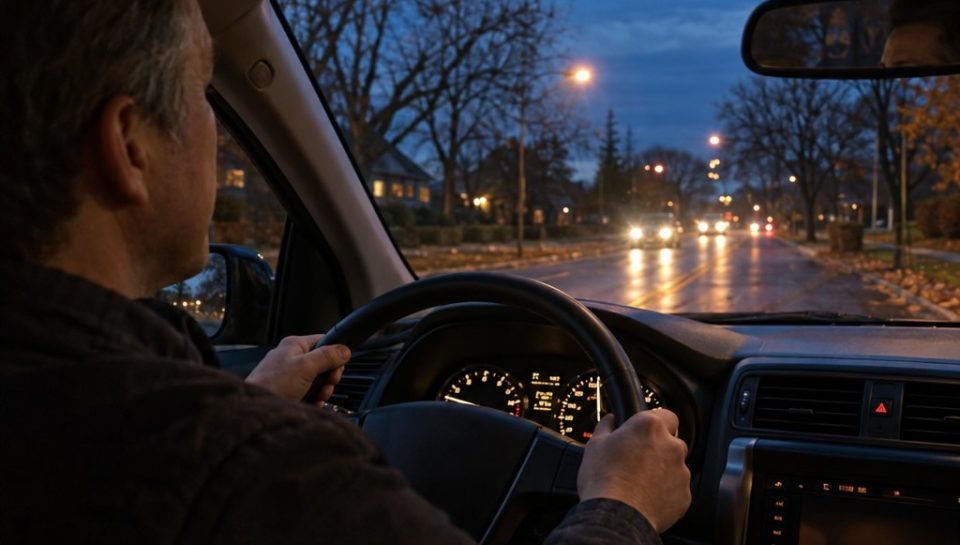
The clocks fell back on November 1, and now the drive home happens in full darkness by about 4:30. If oncoming headlights seem harsher this year, if streetlights wear fuzzy rings around them, or if you find yourself squinting at road signs you used to read with ease, you are not imagining it.
Some of that is simply what happens to every pair of eyes after sunset. But glare and halos can also be early signs of a common, very manageable eye condition, like astigmatism, dry eye, or a developing cataract. With Thanksgiving travel around the corner, here is how to tell the difference between normal night vision and something worth getting checked.
In this article
Why Night Driving Feels Harder This Time of Year
When daylight saving time ends, a big share of Chicagoland’s commuting shifts into darkness almost overnight. The evening rush on I-55, I-294, and Route 83 now happens under headlights, and Thanksgiving trips often mean long stretches of unlit highway after a full day of travel. Late fall adds its own problems: rain and early slush leave a film on windshields, and wet pavement bounces headlight glare right back at you.
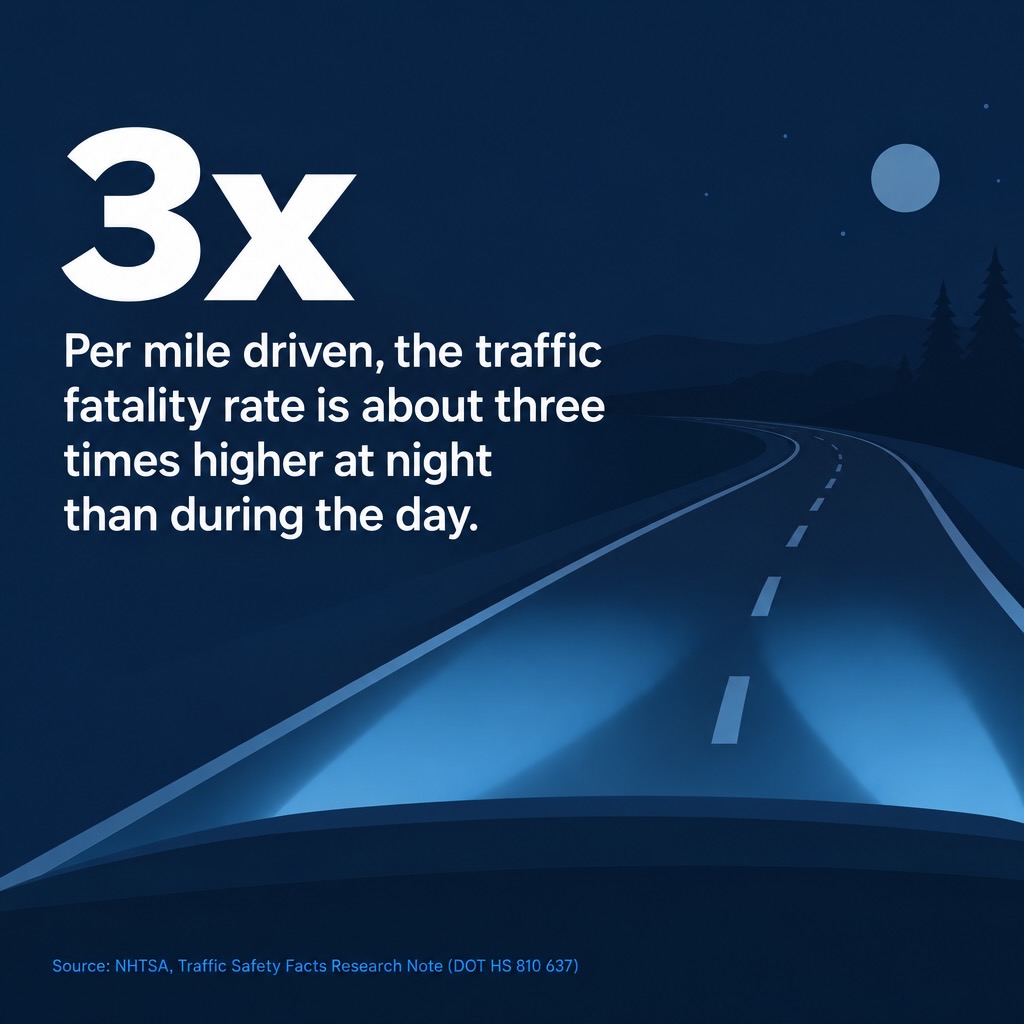
The stakes are real. According to the National Highway Traffic Safety Administration (NHTSA), the traffic fatality rate per mile driven is about three times higher at night than during the day. Fatigue and impaired drivers play a part, but reduced visibility is a big piece of the picture, and visibility is something your eyes have a lot to say about.
What Your Eyes Go Through After Dark
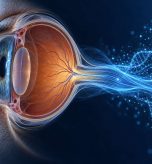
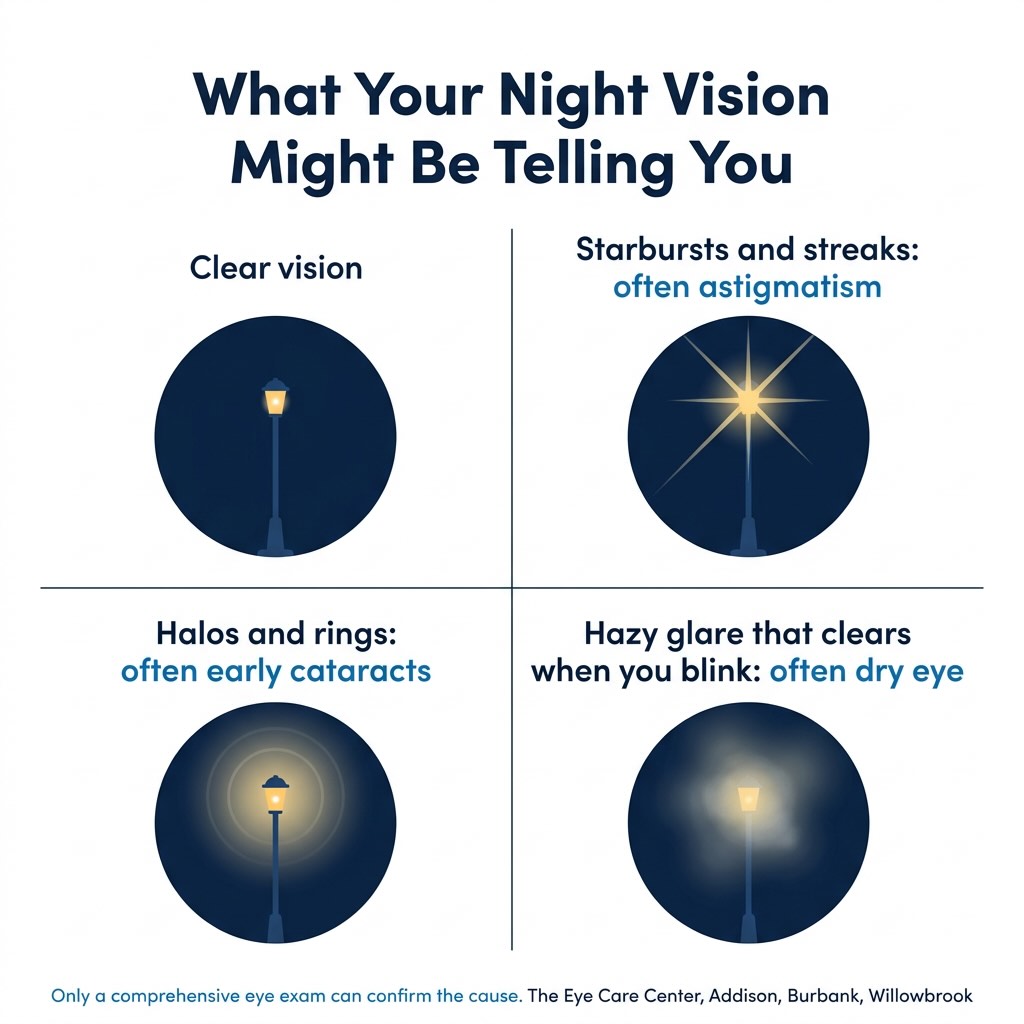
In low light, your pupils widen to let in as much light as possible. That helps you see, but it also means light passes through the outer edges of your cornea and lens, where tiny irregularities are more likely to scatter it. A small focusing issue that goes unnoticed at noon can show up at night as starbursts, streaks, or rings around every light.
Your eyes also lean more on the cells that handle dim light, which see less sharply and pick up less color. And as we age, pupils tend to get smaller and the natural lens grows less clear, so older eyes take in less light and take longer to recover after bright headlights pass. Some decline in night vision over the years is normal. A noticeable change from one winter to the next is not something you should just accept.
Common Causes of Glare and Halos
- Uncorrected astigmatism: lights look streaked or star-shaped.
- Outdated prescription: mild blur that daylight hides.
- Dry eye: an uneven tear film scatters incoming light.
- Early cataracts: a clouding lens spreads light into halos.
- Worn or scratched lenses: surface reflections add extra glare.
- Dirty windshield: film and pitting blur oncoming headlights.
Astigmatism means the front of the eye is curved more like a football than a basketball, so light focuses unevenly. Even a mild amount that is not fully corrected can turn headlights into long streaks at night. If that sounds familiar, our guide to astigmatism and blurry vision explains how it is measured and corrected.
Prescriptions also drift gradually, and some people become slightly more nearsighted in dim light. A pair of glasses that feels fine at your desk may leave you just a little short at night, which is exactly when you need every bit of clarity.
Dry eye is a big one in a Chicago winter. Furnace season starts now, and a car heater blowing toward your face dries the tear film quickly. When that film breaks up, the surface of your eye stops acting like a smooth window and starts scattering light. The telltale sign is vision that clears up for a moment after you blink.
Cataracts are extremely common with age. The National Eye Institute reports that by age 80, more than half of Americans either have a cataract or have had cataract surgery. Glare, halos around lights, faded colors, and poor night vision are classic early symptoms. Because cataracts form slowly, many people adjust without realizing how much their vision has changed.
Finally, do not overlook the simple stuff. Old lenses without an anti-reflective coating, scratches from years of wear, and a hazy film on the inside of your windshield all add glare on top of whatever your eyes are already doing.
When It’s More Than Just the Dark
It is time to book an eye exam if glare has gotten worse over the past few months, if halos show up in one eye more than the other, or if you see double out of one eye. The same goes for trouble seeing in dim restaurants or at home in the evening, not just behind the wheel. A good gut check: if you have started avoiding night driving, or someone you love has quietly started offering to drive after dark, your eyes deserve a closer look.
Some changes should not wait for a routine visit. Sudden blurry vision, a shower of new floaters or flashes of light, a shadow or curtain across your vision, or eye pain with redness all need same-day attention. Call us right away, or go to the emergency room if you cannot reach a doctor.
Health conditions matter too. Diabetes, for example, can affect the retina and how your eyes handle changing light, which is one more reason people with diabetes need a yearly dilated exam even when they feel like they see fine.
What Actually Helps, and What Doesn’t
The right fix depends on the cause, which is why it helps to find the cause first. An updated prescription that fully corrects astigmatism often makes a dramatic difference on its own. Anti-reflective lenses are another strong option: the coating cuts down reflections on the front and back of your lenses, so more light reaches your eyes and less bounces around as glare. We carry anti-reflective lenses at all three of our locations and can recommend the right option for your prescription.
For dry eye, treatment can range from the right kind of eye drops to in-office therapies, and small habits help too, like pointing car vents away from your face. If a cataract is behind your symptoms, we will monitor it over time and refer you to a trusted surgeon when it starts interfering with daily life. If you have had LASIK or SMILE and notice new halos, we co-manage both procedures and can evaluate what is going on.
One thing that does not help much: yellow “night driving” glasses. A 2019 driving simulator study published in JAMA Ophthalmology found that yellow-lens glasses did not improve drivers’ ability to spot pedestrians at night, with or without headlight glare. Any tint reduces the amount of light reaching your eyes, which is the opposite of what you need after dark.
A few practical habits round things out. Keep the inside and outside of your windshield clean, replace streaky wiper blades, dim your dashboard lights, and when a bright car approaches, shift your gaze toward the right edge of your lane instead of looking into the headlights.
Why a Comprehensive Exam Beats a Quick Screening
A basic vision screening usually means reading a chart in a brightly lit room, which is the easiest possible condition for your eyes. It can miss the very problems that show up at night. A comprehensive eye exam goes further: a careful refraction to fine-tune your prescription, including any astigmatism, a look at the quality of your tear film, and a dilated view of your lens and retina to check for early cataracts and other changes.
When you come in, tell your doctor specifically that night driving has gotten harder. Describe what you see, whether it is streaks, rings, or general haze, and when it happens. That detail helps us pinpoint the cause and choose the right solution, so your drive home feels safe and comfortable again.
Don’t let glare and halos keep you off the road after dark.
Book a comprehensive eye exam at any of our three Chicagoland locations in Addison, Burbank, or Willowbrook, and let’s find out what is behind your night vision changes. Se habla espanol.
Book online: Request an appointment
Call us: 1-888-899-0816
Addison: 1250 W Lake St #19c, (630) 543-0607
Burbank: 8525 S Harlem Ave, (708) 599-0050
Willowbrook: 6300 Kingery Hwy #116, (630) 969-2807
Hours: Mon to Thu 10am to 6pm, Fri 10am to 5pm, Sat 9am to 2pm
Frequently Asked Questions
Why do I see halos around lights at night?
Halos happen when light scatters before it focuses on the back of your eye. Common causes include uncorrected astigmatism, an outdated prescription, dry eye, and early cataracts. Your pupils widen in the dark, which makes these issues more noticeable at night than during the day.
Is it normal for night vision to get worse with age?
Some decline is normal, because pupils get smaller and the lens becomes less clear over time. But a noticeable change over a few months, or glare that makes you avoid driving at night, is worth a comprehensive eye exam to rule out cataracts and other treatable causes.
Do yellow night driving glasses work?
The evidence says no. A 2019 driving simulator study in JAMA Ophthalmology found yellow-lens glasses did not help drivers see pedestrians better at night. Tinted lenses reduce the light reaching your eyes, which can make night vision worse.
Can anti-reflective lenses help with night driving glare?
Yes. An anti-reflective coating reduces reflections on the front and back of your eyeglass lenses, so more light reaches your eyes and less becomes distracting glare. It works best paired with an up-to-date prescription.
When should I see an eye doctor about night driving problems?
Book an exam if glare or halos are getting worse, appear mostly in one eye, or cause you to avoid driving after dark. Sudden vision changes, new flashes or floaters, a shadow across your vision, or eye pain need same-day care.