Beyond Eye Drops: Why Radio Frequency and IPL Are Revolutionizing Dry Eye Treatment in 2025
You’ve tried every eye drop at CVS. You’ve used warm compresses. You’ve taken omega-3 supplements. You’ve even changed your diet, adjusted your workstation, and bought a humidifier for your desk. And still, by 2 PM every day, your eyes feel like someone threw sand in them.
Your eye doctor keeps handing you samples of different drops and telling you to “use them more frequently.” But you’re already using drops 8-10 times a day, and frankly, you’re exhausted by the constant maintenance of a problem that never actually gets better.
Here’s what nobody’s telling you: if you have meibomian gland dysfunction (MGD) – which causes 86% of dry eye cases – drops are just treating the symptom, not the disease. You need to restore your oil gland function, not just add more moisture to a system that can’t retain it.
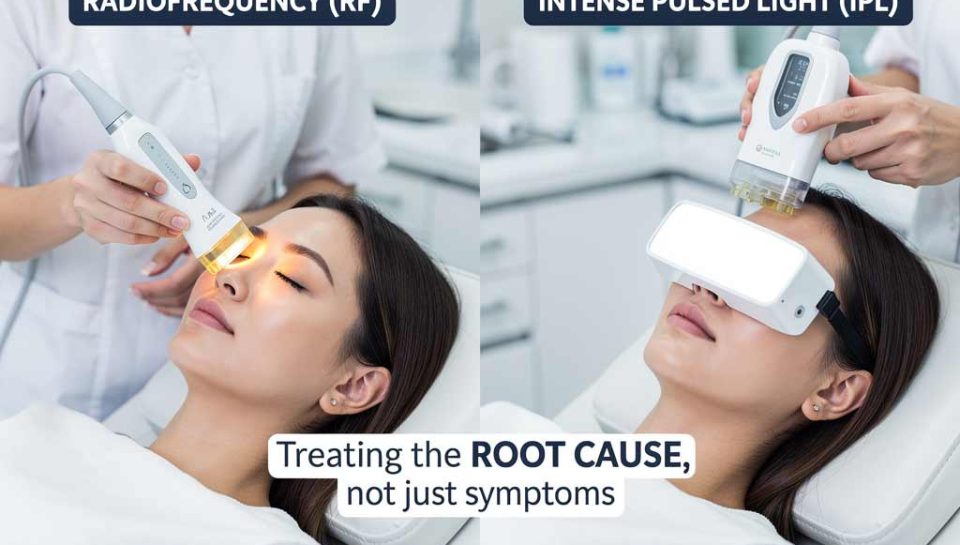
That’s where radiofrequency (RF) and intense pulsed light (IPL) come in. These FDA-approved treatments actually fix the underlying problem by improving your meibomian gland function, and they’re producing results that eye drops simply cannot match.
Let me explain exactly how these treatments work, who they help, what to expect, and why 2025 might be the year you finally get lasting relief from chronic dry eye.
The Problem Eye Drops Can’t Solve
Before we dive into RF and IPL, let’s make sure we understand why drops alone aren’t working for you.
Meibomian Gland Dysfunction: The Root Cause
Your tears aren’t just water. They’re a three-layer system:
- Mucin layer (innermost): Helps tears stick to your eye
- Aqueous layer (middle): The watery component
- Lipid layer (outer): An oily film that prevents evaporation
That outer lipid layer is produced by meibomian glands – about 30-40 tiny oil glands along your upper eyelid and 20-30 along your lower lid. They secrete oil with every blink, sealing in your tears.
In MGD, these glands become clogged, inflamed, or atrophied. The oil they produce (if they produce it at all) is thick, paste-like, and ineffective. Your tears evaporate 4-16 times faster than they should.
Why Drops Are Like Filling a Bathtub with the Drain Open
Eye drops add moisture – they’re filling the “bathtub.” But if your lipid layer is dysfunctional (the “drain is open”), those drops evaporate in minutes. You’re in a constant cycle of adding moisture that immediately disappears.
This is why people use drops 10-15 times a day and still struggle. The drops provide temporary relief but don’t address why your tears aren’t staying on your eyes in the first place.
What You Need Instead
To solve MGD, you need to:
- Unclog the blocked glands so oil can flow
- Reduce inflammation damaging the glands
- Improve oil quality so it actually works
- Restore gland function for long-term relief
That’s what RF and IPL do – and why they’re revolutionizing dry eye treatment.
IPL Therapy: Using Light to Heal Your Eyes
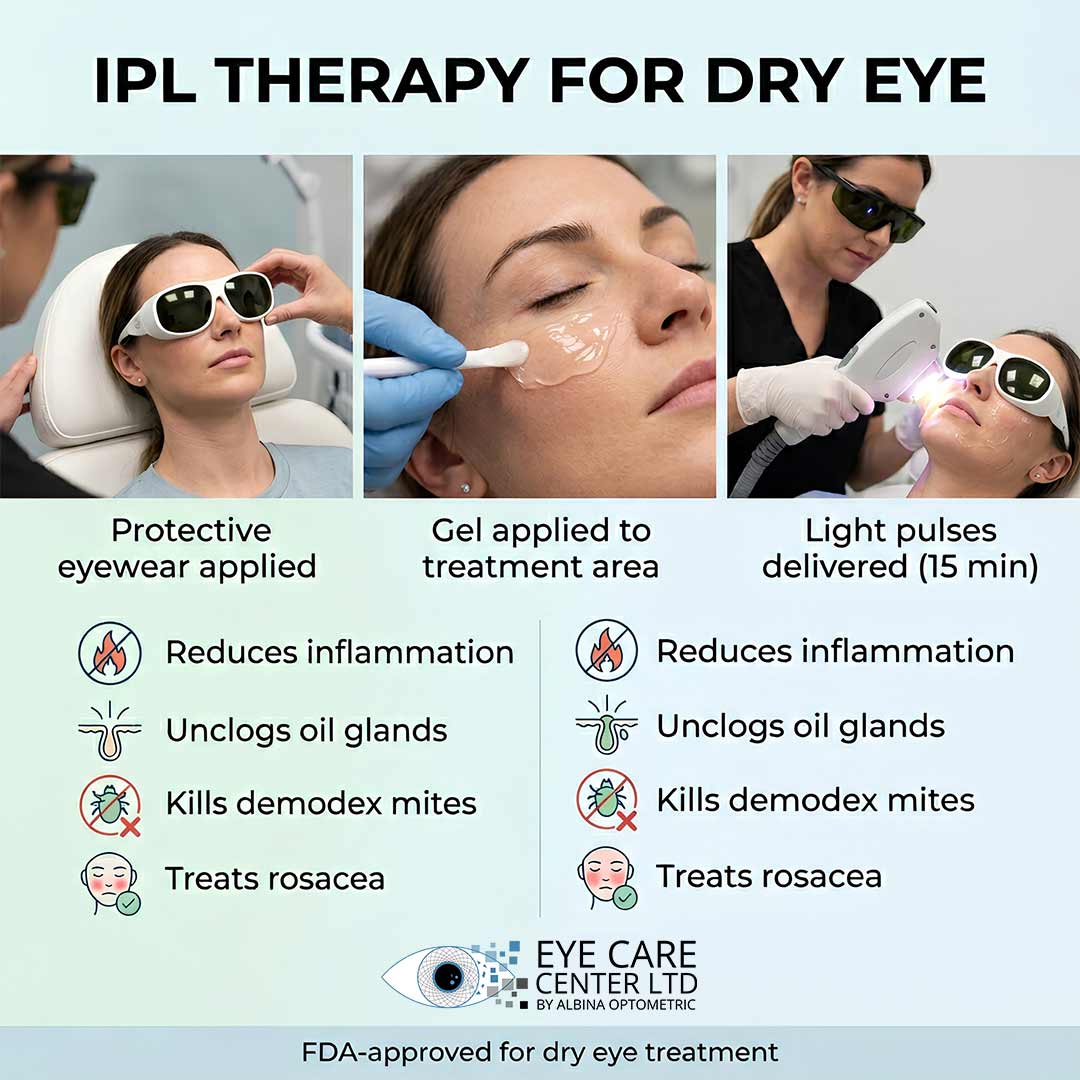
Intense Pulsed Light (IPL) therapy was originally developed for dermatology – treating rosacea, spider veins, sun damage, and age spots. Then eye care professionals discovered something remarkable: it also dramatically improved dry eye symptoms, particularly in patients with MGD and ocular rosacea.
How IPL Works (The Science)
IPL uses controlled pulses of broad-spectrum light (500-1200nm wavelength) delivered to the skin around your eyes – specifically the cheeks and areas near the eyelids.
Here’s what happens at the cellular level:
1. Reduces Inflammation
The light energy decreases inflammatory mediators (cytokines, matrix metalloproteinases) that damage meibomian glands. Less inflammation = healthier gland function.
2. Treats Abnormal Blood Vessels
IPL targets telangiectasia – the tiny dilated blood vessels along your eyelid margins that contribute to inflammation. The light energy causes these vessels to coagulate and be reabsorbed by the body.
3. Liquefies Blocked Oil
The heat from light absorption melts the thick, solidified oil clogging your meibomian glands. After treatment, we perform gland expression to clear out this liquefied oil.
4. Kills Demodex Mites
These microscopic mites live in eyelash follicles in about 50% of adults. They contribute to inflammation and MGD. IPL significantly reduces demodex populations.
5. Treats Ocular Rosacea
If you have facial rosacea (redness, visible blood vessels), you likely have ocular rosacea – inflammation affecting your eyes and contributing to dry eye. IPL treats both simultaneously.
The IPL Treatment Protocol
A typical IPL series at Eye Care Center consists of:
Initial treatment series: 4 treatments spaced 2-4 weeks apart
Each treatment takes about 15 minutes and involves:
- Protective eyewear application
- Conducting gel applied to treatment areas
- Light pulses delivered to cheeks and periorbital areas (feels like warm rubber band snaps)
- Gel removal
- Meibomian gland expression to clear liquefied oil
Maintenance: Many patients return every 6-12 months for maintenance treatments to sustain benefits
Who Benefits Most from IPL
- Patients with ocular or facial rosacea
- Moderate to severe MGD with thick gland secretions
- Visible blood vessels along eyelid margins
- Demodex infestation
- Chronic inflammation despite conventional treatments
- Light to medium skin tones (Fitzpatrick I-IV)
IPL Limitations
Skin tone restrictions: IPL works by targeting melanin and hemoglobin (red color in blood vessels). Very dark skin (Fitzpatrick V-VI) absorbs too much energy, making IPL unsafe. Radiofrequency is a better option for darker skin tones.
Not for everyone: Contraindicated if you’re pregnant, taking photosensitizing medications, have certain skin conditions, or have a history of keloid scarring.
Cost: Typically not covered by insurance. Expect $300-600 per treatment, so a full series might run $1,200-2,400.
Radiofrequency: Precision Heat Therapy for Your Meibomian Glands
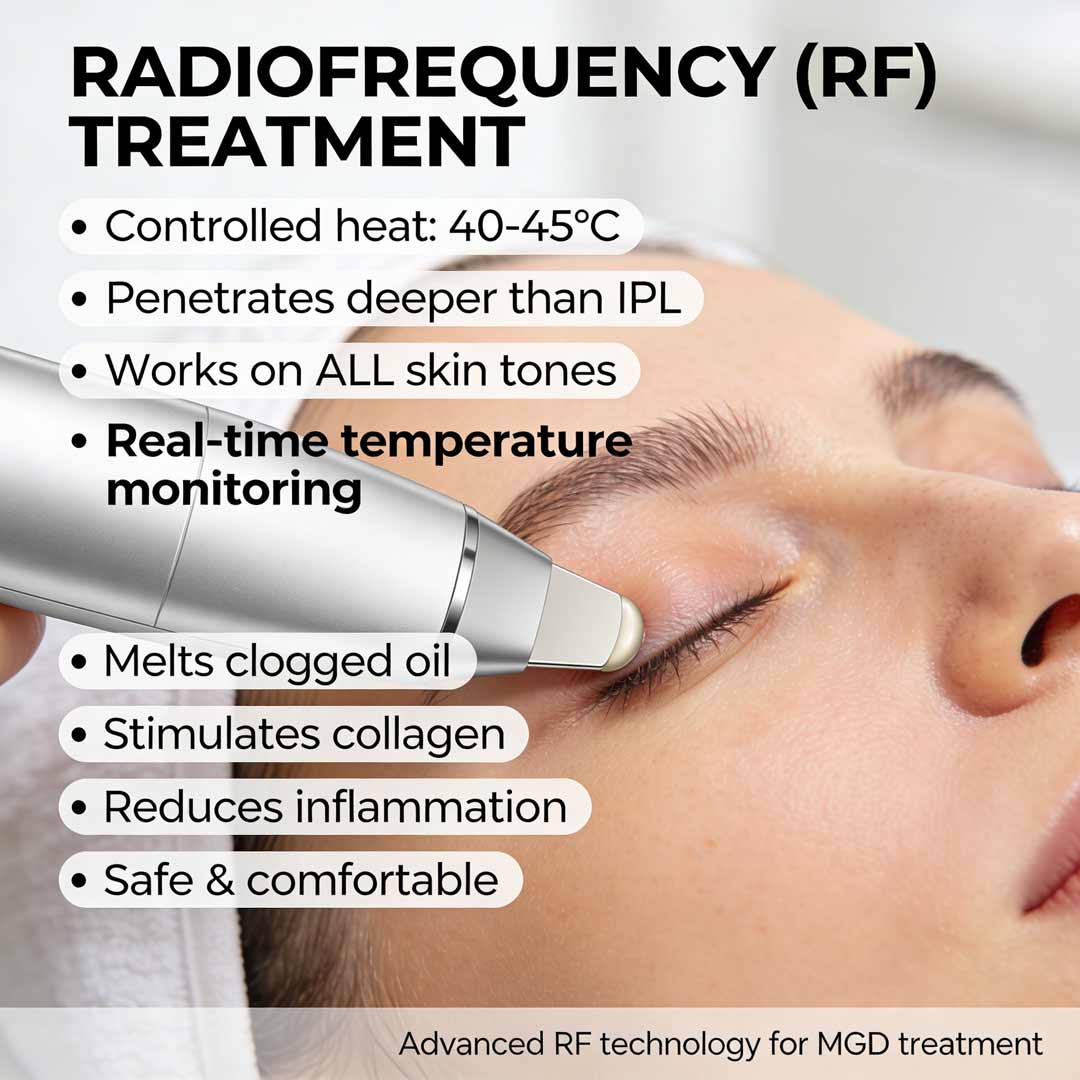
Radiofrequency takes a different approach than IPL but targets the same fundamental problem: dysfunctional meibomian glands that need to be unblocked and restored to health.
How RF Works (The Science)
RF devices use controlled electromagnetic energy to generate heat in the deeper layers of your eyelid tissue. Unlike IPL which uses light, RF uses electrical current to create therapeutic heating.
Key Advantages of RF:
1. Precise Temperature Control
RF devices continuously monitor skin temperature, typically targeting 40-45°C (104-113°F). This precision ensures effective treatment without overheating.
2. Deeper Penetration
RF energy reaches meibomian glands more directly than light-based treatments. The heat penetrates to the gland level without requiring the skin surface to absorb as much energy.
3. Works on All Skin Tones
Unlike IPL which relies on melanin absorption, RF isn’t affected by skin pigmentation. This makes it safe and effective for darker skin tones (Fitzpatrick IV-VI).
4. Dual Benefits
Beyond treating MGD, RF stimulates collagen production in the skin around your eyes, potentially providing some cosmetic benefits (reduced fine lines, mild skin tightening).
What RF Does to Your Meibomian Glands
- Liquefies solidified oil: The therapeutic heat melts thickened, paste-like secretions blocking your glands
- Improves oil flow: After heating, we express the glands to clear out the liquefied oil and restore normal flow
- Reduces inflammation: Heat has anti-inflammatory effects on damaged gland tissue
- Stimulates gland function: Repeated treatments may help restore glands that have become sluggish or partially atrophied
The RF Treatment Protocol
A typical RF series at Eye Care Center:
Initial series: 3-4 treatments spaced 2-4 weeks apart
Each treatment takes 10-15 minutes:
- RF applicator applied to closed eyelids and surrounding skin
- Multiple passes ensure even heating
- Temperature monitored continuously
- Most patients find it comfortable – described as “gentle, soothing warmth”
- Followed by meibomian gland expression
Maintenance: Some patients return every 6-12 months; others find longer-lasting relief
Who Benefits Most from RF
- Patients with darker skin tones (Fitzpatrick IV-VI)
- Pure MGD without significant rosacea or visible blood vessels
- Patients who can’t tolerate or are contraindicated for IPL
- Anyone preferring heat-based treatment over light-based
- Patients wanting both dry eye relief and mild cosmetic benefits
RF vs. Warm Compresses
You might be thinking: “Isn’t this just fancy warm compresses?”
Not even close. Here’s the difference:
Warm compresses at home:
- Surface heat only
- Temperature inconsistent (cools quickly)
- Penetration limited
- Difficult to apply long enough
- User-dependent (compliance is an issue)
RF treatment:
- Targeted deep heat to gland level
- Precise, controlled temperature maintained throughout treatment
- Consistent therapeutic effect
- Professional gland expression immediately after
- Results measured and tracked
Think of it like comparing a heating pad on sore muscles versus professional physical therapy. The goal is similar, but the effectiveness and precision are completely different.
How RF and IPL Actually Work Together (Combination Therapy)
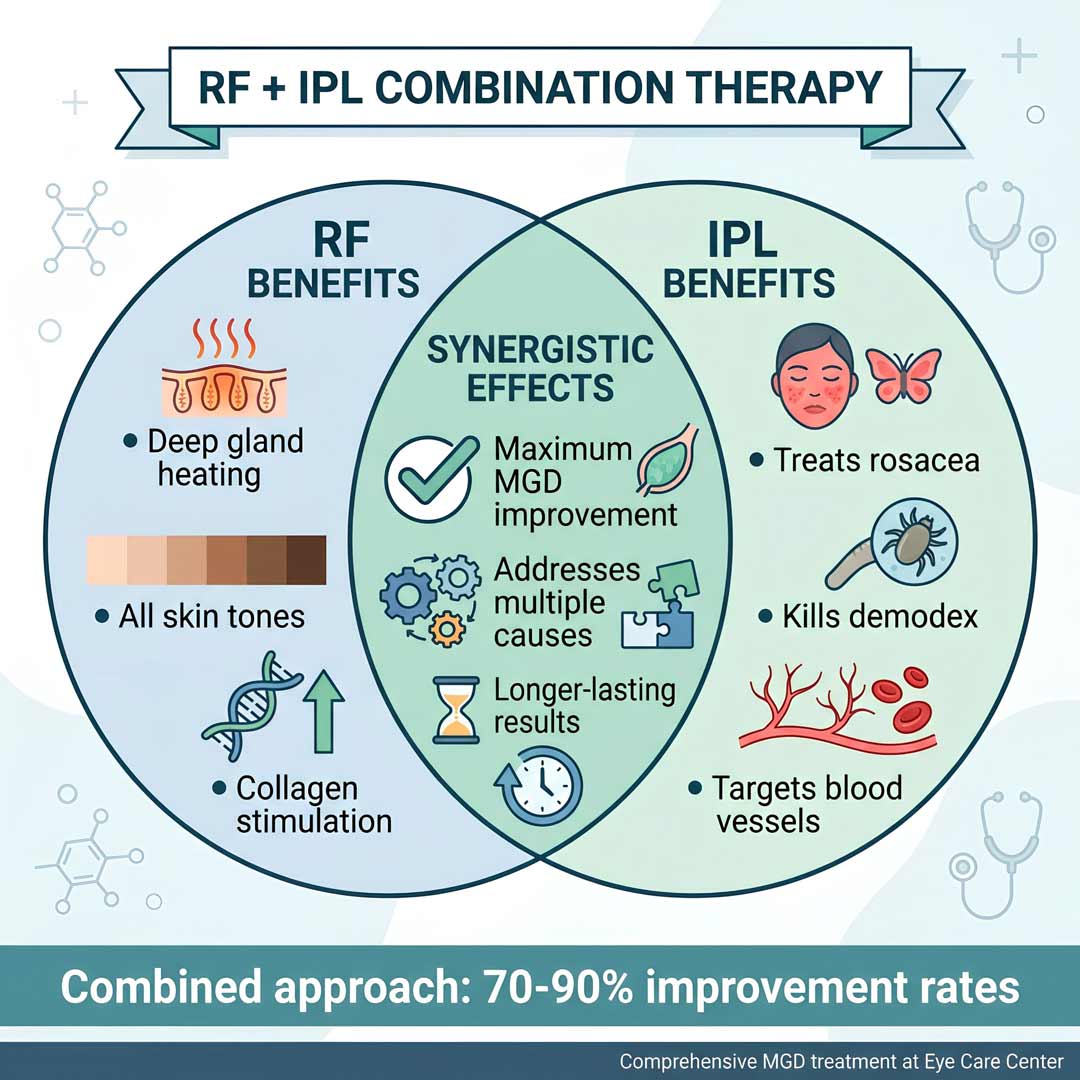
Here’s where treatment gets really interesting: many practices, including Eye Care Center, offer combination therapy – using both RF and IPL in the same treatment session.
Why Combine Them?
RF and IPL address MGD through different mechanisms. Together, they provide synergistic benefits:
IPL excels at:
- Reducing inflammation systemically
- Treating ocular rosacea and telangiectasia
- Killing demodex mites
- Targeting vascular components of inflammation
RF excels at:
- Direct deep heating of meibomian glands
- Precise temperature control for optimal oil liquefaction
- Working regardless of skin tone
- Providing consistent heat penetration
Together, they provide:
- Maximum gland unblocking
- Comprehensive inflammation reduction
- Treatment of multiple contributing factors simultaneously
- Potentially longer-lasting results
The Combined Treatment Session
When we do combination therapy, a typical session looks like:
- IPL first: Treats inflammation, blood vessels, reduces demodex (10-15 min)
- RF second: Provides deep, sustained heat to liquefy gland contents (10-15 min)
- Gland expression: Manual or automated expression to clear liquefied oil (5-10 min)
Total treatment time: 25-40 minutes
Cost: Combined treatments typically cost less than paying for RF and IPL separately. Expect $500-800 per session, with 3-4 sessions recommended for optimal results.
Who Benefits Most from Combination Therapy
- Severe MGD not responding to single-modality treatment
- Patients with both inflammatory and mechanical components
- Those with ocular rosacea plus severe gland dysfunction
- Anyone wanting maximum results in minimum time
- Patients who can afford the higher upfront investment for potentially better outcomes
Are You a Candidate for RF or IPL? (The Honest Assessment)
Not everyone with dry eye needs or will benefit from RF or IPL. Let’s figure out if you’re a good candidate.
You’re Likely an Excellent Candidate If:
- Diagnosed MGD: Your eye doctor has confirmed meibomian gland dysfunction
- Drops aren’t enough: You use artificial tears 4+ times daily with minimal relief
- Thick gland secretions: When glands are expressed, the oil is paste-like, not clear
- Visible inflammation: Red, irritated eyelid margins, visible blood vessels
- Ocular rosacea: Diagnosed or suspected based on facial rosacea
- Moderate to severe symptoms: Dry eye significantly impacts quality of life
- Motivated for treatment: Willing to commit to a treatment series
You Might Not Be a Candidate If:
- Aqueous deficiency dry eye: Your tear production is the problem, not MGD (less common, accounts for ~14% of dry eye)
- Mild symptoms well-controlled with drops: If you’re comfortable with occasional artificial tears, you don’t need advanced treatment
- Very dark skin (for IPL only): Fitzpatrick V-VI skin types should use RF instead
- Pregnancy or nursing: Wait until after
- Active eye infection: Treat infection first, then consider RF/IPL
- Certain medications: Photosensitizing drugs (for IPL)
Special Considerations
Contact lens wearers: You may need to discontinue lens wear temporarily during treatment. Many patients find they can wear contacts more comfortably after RF/IPL.
Seasonal allergies: If allergies contribute to your symptoms, you may still benefit from RF/IPL, but managing allergies concurrently is important.
Autoimmune conditions: Sjögren’s syndrome, rheumatoid arthritis, and lupus can cause dry eye. RF/IPL may help the MGD component but won’t cure the underlying autoimmune disease.
The Evaluation Process
At Eye Care Center, before recommending RF or IPL, we perform comprehensive dry eye evaluation including:
- Symptom questionnaires: Quantifying your discomfort
- Tear film assessment: Measuring tear breakup time and volume
- Meibomian gland imaging: Meibography to visualize gland structure and dropout
- Gland expression: Evaluating oil quality and flow
- Inflammation markers: Testing for specific inflammatory indicators
- Ocular surface examination: Checking for corneal/conjunctival damage
This comprehensive evaluation ensures we’re treating the right problem with the right solution.
What RF and IPL Treatment Actually Feels Like
Let’s talk about the real-world experience because I know comfort matters.
IPL Treatment Sensation
During the light pulses:
- Feels like warm rubber band snaps or camera flashes
- Brief heat sensation with each pulse
- Slight awareness of brightness (even with protective eyewear)
- Most people rate discomfort as 2-3 out of 10
After treatment:
- Mild redness on treated areas (fades within hours)
- Slight warmth sensation (30-60 minutes)
- Some light sensitivity (wear sunglasses)
- Most people return to normal activities immediately
RF Treatment Sensation
During treatment:
- Gentle, soothing warmth
- Most patients find it comfortable, even relaxing
- No sharp pain or discomfort
- Temperature is carefully controlled
- Discomfort rating typically 1-2 out of 10
After treatment:
- Minimal redness (if any)
- Eyes may feel slightly tired
- No significant restrictions on activities
- Vision unaffected
Gland Expression (The Less Fun Part)
After RF or IPL, we perform meibomian gland expression to clear out the liquefied oil. This involves:
- Applying pressure to eyelids with specialized tools
- Can cause brief discomfort (pressure sensation)
- Takes 5-10 minutes
- Discomfort is temporary and worthwhile – this is when we actually clear the glands
Most patients rate expression as 4-6 out of 10 on the discomfort scale – not pleasant, but tolerable and brief.
Post-Treatment Care
Immediately after:
- Wear sunglasses (light sensitivity, especially with IPL)
- Avoid heavy exercise for 24 hours
- No eye makeup for 24 hours
- Use preservative-free artificial tears as needed
Following days:
- Resume normal activities
- Continue any prescribed dry eye treatments
- Follow up as scheduled for next session
When Will I See Results? (Setting Realistic Expectations)
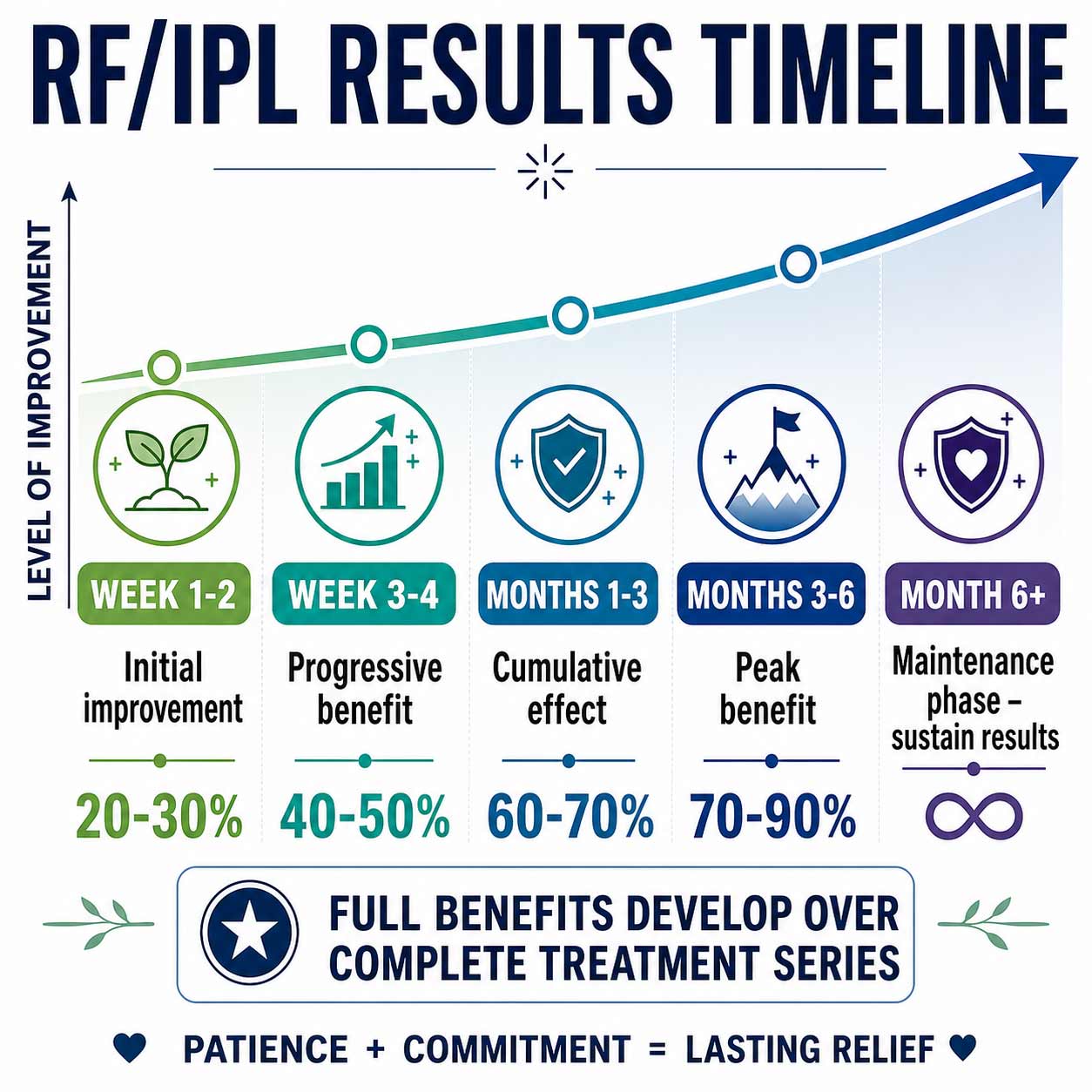
This is the most common question: “When will I feel better?” The honest answer requires managing expectations.
The Realistic Timeline
After Treatment 1:
- Some patients notice mild improvement within days
- Many don’t feel dramatic change yet (this is normal)
- Gland function begins improving but takes time to manifest as symptom relief
After Treatments 2-3:
- Most patients begin noticing real improvement
- Symptom scores typically improve 40-50%
- May need drops less frequently
- Eyes feel less irritated
After Treatment 4 (completing initial series):
- Peak benefits continue developing over next 1-3 months
- Typical improvement: 60-80% reduction in symptoms
- Many patients reduce or eliminate drop dependency
- Quality of life significantly improved
Months 3-6 post-treatment:
- Results typically plateau and stabilize
- Some patients maintain benefits 12+ months
- Others need maintenance treatments every 6-12 months
Why Results Take Time
RF and IPL don’t work like dropping a painkiller that takes effect in 30 minutes. They’re regenerative treatments that restore gland health over time:
- Immediate effect: Glands are unblocked and oil flows better
- Days to weeks: Inflammation decreases, glands heal
- Weeks to months: Gland function improves, oil quality normalizes
- Months 3-6: Full functional restoration, sustained symptom relief
This is biological healing, not instant symptom masking. That’s why results last – we’re actually fixing the problem.
What If I Don’t Improve?
Most patients (70-90% depending on studies) experience significant improvement. But some don’t respond as well. Possible reasons:
- Severe gland atrophy: If glands are completely gone (not just blocked), there’s nothing to restore
- Wrong diagnosis: Maybe MGD isn’t your primary problem
- Contributing factors not addressed: Medication side effects, environmental factors, concurrent autoimmune conditions
- Incomplete series: Stopping treatment early before full benefit develops
If you don’t see expected improvement, we reassess. Sometimes a different treatment approach, addressing underlying contributors, or combination therapy makes the difference.
RF vs. IPL: Which Is Better for You?
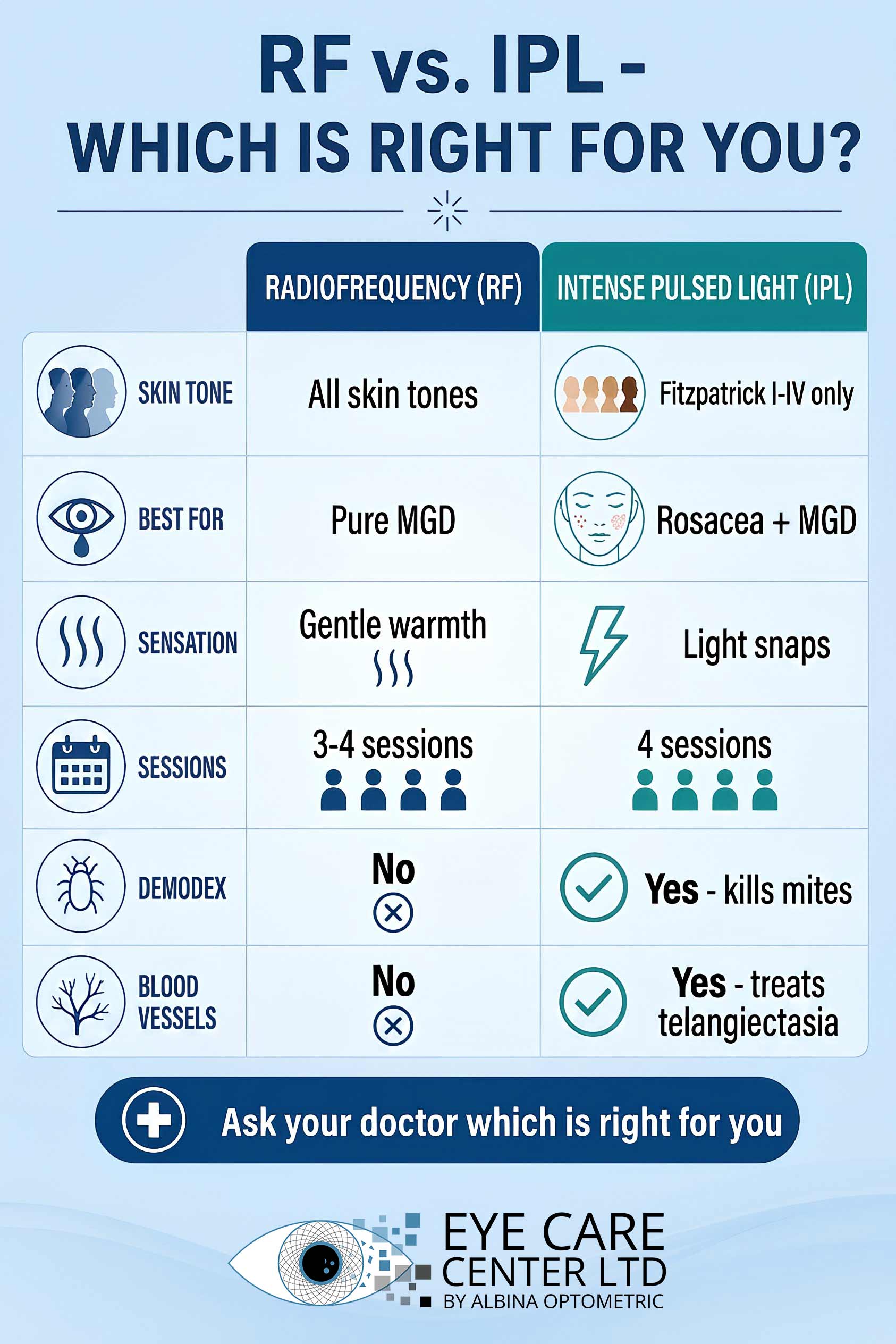
The most common question I hear after explaining these two treatments is: “Which one should I get?” The honest answer is that it depends on your specific presentation, and there is no universally superior option.
Choose IPL If:
- You have facial or ocular rosacea
- Visible blood vessels are present along your eyelid margins
- Demodex mite infestation is confirmed or suspected
- You have light to medium skin tone (Fitzpatrick I-IV)
- Your MGD is driven heavily by inflammatory vascular components
Choose RF If:
- You have darker skin (Fitzpatrick IV-VI)
- Your dry eye is primarily mechanical MGD without significant rosacea
- You are contraindicated for light-based treatments
- You prefer the gentler warmth sensation over light pulses
- You want the added benefit of mild periorbital skin tightening
Choose Combination Therapy If:
- You have severe MGD with multiple contributing factors
- Single-modality treatment has not produced satisfactory results
- You have rosacea plus significant gland blockage
- You want the most comprehensive treatment available in a single series
The Most Honest Answer
Trying to decide between RF and IPL without a comprehensive dry eye evaluation is like choosing surgery without a diagnosis. At Eye Care Center, we perform meibography, tear film analysis, and a full ocular surface exam before recommending either treatment. The data from that evaluation, not a comparison chart, tells us which approach will give you the best outcome.
That said, the research is encouraging across the board. A 2022 systematic review published in Ocular Surface found that both RF and IPL significantly improved meibomian gland function and dry eye symptom scores compared to baseline, with combination protocols showing the highest overall improvement rates.
Cost and Long-Term Value: Is RF or IPL Worth It?
Let’s be direct about the financial reality because I know cost matters when insurance doesn’t cover a treatment.
Typical Pricing
IPL per session: $300-$600
RF per session: $250-$500
Combination therapy per session: $500-$800
Full initial series (4 sessions): $1,200-$3,200 depending on treatment type and location
Maintenance sessions (every 6-12 months): $250-$600
These are general ranges. Pricing at Eye Care Center is discussed during your consultation, and we are transparent about costs before you commit to anything.
How to Think About Value
Before dismissing the cost, consider what you are currently spending on ineffective management:
- Premium artificial tears used 8-10 times daily: $40-$80 per month
- Prescription drops like Restasis or Xiidra: $300-$600 per month without insurance
- Lid hygiene products, supplements, warm compress masks: $30-$60 per month
- Follow-up appointments for continued drop trials: $50-$200 per visit
If you have been managing chronic dry eye for 2-3 years with minimal relief, you may have already spent more than the cost of a treatment series – with nothing lasting to show for it. RF and IPL, for the right patient, are not an expense. They are an investment in stopping the cycle.
Insurance Coverage Reality
As of 2025, most insurance plans, including Medicare, do not cover RF or IPL for dry eye. This is frustrating and, frankly, short-sighted from a healthcare economics standpoint. Successful treatment reduces long-term medication costs, clinic visits, and lost productivity from symptoms that affect work and daily life.
Some practices offer payment plans or financing through CareCredit or similar programs. Ask about options during your consultation at Eye Care Center.
HSA and FSA Eligibility
RF and IPL for medically diagnosed dry eye disease generally qualify as eligible expenses under Health Savings Accounts (HSA) and Flexible Spending Accounts (FSA). This is worth factoring into your planning, particularly if you have unused FSA funds to use before year-end or are budgeting your HSA contributions.
Getting Started: Your Path to Lasting Dry Eye Relief

If you have been managing chronic dry eye with artificial tears and getting nowhere, you do not have to keep doing that. RF and IPL exist precisely because the optometry field recognized that drops-only management was failing too many patients.
Here is what I recommend as your next step: come in for a comprehensive dry eye evaluation. Not a quick screening. Not a sample-and-return visit. A real, thorough evaluation that includes meibography to see the actual state of your meibomian glands, tear film analysis, and a full ocular surface exam.
That evaluation tells us what is actually driving your symptoms. If RF or IPL is the right answer for you, we will explain exactly which treatment, how many sessions we expect you will need, what results are realistic, and what the full cost will be. No surprises, no pressure.
If RF and IPL are not the right fit for your specific situation, we will tell you that too – and explain what will work better. The goal is your relief, not treatment for its own sake.
Eye Care Center serves patients at our Addison, Burbank, and Willowbrook locations. Advanced dry eye care including RF and IPL evaluation is available at all three. Call us at 1-888-899-0816 or book your comprehensive dry eye evaluation online.
Stop Managing. Start Treating.
If artificial tears are not giving you lasting relief, it is time to find out why. Schedule a comprehensive dry eye evaluation at Eye Care Center and discover whether RF or IPL therapy could finally address the root cause of your symptoms.
Serving Addison, Burbank, and Willowbrook, Illinois.
Schedule Your Dry Eye Evaluation
Or call us: 1-888-899-0816
Mon-Thu 10am-6pm | Fri 10am-5pm | Sat 9am-2pm
Frequently Asked Questions: RF and IPL for Dry Eye
How many RF or IPL sessions will I need?
Most patients complete an initial series of 3-4 sessions spaced 2-4 weeks apart. After completing the series, some patients maintain their results for 12 months or longer before needing a maintenance session, while others return every 6-12 months. The number of sessions depends on the severity of your meibomian gland dysfunction, how your glands respond to treatment, and whether you have contributing factors like rosacea or demodex. Your treatment plan will be personalized based on your evaluation results.
Does RF or IPL hurt?
Most patients find both treatments well tolerable. RF is typically described as a gentle, soothing warmth with a discomfort rating of 1-2 out of 10. IPL feels like brief, warm snaps of light – similar to a rubber band flick – and most patients rate it at 2-3 out of 10. The meibomian gland expression performed after either treatment can cause temporary pressure discomfort, usually rated 4-6 out of 10, but it is brief and is the step that actually clears the blocked glands.
Is IPL safe for dark skin tones?
IPL is not recommended for very dark skin tones (Fitzpatrick V-VI) because the light energy is absorbed by melanin in the skin, which can cause burns or pigmentation changes. For patients with darker skin, radiofrequency (RF) is the preferred treatment. RF uses electrical energy rather than light, so it is effective and safe across all skin tones. If you are unsure about your Fitzpatrick skin type, your provider will assess this during your evaluation before recommending IPL.
Will my insurance cover RF or IPL for dry eye?
As of 2025, most insurance plans including Medicare do not cover RF or IPL for dry eye disease. These treatments are considered elective or investigational by most payers, despite strong clinical evidence supporting their effectiveness. However, HSA and FSA funds can typically be used for these treatments when they are performed for a diagnosed medical condition like meibomian gland dysfunction. Many patients also use CareCredit or in-practice financing to spread the cost across several months. We are transparent about fees during your consultation so you can plan accordingly.
How is RF different from doing warm compresses at home?
The goal is similar – using heat to loosen thickened meibomian gland secretions – but the effectiveness is not comparable. Home warm compresses provide surface-level heat that cools within seconds, rarely reaching the gland level at the right temperature, and require sustained compliance to have any effect. RF therapy delivers precisely controlled, sustained heat directly to the meibomian gland level at a therapeutic temperature of 40-45 degrees Celsius, monitored in real time throughout treatment. It is then followed immediately by professional gland expression. Think of it as the difference between applying a heating pad to sore muscles versus getting professional physical therapy – the goal is similar, but the outcome is not.
Can I wear contacts after RF or IPL treatment?
You will need to remove contact lenses before your treatment session and should avoid wearing them for the rest of that day. Most patients can return to normal contact lens wear the following day. Many patients actually find that after completing their treatment series, their contact lens comfort improves significantly – because the underlying dry eye driving their discomfort has been treated rather than just temporarily masked.
How long do RF and IPL results last?
Results vary by patient, but many people maintain significant improvement for 12 months or longer after completing their initial treatment series. Dry eye disease is a chronic condition, which means it can recur over time. Maintenance treatments every 6-12 months help sustain the benefits for patients who experience gradual return of symptoms. Your response to treatment will be monitored and your maintenance schedule will be based on your individual outcome.
Where can I get RF or IPL dry eye treatment near me in Illinois?
Eye Care Center LTD offers advanced dry eye care including RF and IPL evaluation at our three Illinois locations: Addison (1250 W Lake St #19c), Burbank (8525 S Harlem Ave), and Willowbrook (6300 Kingery Hwy #116). To find out whether you are a candidate, schedule a comprehensive dry eye evaluation by calling 1-888-899-0816 or booking online.