


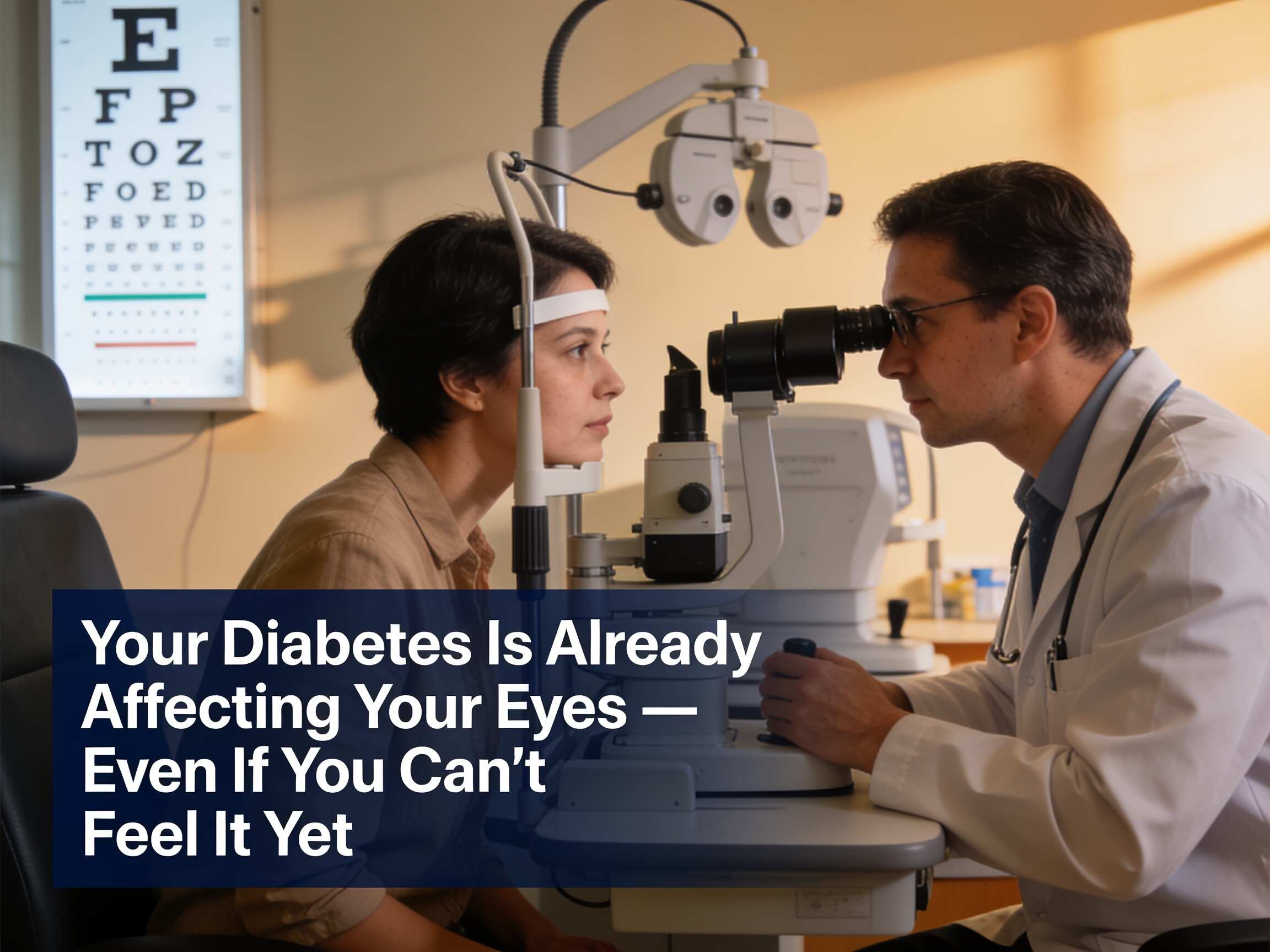
Diabetes Is Silently Damaging Your Eyes Right Now — A Retinal Specialist Explains What’s Happening Behind Your Eyelids
By Dr. Jenna Bacerra, O.D. | The Eye Care Center LTD
One of the most difficult conversations I have with patients is the one where I have to explain that their diabetes has already affected their eyes, and they had no idea. No blurring. No pain. No warning. Diabetic retinopathy works exactly this way, damaging the delicate blood vessels of the retina steadily and silently until the changes become dramatic enough to threaten vision. By the time symptoms appear, significant and sometimes irreversible damage has already occurred.
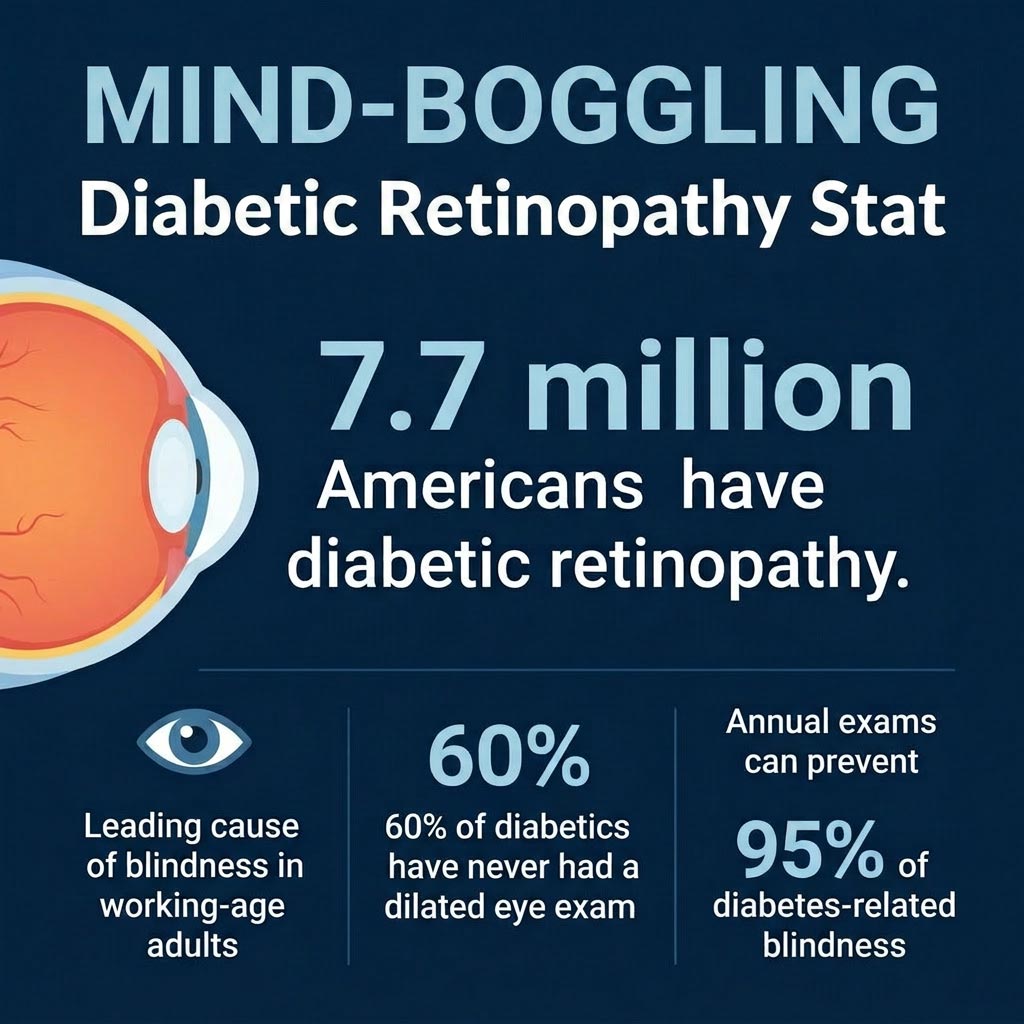
Diabetic retinopathy is the leading cause of new blindness in working-age Americans. That statistic isn’t meant to frighten you; it is meant to convey urgency. Because here is the other side of it: diabetic retinopathy is highly preventable when caught early. A dilated retinal exam can detect changes years before they affect vision, giving you and your healthcare team the time to intervene before anything serious happens.
Whether you have Type 1 or Type 2 diabetes, whether you’ve been managing it for years or were recently diagnosed, this article is for you. I want you to understand what is happening at the cellular level in your eyes, what the stages of retinopathy look like, what we check for at your dilated eye exam, and what happens if treatment becomes necessary.
Mind-boggling fact: Diabetic retinopathy affects approximately 7.7 million Americans, yet studies show that nearly 60% of people with diabetes have never had a dilated eye exam. This single missed appointment is the primary reason diabetic retinopathy remains the leading cause of preventable blindness in working-age adults.
How diabetes damages the eyes
The retina is one of the most metabolically active tissues in the entire body. It requires an enormous and continuous supply of oxygen and nutrients delivered by a dense network of tiny blood vessels. In people with diabetes, chronically elevated blood glucose levels damage these vessels in specific and progressive ways.
Excess glucose causes the walls of retinal capillaries to weaken. Small bulges, called microaneurysms, form at points of weakness and can leak fluid or blood. The surrounding retinal tissue may swell, a condition called diabetic macular edema, which directly threatens central vision. As the disease progresses, some blood vessels close off entirely, starving areas of the retina of oxygen. In response to this ischemia, the eye attempts to grow new blood vessels, a process called neovascularization or proliferative retinopathy. The problem is that these new vessels are fragile and prone to bleeding into the vitreous gel that fills the eye, and they can form fibrous traction that pulls on the retina and causes retinal detachment.
This entire process can unfold over years without any symptoms. The retina has no pain fibers, so damage accumulates silently. This is not unique to diabetes; it is a feature of most retinal disease. The eye compensates remarkably well for incremental changes, which is why vision often remains normal until damage is already extensive.
The four stages of diabetic retinopathy
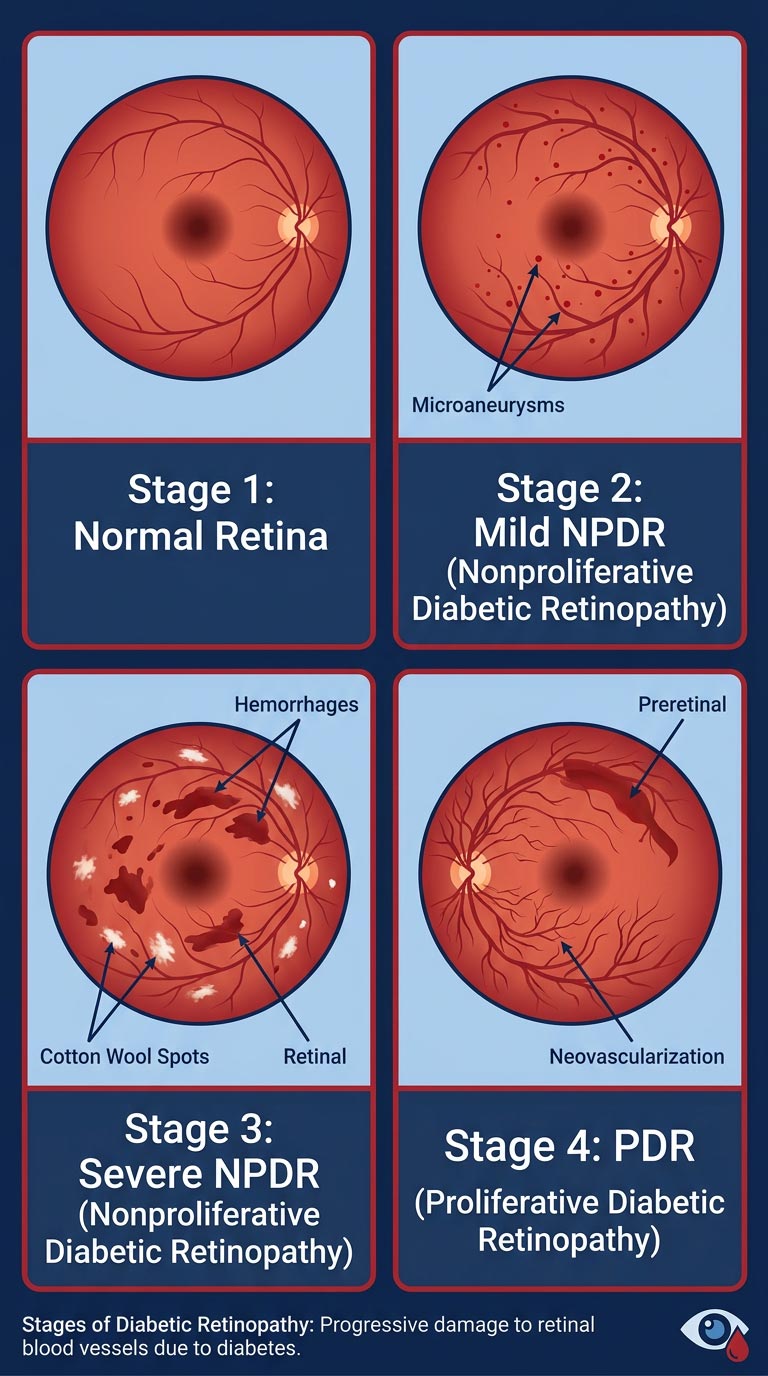
Diabetic retinopathy is classified into four stages, and understanding where a patient sits in this progression guides our monitoring and treatment decisions.
Mild nonproliferative retinopathy is the earliest detectable stage. At this point, small microaneurysms are visible in the retinal blood vessels during examination, but there is no significant leakage, no swelling, and no functional vision impairment. This stage can be managed primarily through excellent diabetes control and close monitoring.
Moderate nonproliferative retinopathy shows more widespread vessel changes including blockages, dot and blot hemorrhages, and sometimes the early stages of diabetic macular edema. Vision may still be unaffected, but the risk of progression increases meaningfully. Closer monitoring intervals are typically recommended at this stage.
Severe nonproliferative retinopathy involves significant blood vessel blockage affecting large areas of the retina. The ischemic tissue begins signaling for new blood vessel growth. Patients at this stage are at high risk of progressing to proliferative disease within a year without appropriate intervention.
Proliferative diabetic retinopathy is the most advanced and most dangerous stage. New, fragile blood vessels grow on the surface of the retina and into the vitreous. These vessels bleed easily, causing vitreous hemorrhage with sudden vision loss, and the fibrous tissue that forms around them can cause tractional retinal detachment, which is a vision-threatening emergency. This stage requires prompt referral for treatment.
Symptoms and when they appear
In the early stages of diabetic retinopathy, there are typically no symptoms. This cannot be overstated, because patients frequently tell me they will make an appointment if they notice a change in their vision. By the time vision changes are noticeable, the window for the easiest and most effective intervention has often passed.
When symptoms do appear, they can include blurred or fluctuating vision (particularly in the setting of diabetic macular edema, where fluid accumulation affects the macula), floaters or dark spots from small hemorrhages, and difficulty seeing colors accurately. In severe cases, a sudden dramatic loss of vision can occur from a major vitreous hemorrhage, where blood from ruptured neovascular vessels floods the vitreous cavity.
The important message is that waiting for symptoms is not a monitoring strategy. Annual dilated eye exams are the monitoring strategy, because they allow us to identify changes when they are still at the mild or moderate nonproliferative stage, where intervention is straightforward and outcomes are excellent.
What happens at a diabetic eye exam
A diabetic eye exam at our practice is a comprehensive dilated retinal evaluation. After dilating drops are administered and allowed time to work (usually 20 to 30 minutes), we have a greatly enlarged view of your retina, optic nerve, and blood vessels. We document the presence and severity of any retinopathy changes, assess for macular edema, measure intraocular pressure, and evaluate the optic nerve.
We also use fundus photography to document and track changes over time. Having photographic records from year to year allows us to make objective comparisons rather than relying on memory or subjective description alone. Optical coherence tomography (OCT) is particularly valuable for detecting and quantifying diabetic macular edema, providing cross-sectional images of retinal layers that reveal fluid accumulation well before it causes measurable vision loss.
We communicate our findings and their significance to both you and your primary care physician or endocrinologist, because retinal health is directly tied to your systemic diabetes management. Severe retinopathy correlates with kidney disease and cardiovascular risk, so eye findings sometimes prompt important adjustments in your overall diabetes care.
Treatment options when needed
For mild to moderate nonproliferative retinopathy without macular edema, the treatment is optimized diabetes management: tight blood sugar control, blood pressure management, and annual or more frequent eye exams. No ocular intervention is required yet, but the trajectory is everything.
For diabetic macular edema, anti-VEGF injections (vascular endothelial growth factor inhibitors) have revolutionized treatment outcomes over the past decade. These injections, administered directly into the vitreous by a retinal specialist, block the growth factor responsible for leaky blood vessel formation and macular swelling. Multiple large clinical trials have shown that anti-VEGF therapy not only prevents further vision loss but can actually improve vision in a significant proportion of patients when treatment is initiated early.
For proliferative retinopathy, panretinal photocoagulation (PRP) laser therapy and anti-VEGF injections are the primary treatment modalities. PRP uses thousands of small laser burns to destroy the ischemic peripheral retina, eliminating the signal for new vessel growth. In cases with advanced complications such as vitreous hemorrhage or tractional retinal detachment, vitrectomy surgery may be required.
When retinopathy requiring these interventions is detected in our exams, we coordinate a prompt referral to a retinal specialist and stay involved in your ongoing eye care. Our role is both detection and continued co-management of your overall eye health alongside the specialist.
Prevention: what you can control
The most powerful thing you can do to prevent diabetic retinopathy is achieve and maintain good blood sugar control. The Diabetes Control and Complications Trial demonstrated that intensive blood glucose management reduced the development of retinopathy by 76% and progression of existing retinopathy by 54% in people with Type 1 diabetes. Similar benefits have been shown in Type 2 diabetes studies.
Blood pressure control is nearly as important. Hypertension accelerates retinopathy progression and independently damages retinal blood vessels. Lipid management, avoiding smoking, and maintaining a healthy weight all contribute to lower retinopathy risk. Your eye doctor and primary care physician should be working in concert on these systemic factors alongside their respective specialty care.
Annual dilated eye exams are non-negotiable. The American Diabetes Association recommends that people with Type 1 diabetes begin annual dilated exams within five years of diagnosis, and that people with Type 2 diabetes begin at the time of diagnosis. Pregnant women with diabetes should have exams in each trimester due to the risk of rapid retinopathy progression during pregnancy.
Patients at all three of our Illinois locations are welcome for diabetic eye exams. Call us in Addison at (630) 543-0607, Burbank at (708) 599-0050, or Willowbrook at (630) 969-2807, or book online here.
If You Have Diabetes, Your Annual Eye Exam Is Not Optional
Diabetic retinopathy is largely preventable. One dilated eye exam per year, combined with good systemic diabetes management, gives you the best possible protection against vision loss. Schedule your diabetic eye exam at Eye Care Center LTD today.
Schedule Your Diabetic Eye Exam
Addison: (630) 543-0607 | Burbank: (708) 599-0050 | Willowbrook: (630) 969-2807
Monday – Thursday 10am-6pm | Friday 10am-5pm | Saturday 9am-2pm
Frequently asked questions about diabetic retinopathy
How quickly can diabetic retinopathy progress?
Progression varies widely based on blood sugar control, blood pressure, disease duration, and individual factors. In people with well-controlled diabetes, progression is typically slow over years. In poorly controlled diabetes or during periods of fluctuating blood sugar, progression can be significantly faster. Pregnancy can also accelerate retinopathy dramatically. This variability is exactly why consistent annual monitoring is so important rather than assuming stable disease.
Can diabetic retinopathy be reversed?
Early-stage nonproliferative retinopathy can sometimes improve with intensive blood sugar and blood pressure control. More advanced stages can be stabilized and further progression halted with treatment, and diabetic macular edema often improves significantly with anti-VEGF therapy. However, vision that has been lost due to advanced retinopathy or macular damage is typically not fully recoverable. This reinforces the importance of early detection.
Do I need a dilated exam even if my vision seems fine?
Yes, absolutely. Diabetic retinopathy causes no symptoms in its early and most treatable stages. Waiting until your vision changes is equivalent to waiting until a cavity needs a root canal rather than a filling. The dilated exam is the only way to see what is actually happening at the back of your eye, independent of how your vision feels.
What is diabetic macular edema?
Diabetic macular edema (DME) is swelling of the macula, the central portion of the retina responsible for your sharpest, most detailed vision. It occurs when damaged retinal blood vessels leak fluid into the macula. DME is a leading cause of vision impairment in people with diabetes and can occur at any stage of retinopathy. It is highly treatable with anti-VEGF injections when detected early.
How is diabetic retinopathy different from glaucoma?
Diabetic retinopathy damages the retinal blood vessels and the photoreceptors they support, most often affecting the central and peripheral vision depending on the location of damage. Glaucoma damages the optic nerve, typically causing peripheral vision loss first. Both conditions can develop without symptoms, and people with diabetes have elevated risk for both. A comprehensive eye exam screens for both conditions simultaneously.
What should I bring to my diabetic eye exam?
Bring your current list of medications, your most recent HbA1c result if you have it, and information about the duration of your diabetes diagnosis and how well your blood sugar has been controlled. Let us know if you have had any previous eye treatments or retinal procedures. If you have a primary care physician or endocrinologist, we will coordinate findings with them with your permission.
Can Type 2 diabetes cause retinopathy even without insulin use?
Yes. Retinopathy risk is related to blood glucose levels, not to whether insulin is being used. People with Type 2 diabetes who manage their condition with oral medications or diet alone can still develop retinopathy if blood sugar is not well controlled. Duration of diabetes is also a significant factor; the longer diabetes has been present, the higher the cumulative risk of retinal changes regardless of treatment type.
How often do I need diabetic eye exams?
The American Diabetes Association recommends annual dilated eye exams for all people with diabetes once they meet the recommended timing for initial exam. If retinopathy is already detected, we may recommend exams every six months or more frequently depending on the stage and rate of progression. People with well-controlled diabetes and no detectable retinopathy after several years of annual exams may be candidates for less frequent monitoring with their eye doctor’s guidance.