If you have spent any time in a parenting group or a myopia management forum lately, you have probably seen it: red light therapy, marketed as a new at-home tool for slowing nearsightedness in children. The pitch is appealing. A few minutes a day looking into a small red light, done at home, with claims of dramatic results. For a parent watching their child’s prescription climb every year, that sounds like relief.
But red light therapy for myopia is genuinely new, genuinely being studied, and genuinely not settled science yet. Some of the clinical trial data is encouraging. Some of the safety data is not. Before you consider it for your child, it is worth understanding what the research actually shows, where the open questions are, and why this is a conversation to have with your child’s eye doctor rather than a decision to make from a product page.
In this article:
What Is Red Light Therapy for Myopia?
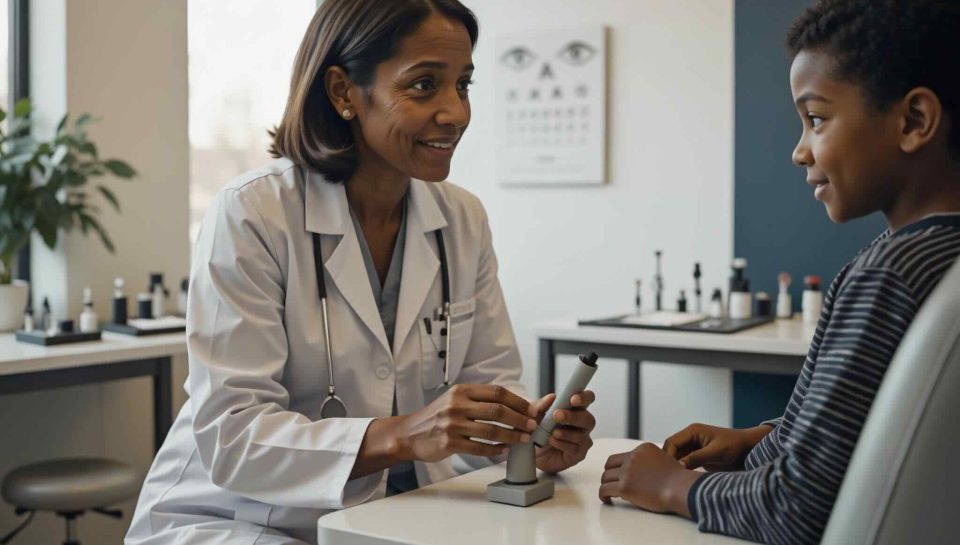
Repeated low level red light therapy, often shortened to RLRL, involves a child looking into a small desktop device that emits a specific wavelength of red light for a few minutes at a time, typically twice a day. The idea grew out of earlier photobiomodulation research in other areas of medicine, and researchers began testing whether it could slow the elongation of the eyeball that drives most childhood myopia progression. It is different from red light wellness devices sold for skin or muscle recovery. The devices being studied for myopia use a specific wavelength, dose, and treatment protocol, and they are not interchangeable with general consumer red light products.
It is also different from the myopia control tools that have been in mainstream use for years, such as specialty contact lenses, orthokeratology, low dose atropine drops, and specialty spectacle lenses. Those approaches have a longer track record. Red light therapy is the newest entrant, and it is still being defined.
What the Research Actually Shows
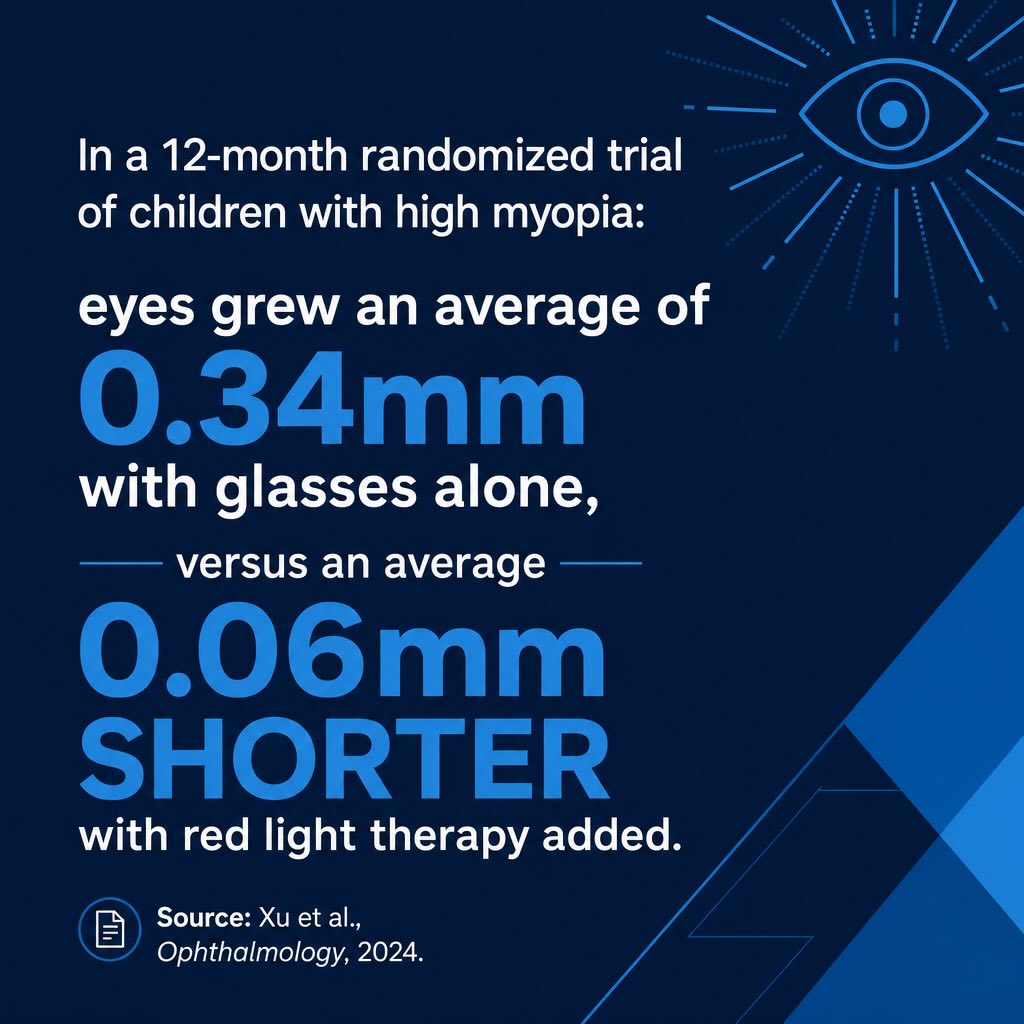
The most talked about study is a 2024 multicenter randomized controlled trial published in the journal Ophthalmology, which followed 192 children ages 6 to 16 with high myopia for 12 months. Half the children wore single vision glasses only. The other half wore glasses and used an RLRL device twice daily. At the one year mark, the glasses only group had an average of 0.34 millimeters of additional eye elongation, a marker doctors use to track myopia progression. The RLRL group averaged 0.06 millimeters of shortening instead. Just over half of the children in the treatment group showed measurable axial shortening at that visit.
Other cohort studies and a 2025 systematic review and meta-analysis have generally pointed the same direction, suggesting RLRL can meaningfully slow axial elongation compared to glasses alone in the studies conducted so far. That is a real and interesting signal. It is also, so far, based mostly on shorter term studies, largely conducted in China, with results that have not yet been replicated over many years or across large, diverse populations in the way that older myopia control methods have been.
The Safety Questions Doctors Are Watching
Efficacy is only half the picture, and this is where families should slow down. In 2026, researchers at the University of Houston College of Optometry published a laboratory based safety evaluation in JAMA Ophthalmology testing four commercially available red light myopia devices. They found that for some laser based devices, the light exposure during a standard three minute session approached or exceeded established retinal safety limits, the thresholds designed to prevent photochemical or thermal damage to the retina. Not every device tested raised the same concerns, and an LED based device in the study stayed within safety limits by a wide margin, which suggests device design matters a great deal.
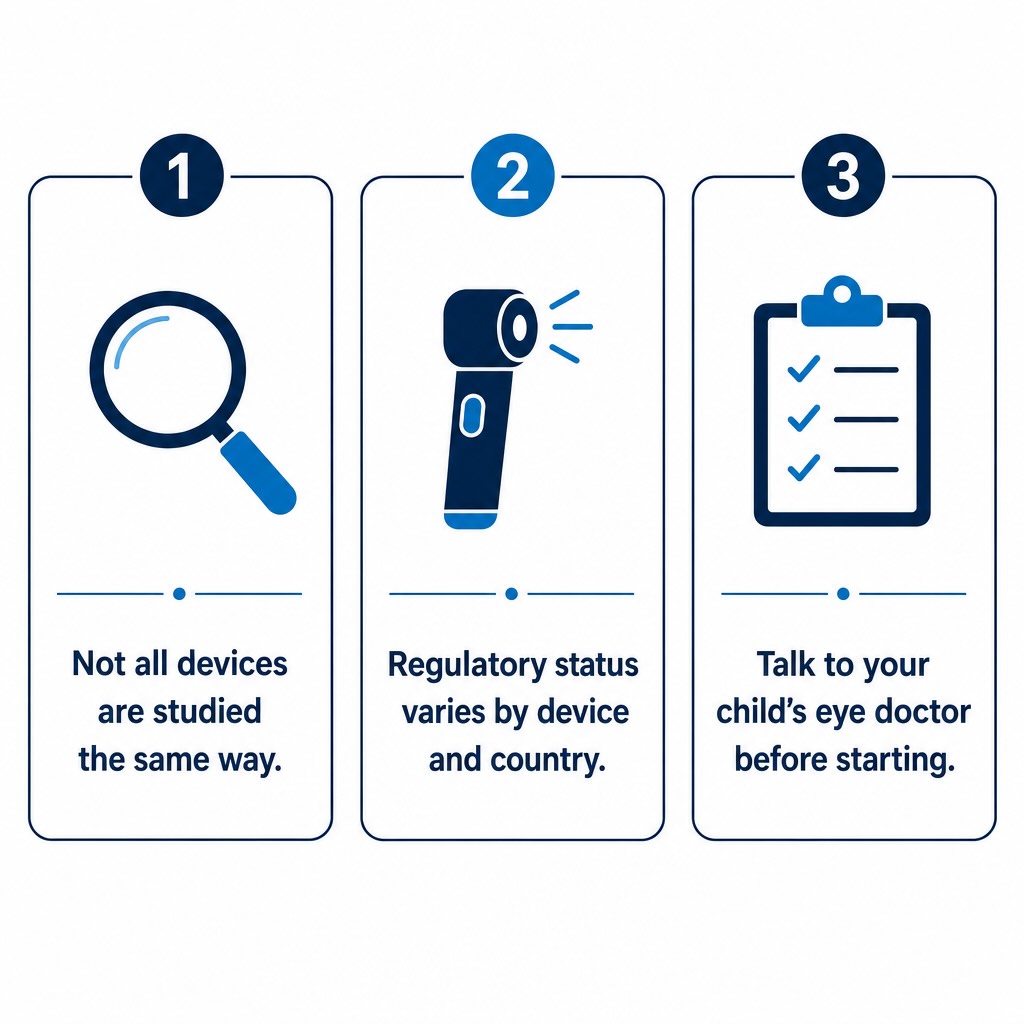
This is not a hypothetical concern. Published case reports have described structural retinal changes and reduced cone cell density in a small number of children following repeated red light laser therapy, and in 2024 China, where these devices were first widely used, reclassified red light laser instruments into a stricter regulatory category after reviewing reports of retinal injury. The device manufacturer named in the University of Houston study has publicly disputed how its product was characterized and states it is not aware of confirmed cases of permanent vision threatening injury when its device is used exactly as directed. Both things can be true at once: the efficacy data is promising, and the safety picture is still being actively studied and is not yet uniform across devices.
Questions to Ask Before Starting Red Light Therapy
If red light therapy comes up for your child, whether from a friend, a social media ad, or a device sold directly to consumers, a short list of questions can help you sort a well studied option from an untested one.
- Which specific device is this? Safety and evidence vary meaningfully from one product to the next, so a specific device name and model matters more than the general category.
- What published data exists for this exact device? Ask whether the efficacy and safety data come from peer reviewed studies on that specific device, not just the concept of red light therapy in general.
- Is it being used inside or outside a monitored treatment plan? Devices used and monitored by an eye care provider allow for regular checks that a device purchased and used entirely at home does not.
- How is progress being measured? Meaningful myopia control tracking requires objective measurements like axial length, not just a new glasses prescription.
- What are the other options? Orthokeratology, low dose atropine, and specialty spectacle lenses each have a longer safety and efficacy track record worth weighing alongside anything newer.
None of this means red light therapy is off the table. It means it deserves the same scrutiny you would give any medical device used repeatedly on a developing child’s eyes, and it is a decision best made with a doctor who can look at your child’s specific prescription, eye health, and risk factors.
How This Fits Into a Myopia Management Plan
Myopia progression in children is not just a matter of stronger glasses every year. Higher levels of myopia are linked to increased lifetime risk of other eye conditions, which is why slowing progression during childhood has become a bigger focus in pediatric eye care. At The Eye Care Center, our Little Eyes, Big Smiles myopia management program is built around this idea, starting with a comprehensive evaluation to understand how quickly a child’s prescription is changing and which combination of tools, established or emerging, makes sense for their specific eyes. Where a newer option like red light therapy fits into that picture is exactly the kind of question worth bringing to that evaluation rather than deciding on your own.
Wondering whether red light therapy or another myopia control option is right for your child?
Our doctors can evaluate your child’s prescription and eye health and walk you through every myopia management option available, including where the newer research stands. We see families at all three Chicagoland locations. Se habla espanol.
Book online: Request an appointment
Call us: 1-888-899-0816
Addison: 1250 W Lake St #19c, (630) 543-0607
Burbank: 8525 S Harlem Ave, (708) 599-0050
Willowbrook: 6300 Kingery Hwy #116, (630) 969-2807
Hours: Mon to Thu 10am to 6pm, Fri 10am to 5pm, Sat 9am to 2pm
Frequently Asked Questions
What is red light therapy for myopia control?
It is a treatment in which a child looks into a device emitting a specific low level wavelength of red light for a few minutes, typically twice a day, with the goal of slowing the elongation of the eye that drives most childhood nearsightedness progression.
Does red light therapy actually work to slow myopia in kids?
Early randomized trial data, including a 2024 study published in Ophthalmology, showed slower eye elongation in children using red light therapy alongside glasses compared to glasses alone. The results are promising but come mostly from shorter term studies, so longer term data across more diverse populations is still needed.
Is red light therapy for myopia safe for children?
Safety appears to vary significantly by device. A 2026 laboratory study published in JAMA Ophthalmology found that some laser based devices came close to or exceeded established retinal safety exposure limits during a standard treatment session, while another device design stayed well within those limits. Rare case reports of retinal changes in children have also been published. This is an active area of research, and any use should be discussed with and monitored by an eye doctor.
How is red light therapy different from other myopia control options like orthokeratology or atropine drops?
Orthokeratology, low dose atropine drops, and specialty spectacle lenses have been used and studied for myopia control for a longer period of time than red light therapy. Red light therapy is newer, with a smaller and more recent body of evidence on both effectiveness and long term safety.
Where can my child get evaluated for myopia control options in the Chicago area?
The Eye Care Center offers comprehensive myopia evaluations, including our Little Eyes, Big Smiles program, at our Addison, Burbank, and Willowbrook locations. Our doctors can review your child’s specific prescription and eye health to discuss which options, established or newer, make sense.