
Contact lenses should feel like nothing at all. On a good day, you forget you are even wearing them. So when your lenses start to feel dry, scratchy, or blurry by mid-afternoon, or you find yourself pulling them out the second you walk through the door, it is easy to assume that is just the price of wearing contacts. It is not.
Discomfort is one of the most common reasons people give up on contact lenses, and the good news is that the cause is usually fixable. It might be your lens material, your solution, fall allergies, or the dry indoor air that settles over Chicagoland once the furnace kicks on. October is Contact Lens Safety Month, which makes it a good time to take a closer look. Below, we walk through the most common causes of uncomfortable contacts, simple fixes to try at home, and the warning signs that mean you should take your lenses out and call us today.
In this article
Why Contact Lens Discomfort Is So Common
The CDC estimates that about 45 million Americans wear contact lenses. Each of those lenses floats on the tear film, a very thin layer of water, oil, and mucus that keeps the front of your eye smooth and moist. When the tear film is healthy and the lens fits well, everything glides comfortably. When the tear film is unstable, or the lens is dirty, worn out, or not the right fit, you start to feel it.
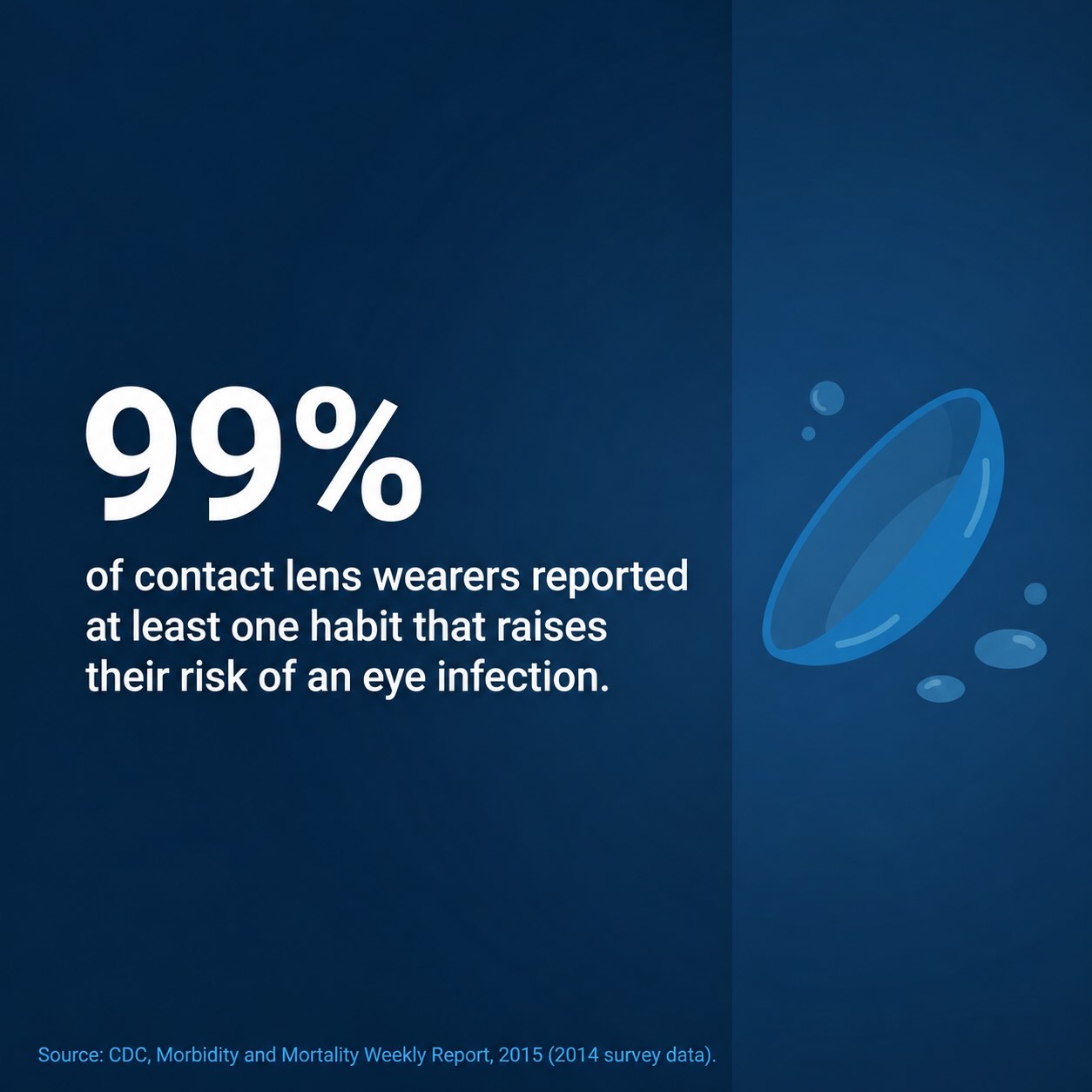
That is why discomfort often builds as the day goes on. Tears evaporate, deposits collect on the lens surface, and your eyes send a clear message by late afternoon. The Tear Film and Ocular Surface Society (TFOS) international workshop on contact lens discomfort identified discomfort as a leading reason wearers stop using lenses entirely. Daily habits play a big role too. In a CDC survey published in 2015, 99% of contact lens wearers reported at least one habit that raises their risk of an eye infection, such as sleeping in lenses or topping off old solution.
The Most Common Causes of Uncomfortable Contacts
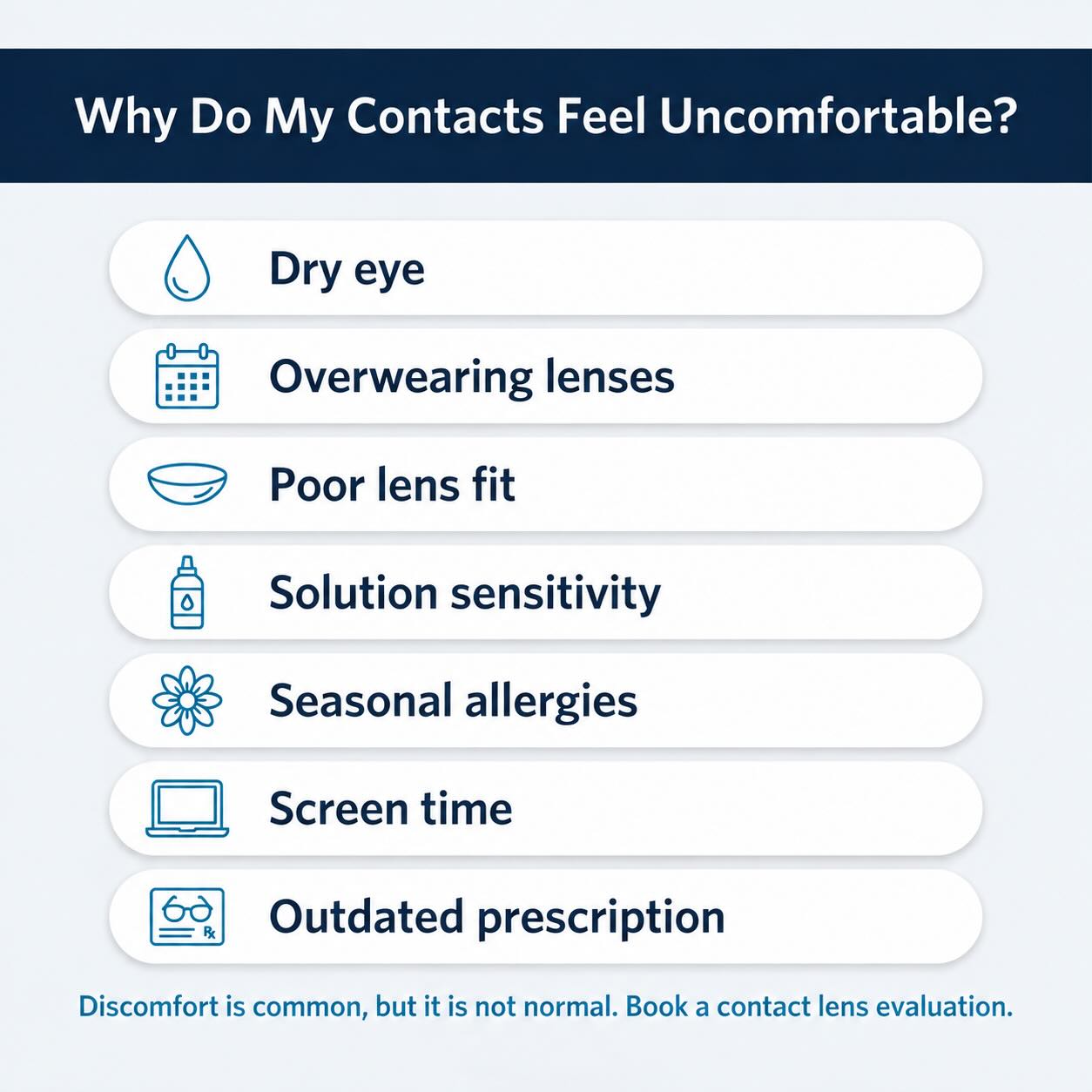
- Dry eye: your tears cannot keep the lens moist all day.
- Overwearing: lenses used past their schedule collect deposits.
- Poor fit: a lens that is too tight or too loose rubs and shifts.
- Solution sensitivity: some preservatives irritate sensitive eyes.
- Allergies: pollen and dust cling to the lens surface.
- Screen time: you blink less while focusing on a screen.
- Outdated prescription: blur and strain feel like discomfort.
Dry eye is the most frequent culprit we see. Some people naturally produce fewer tears or tears that evaporate too quickly, and lenses can make those symptoms more noticeable. If your eyes also feel dry without contacts, this is worth mentioning at your next visit, because treating the dry eye itself often solves the lens problem.
Overwearing is the next big one. A two-week lens worn for a month, or a daily lens reused, becomes coated with protein and lipid deposits that feel gritty and cloud your vision. Fit matters just as much. Your eyes can change shape slightly over time, so a lens that fit perfectly five years ago may now sit too tight, causing redness, or too loose, causing it to slide around every time you blink.
Seasonal triggers are especially relevant this time of year. Fall ragweed pollen sticks to lenses and keeps allergens pressed against your eye, which is why many wearers notice itchy, watery eyes in September and October. You can read more in our guide to ragweed season and itchy, watery eyes. Screens add to the problem, since research shows people tend to blink less often and less completely during focused screen work, which lets the lens surface dry out.
Simple Fixes You Can Try at Home
Start with the basics, because small habit changes often make a big difference. Replace your lenses exactly on schedule, even if they still seem fine. Use fresh solution every single time you store your lenses, and never top off old solution in the case. Clean and rinse your case with solution, not water, let it air dry face down, and replace it at least every three months, which is what the CDC recommends.
Keep water away from your lenses. Tap water, shower water, pools, and hot tubs can carry organisms that cause serious eye infections, so never rinse or store lenses in water and remove them before swimming. Sleep is another important one. According to the CDC, sleeping in contact lenses increases the chance of an eye infection six to eight times, even with lenses that are approved for overnight wear.
For dryness, use rewetting drops that are labeled as safe for contact lenses. Avoid “get the red out” drops, which are not designed for lens wear and can make irritation worse over time. During long stretches of screen work, follow the 20-20-20 rule: every 20 minutes, look at something about 20 feet away for 20 seconds, and make a point of blinking fully. Once Chicago heating season starts, a humidifier at home or at your desk can help keep your eyes from drying out.
Finally, give your eyes a break. Wearing glasses one evening a week, or on a lazy weekend morning, lets your corneas breathe. And with Halloween approaching, a quick reminder: never wear decorative or costume contact lenses bought without a prescription. The FDA regulates all contact lenses as medical devices, and poorly fitted novelty lenses can scratch or infect the eye.
When to See Your Eye Doctor Right Away
Mild dryness at the end of a long day is one thing. Some symptoms, however, can signal an infection or a scratch on the cornea, and those need prompt care. Take your lenses out and call us if you notice eye pain, redness that does not improve within a few hours of removing your lenses, new sensitivity to light, blurry vision that does not clear, discharge, or a feeling that something is stuck in your eye even after the lens is out.
Do not put the lenses back in, and do not try to wait it out over several days. Bring your lenses and case with you to the appointment if you can, since they can help us understand what happened. A visit for a red, painful eye is typically a medical visit, which means it may be billed to your medical insurance rather than your vision plan. Our guide to medical versus vision insurance explains how that works.
How a Contact Lens Refit Can Help
If you have been living with uncomfortable lenses for a while, you may simply be wearing the wrong lens for your eyes today. Lens technology has changed a lot. Breathable silicone hydrogel materials, daily disposable lenses that you throw away every night, toric lenses for astigmatism, and multifocal lenses for people over 40 who struggle with up-close reading have all made comfortable wear possible for patients who once gave up.
A contact lens evaluation is part of a comprehensive eye exam, not a quick screening. We check your prescription, measure the curve of your cornea, look at how the lens moves on your eye, and evaluate the health of your tear film and the front of your eye. If dry eye is part of the picture, we can treat it directly so lenses become comfortable again. And if you are ready to move past contacts entirely, our doctors co-manage LASIK and SMILE and can help you decide whether you are a good candidate.
Do not settle for contacts that make your eyes miserable. Let us find a lens that feels right.
Book a contact lens evaluation at any of our three Chicagoland locations in Addison, Burbank, or Willowbrook, and our doctors will help you get back to all-day comfort. Se habla espanol.
Book online: Request an appointment
Call us: 1-888-899-0816
Addison: 1250 W Lake St #19c, (630) 543-0607
Burbank: 8525 S Harlem Ave, (708) 599-0050
Willowbrook: 6300 Kingery Hwy #116, (630) 969-2807
Hours: Mon to Thu 10am to 6pm, Fri 10am to 5pm, Sat 9am to 2pm
Frequently Asked Questions
Is it normal for new contact lenses to feel uncomfortable?
A little awareness of a new lens during the first few days can be normal, especially for first-time wearers. Pain, lasting redness, or blur is not normal. If discomfort continues beyond the first week, the lens may need a different fit or material.
Why do my contacts feel dry by the end of the day?
End-of-day dryness usually happens because your tear film evaporates and deposits build up on the lens over the day. Dry eye, screen time, dry indoor air, and older lens materials can all make it worse. A different lens material or dry eye treatment often helps.
Can I use regular eye drops with contact lenses?
Only use drops labeled as safe for contact lenses, such as rewetting drops. Redness-relief drops and many medicated drops are not meant for use with lenses. If you are unsure, ask your eye doctor before using a new product.
How often should I replace my contact lens case?
The CDC recommends replacing your contact lens case at least every three months. Clean it with fresh solution after each use, let it air dry face down with the caps off, and never rinse it with tap water.
When should I stop wearing my contacts and call a doctor?
Remove your lenses and call your eye doctor if you have eye pain, redness that does not improve after removing your lenses, sensitivity to light, blurry vision that does not clear, or discharge. These can be signs of an infection that needs prompt treatment.