If your last eye exam is a bit of a blur, you are not alone. Between busy schedules, insurance questions, and the assumption that “my vision seems fine” means everything is fine, comprehensive eye exams are one of the most skipped routine health visits, even though they catch far more than a change in your glasses prescription.
The honest answer to “how often should I get an eye exam” depends on your age and your health history, and the guidance has actually shifted in recent years. Below, we break down the current recommendations, what a comprehensive exam really covers, and why waiting until something feels wrong can mean missing a problem while it is still easy to treat.
In this article:
How Often You Actually Need an Eye Exam
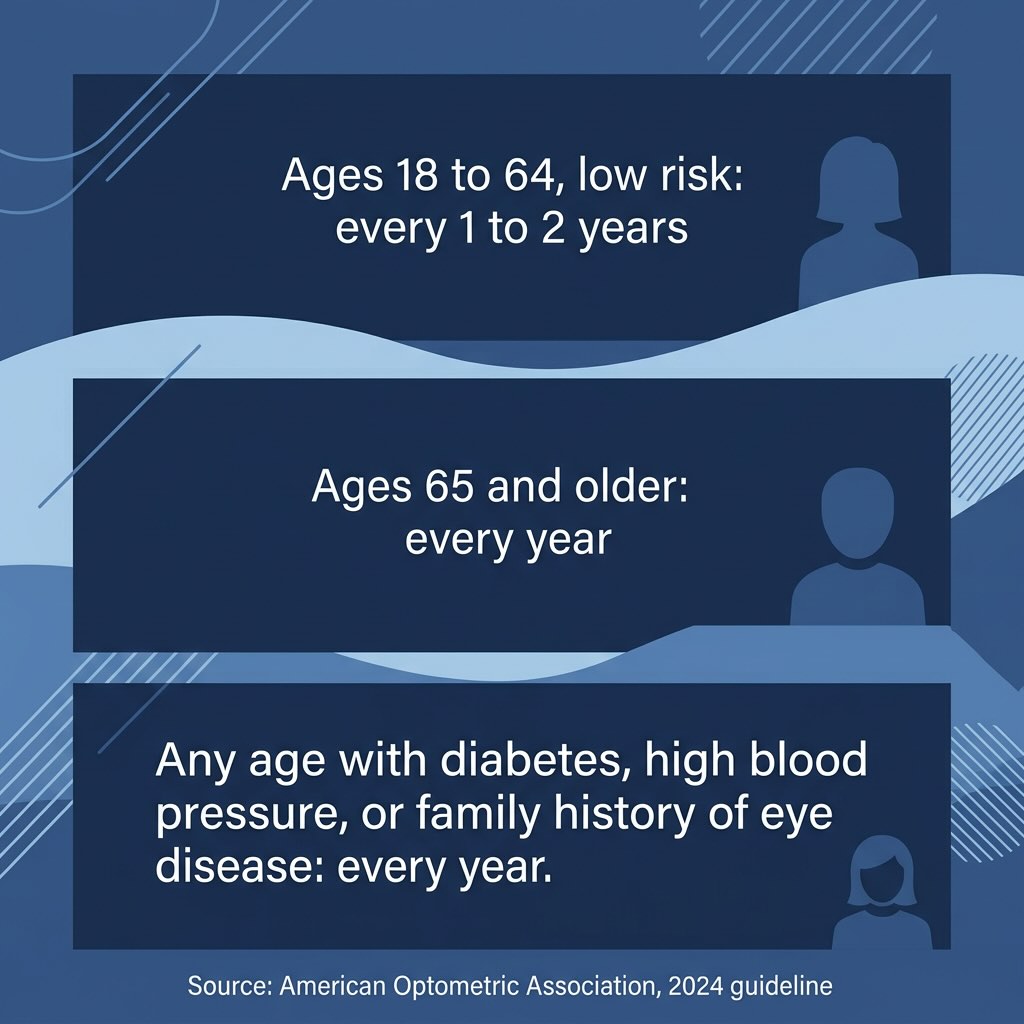
Guidance on eye exam frequency has changed recently, and it is worth knowing the current recommendation. The American Optometric Association updated its clinical practice guideline to recommend an annual comprehensive eye exam for all adults age 18 and older, a shift from the earlier guidance that reserved yearly visits for adults 65 and up or those with known risk factors, while suggesting every two years for lower risk adults 18 to 64.
The American Academy of Ophthalmology takes a somewhat more conservative view for people with no symptoms and no risk factors, generally suggesting a baseline exam at 40 and then a schedule that gets more frequent with age. Both organizations agree on the parts that matter most for your day to day decision: if you have diabetes, high blood pressure, a family history of eye disease, or you are over 65, you should be scheduling a comprehensive exam every single year, no exceptions. If you are younger and generally healthy, annual to every-other-year is the range to aim for, and your optometrist can help you land on the right cadence for your eyes specifically.
Why “My Vision Feels Fine” Isn’t the Same as Healthy Eyes
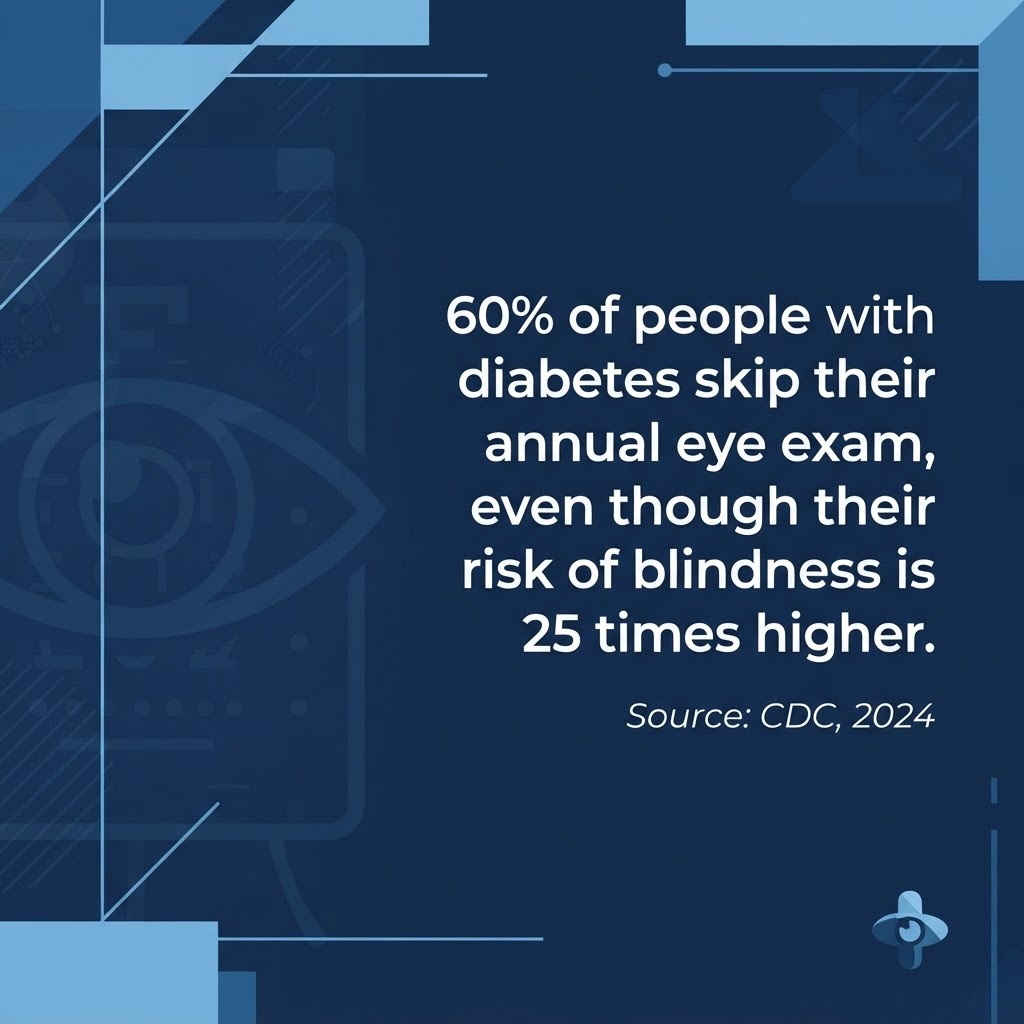
Most of the eye conditions we watch for do not announce themselves. Glaucoma is often called a silent disease because it can quietly damage peripheral vision for years before a patient notices anything different. Early cataracts, mild macular changes, and the earliest signs of diabetic retinopathy can all be present on a dilated exam long before they show up as blurry vision or a change in your glasses prescription.
That gap between “how my eyes feel” and “what is actually happening inside my eyes” is exactly why a comprehensive exam is not the same thing as noticing you need new glasses. It is a health screening for your eyes and, in a lot of cases, an early warning system for the rest of your body.
What a Comprehensive Eye Exam Actually Checks
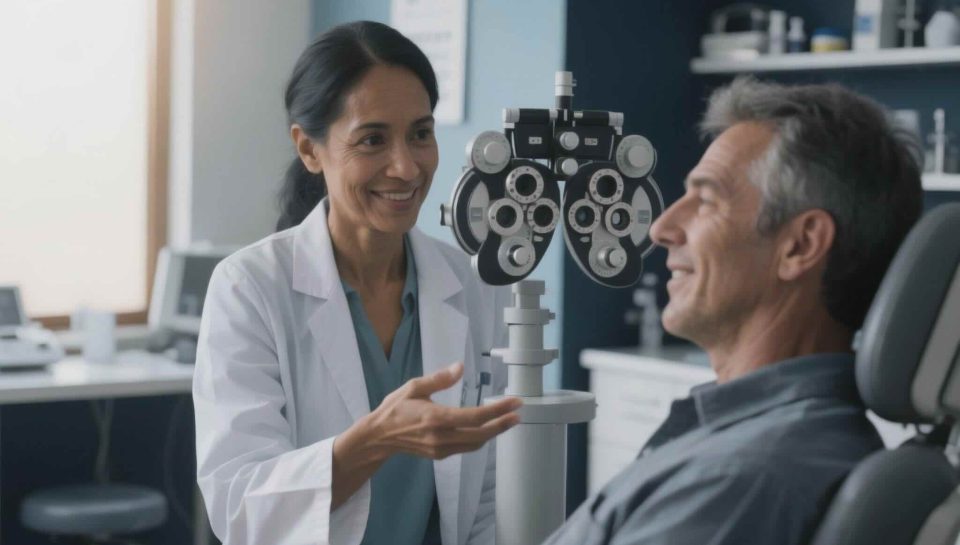
A lot of patients are surprised by how much happens in a comprehensive exam beyond the familiar “better one, or two” refraction test. Here is what we are actually evaluating during your visit.
- Visual acuity and prescription: how clearly you see at distance and up close, and whether your current glasses or contacts still match your eyes.
- Eye teaming and focusing: how well your two eyes work together and adjust as you shift focus, which affects reading comfort and screen fatigue.
- Intraocular pressure: a quick, painless measurement that helps flag early glaucoma risk.
- Retinal health: a dilated view of the blood vessels, optic nerve, and retina in the back of your eye.
- Overall eye disease screening: a check for early signs of cataracts, macular degeneration, and other conditions that develop gradually.
That dilated look at the retina is often the most valuable part of the visit, because the back of your eye is the one place in your body where a doctor can directly see blood vessels without any imaging equipment. It is why eye doctors are sometimes the first clinician to catch signs of diabetes or high blood pressure, sometimes before a patient’s own primary care visit does. A comprehensive exam also reviews your family and health history, current medications, and any changes in symptoms since your last visit, so the picture your doctor builds is about your whole eye health, not just your prescription.
A Screening Is Not the Same as an Exam
Vision screenings, the kind you might get at school, a health fair, or even through an app, are designed to catch obvious problems quickly. They are useful as a first flag, but they are not a substitute for a comprehensive exam. A screening typically checks visual acuity and stops there. It does not dilate your pupils, does not measure eye pressure, and does not give your doctor a real view of your retina or optic nerve.
That distinction matters because the conditions most worth catching early, glaucoma, diabetic retinopathy, and macular degeneration among them, are exactly the ones a basic screening is not built to detect. If a screening is the only eye care you have had recently, it is worth booking a full comprehensive exam, especially if it has been more than a year or two.
When You Should Not Wait for Your Next Scheduled Exam
Regardless of where you land on the recommended schedule, some symptoms deserve a same-week visit rather than waiting for your next annual appointment. Sudden blurry vision, eye pain, flashes of light, a sudden increase in floaters, or any change in your peripheral vision should prompt a call to your eye doctor right away. The same goes for a new diabetes or high blood pressure diagnosis, since your eye doctor will want a baseline dilated exam soon after, not at your next routine checkup.
The bigger picture is simple. An eye exam is one of the easiest, least invasive health checkups you can get, and for a lot of conditions it is also one of the earliest windows into catching a problem while it is still very treatable. If you cannot remember your last comprehensive exam, that alone is a good reason to schedule one.
Not sure when your last comprehensive eye exam was? Let’s find out together.
Our doctors provide thorough, unhurried comprehensive eye exams at our Addison, Burbank, and Willowbrook locations, with same-week appointments often available. Se habla espanol.
Book online: Request an appointment
Call us: 1-888-899-0816
Addison: 1250 W Lake St #19c, (630) 543-0607
Burbank: 8525 S Harlem Ave, (708) 599-0050
Willowbrook: 6300 Kingery Hwy #116, (630) 969-2807
Hours: Mon to Thu 10am to 6pm, Fri 10am to 5pm, Sat 9am to 2pm
Frequently Asked Questions
How often should I get a comprehensive eye exam if I don’t wear glasses or contacts?
Not needing corrective lenses does not mean your eyes are risk free. Current AOA guidance recommends annual comprehensive exams for all adults 18 and older, since conditions like glaucoma and early retinal changes can be present with perfectly clear vision.
Does insurance cover a routine eye exam every year?
It depends on your plan. Many vision insurance plans cover a routine exam annually or every other year, while medical insurance may cover an exam more frequently if you have a qualifying condition such as diabetes. Our team can help verify your specific benefits before your visit.
What’s the difference between a vision screening and a comprehensive eye exam?
A vision screening usually checks acuity only, similar to reading a chart. A comprehensive exam includes dilation, eye pressure measurement, and a full evaluation of eye health, which is what catches conditions like glaucoma or diabetic retinopathy in their earliest stages.
Can an eye exam really catch health problems besides vision issues?
Yes. Because your eye doctor can see blood vessels directly during a dilated exam, comprehensive exams sometimes reveal early signs of diabetes, high blood pressure, and other systemic conditions before those conditions are formally diagnosed elsewhere.
What should I bring to my eye exam?
Bring your current glasses or contacts, a list of any medications you take, and your insurance information. If you have a family history of eye disease or a personal history of diabetes or high blood pressure, be ready to share that as well.