
Medical vs. Vision Insurance: Why Your Eye Exam Might Be Billed Differently
You booked what you thought was a routine eye exam, then learned it was billed to your medical insurance instead of your vision plan. Or you were charged a separate fee you did not expect. It is one of the most common sources of confusion in eye care, and it catches many patients off guard. The good news is that the logic behind it is straightforward once you see how the two types of coverage are designed to work.
Vision insurance and medical insurance are not competing plans. They cover different things, and which one applies comes down to the reason for your visit and what your eye doctor finds. Understanding the difference before you arrive can save you a surprise on your bill and help you get the most from the coverage you already have.
The basic difference between vision and medical insurance
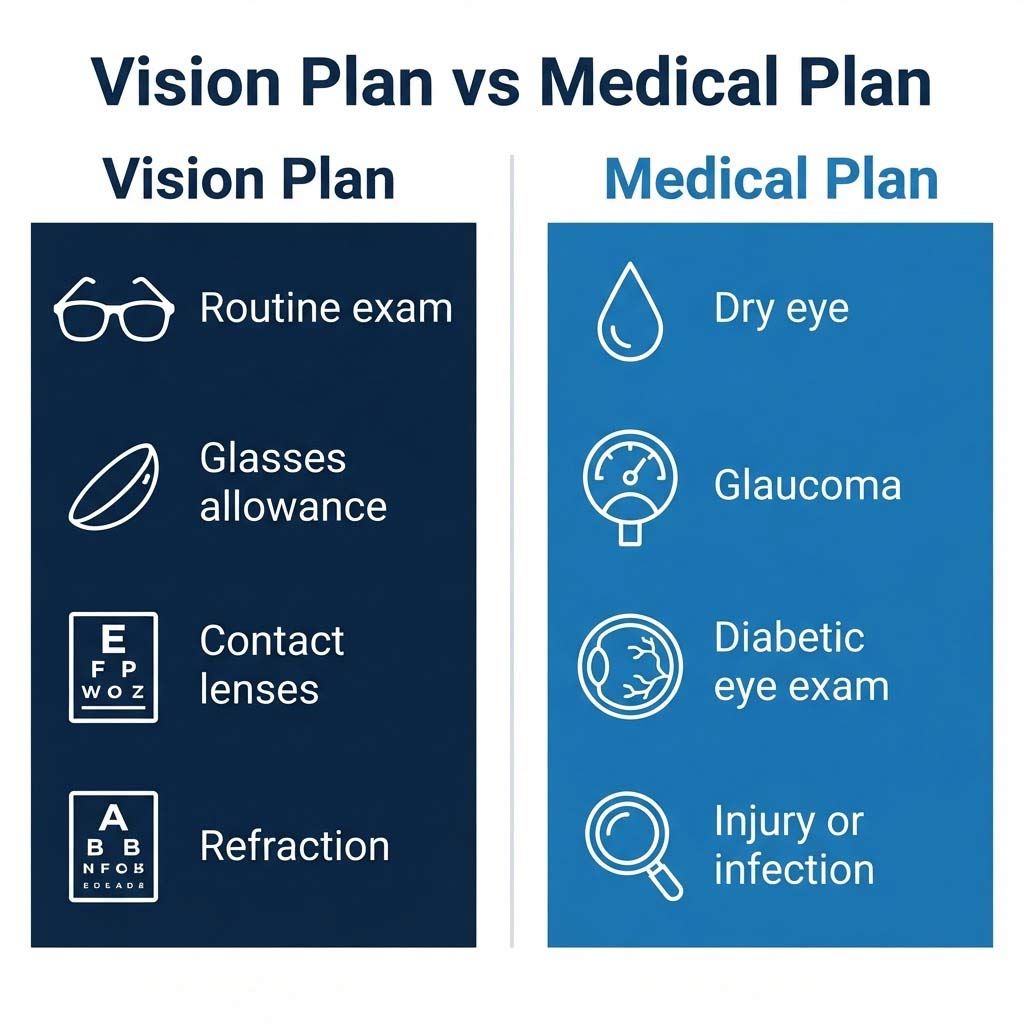
Vision insurance, through plans like VSP or EyeMed, is a wellness benefit. It is built to cover routine care for a healthy eye, which typically means a standard eye exam to check your vision along with allowances toward glasses or contact lenses. If your visit is about keeping healthy eyes healthy and updating your prescription, this is usually the coverage that applies.
Medical insurance is your regular health plan, and it covers the diagnosis and treatment of medical conditions, including those affecting the eyes. When your visit involves a medical concern or an eye health condition, the exam is a medical service, and it is billed the same way a visit for any other health issue would be. The two plans are not interchangeable, and neither one is a substitute for the other.
Why the reason for your visit changes the billing
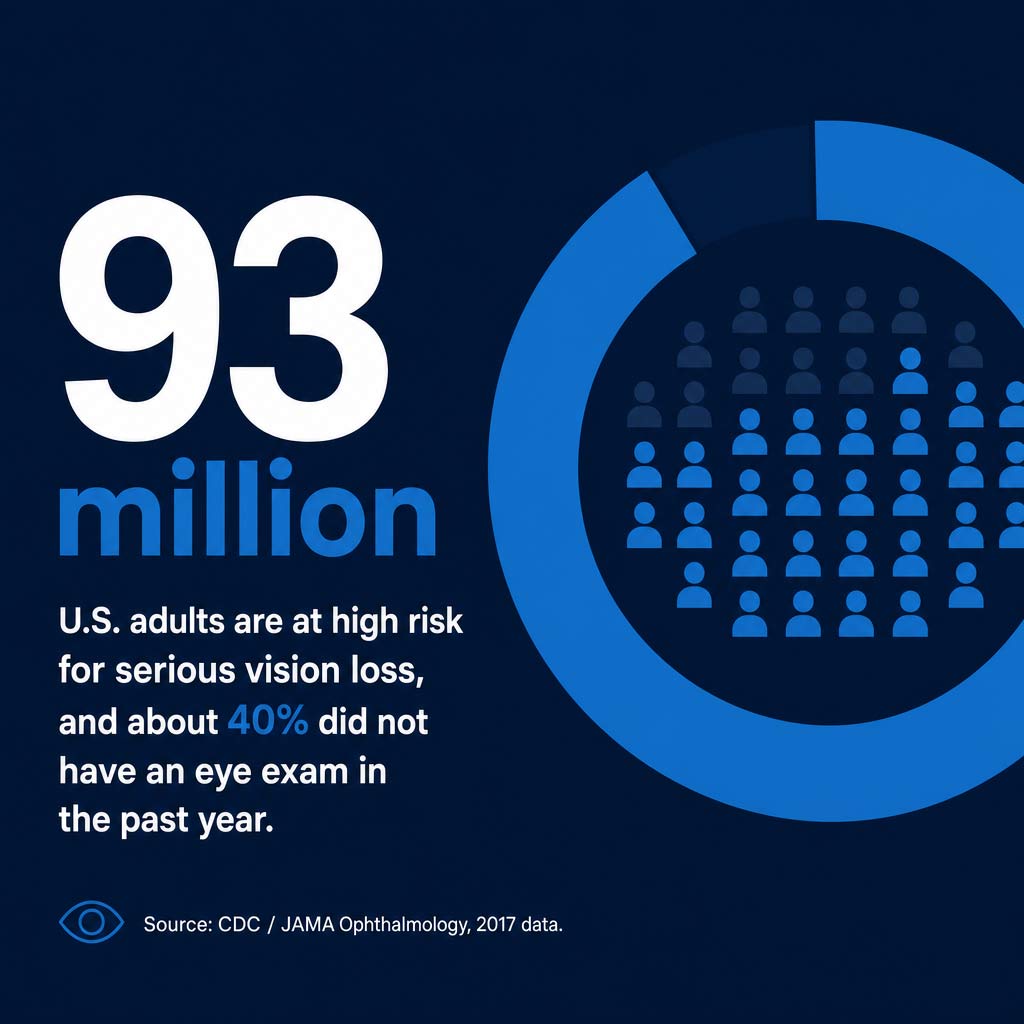
The single biggest factor in how your exam is billed is the reason you came in, known as the chief complaint, along with what your doctor discovers during the exam. If you arrive for a routine check with no symptoms and your eyes are healthy, the visit generally falls under your vision plan. If you arrive with a symptom, or if the doctor identifies a medical condition, the visit becomes a medical one.
This is why two patients sitting in the same waiting room can be billed differently for what looks like the same appointment. It is not about the office choosing one plan over another. It is about accurately coding the care that was actually provided, which is both a billing requirement and a matter of your medical record being correct.
What counts as a medical eye visit
A visit is typically handled as medical when it involves evaluating, diagnosing, or managing a health condition. Common examples include:
- Dry eye disease – ongoing evaluation and treatment of a medical condition.
- Glaucoma – monitoring eye pressure and nerve health over time.
- Diabetic eye exams – checking the retina for diabetes-related changes.
- Floaters or flashes of light – new symptoms that need to be ruled out.
- Pink eye or infection – diagnosis and treatment of an active problem.
- Cataracts – evaluating and tracking changes to the lens.
- Eye injury or pain – urgent medical attention for the eye.
Some of these begin as a surprise during what you expected to be a routine visit. You might come in for a new glasses prescription and mention that your eyes feel gritty and tired, and that conversation turns into an evaluation for dry eye. When that happens, part of your visit may shift to medical billing because the doctor is now addressing a medical concern. If you are being monitored for an ongoing condition like glaucoma or diabetes, those follow-up visits are medical from the start. Our team is always glad to explain which part of a visit falls where before you leave.
Where the refraction fee comes in
Refraction is the part of the exam that determines your exact eyeglass or contact lens prescription, the familiar process of comparing lenses to find your sharpest vision. It is essential if you want updated glasses or contacts, but medical insurance often does not consider it a covered medical service, since it relates to correcting vision rather than treating disease.
That is why you may see a separate refraction fee even when the rest of a medical visit is covered by your health plan. If you have a vision plan, it may cover the refraction and go toward materials like lenses and frames. This is a common point of confusion, and it is worth asking about up front so you know what to expect. Coverage varies from plan to plan, so the clearest answer always comes from checking your specific benefits.
How to prepare for your visit
A little preparation goes a long way toward avoiding billing surprises. These simple steps help our team apply your coverage correctly:
- Bring both insurance cards – your vision plan and your medical plan.
- Know your reason for the visit – routine check versus a specific symptom.
- Mention any symptoms up front – so nothing is a surprise at checkout.
- Ask about the refraction fee – if you want an updated prescription.
- Confirm your benefits – copays and deductibles differ by plan.
When you bring both cards and share what is going on with your eyes, our front-desk team can route your visit through the right coverage from the start. If any part of your care falls outside a given plan, we will walk you through it so there are no unexpected charges. The goal is simple: you get the care you need, and you understand exactly how it is covered. Se habla español.
Have questions about your coverage? We are happy to help.
Schedule your eye exam at The Eye Care Center, and our team will help you make the most of your vision and medical benefits. We welcome patients across the Chicagoland area at our three convenient locations. Se habla español.
Book online: Request an appointment
Call us: 1-888-899-0816
Addison: 1250 W Lake St #19c, (630) 543-0607
Burbank: 8525 S Harlem Ave, (708) 599-0050
Willowbrook: 6300 Kingery Hwy #116, (630) 969-2807
Hours: Mon to Thu 10am to 6pm, Fri 10am to 5pm, Sat 9am to 2pm
Frequently asked questions
Why was my eye exam billed to medical insurance instead of my vision plan?
Billing follows the reason for your visit and what the doctor finds. If your exam involved a medical concern such as dry eye, glaucoma, diabetes, or a new symptom, it is a medical service and is billed to your health plan rather than your vision plan, even if you originally booked it as a routine visit.
What is the difference between vision insurance and medical insurance for eye care?
Vision insurance is a wellness benefit that covers routine exams and allowances toward glasses or contacts for healthy eyes. Medical insurance covers the diagnosis and treatment of eye health conditions. They cover different things and are not interchangeable.
Do I need both vision and medical insurance to see the eye doctor?
No. You can be seen with either one. Having both simply lets us apply the right coverage depending on whether your visit is routine or medical. Bringing both cards helps us bill accurately.
Why is there a separate refraction fee?
Refraction is the measurement of your exact glasses or contact lens prescription. Medical insurance often does not count it as a covered medical service, so it may appear as a separate fee. A vision plan may cover it instead. Coverage varies, so it is worth asking about in advance.
What should I bring to my appointment?
Bring both your vision and medical insurance cards, know the reason for your visit, and mention any symptoms up front. If you want an updated glasses or contact lens prescription, ask about the refraction fee so you know what to expect.