If you or someone in your family takes Ozempic, Wegovy, or another semaglutide based medication, you have probably already heard the headlines. Over the past two years, researchers have been investigating a possible link between these popular GLP-1 drugs and a rare but serious eye condition that can cause sudden vision loss. For the millions of Americans now using these medications for diabetes or weight management, that is understandably unsettling news.
The good news is that this is not a reason to panic, and it is not a reason to stop a medication that may be helping your health in significant ways. It is a reason to understand the research, know what to watch for, and make sure your eyes are part of the conversation with your doctor. Here is what the evidence actually shows, explained without the alarm or the jargon.
In this article:
What Are GLP-1 Drugs, and Why Are They Everywhere
Semaglutide is the active ingredient behind Ozempic and Rybelsus, both approved for type 2 diabetes, and Wegovy, approved for chronic weight management. These medications belong to a class called GLP-1 receptor agonists, which help regulate blood sugar and appetite. Since their approval, prescriptions have climbed dramatically, and semaglutide based drugs are now used by millions of people across the country, including many patients right here in the Chicago area.
For most patients, these medications have been genuinely beneficial, supporting better blood sugar control, meaningful weight loss, and even cardiovascular improvements. That benefit is exactly why the eye related findings deserve a clear headed look rather than an alarmist one. Understanding the real risk, and who it applies to, is what allows you and your doctors to make an informed decision together.
The Eye Condition Doctors Are Watching: NAION
The condition at the center of this research is called nonarteritic anterior ischemic optic neuropathy, or NAION. NAION happens when blood flow to the optic nerve, the cable that carries visual information from your eye to your brain, is suddenly reduced. This can cause sudden, painless vision loss in one eye, and unlike some other eye conditions, it typically does not improve significantly once it occurs.
NAION is uncommon in the general population, but it is already the second most frequent optic nerve disease in adults over 50, behind only glaucoma. It tends to affect people with certain underlying risk factors, including diabetes, high blood pressure, sleep apnea, and certain anatomical features of the optic nerve itself. That backdrop matters, because many people who take semaglutide already carry one or more of these risk factors before they ever start the medication.
What the Research Actually Shows
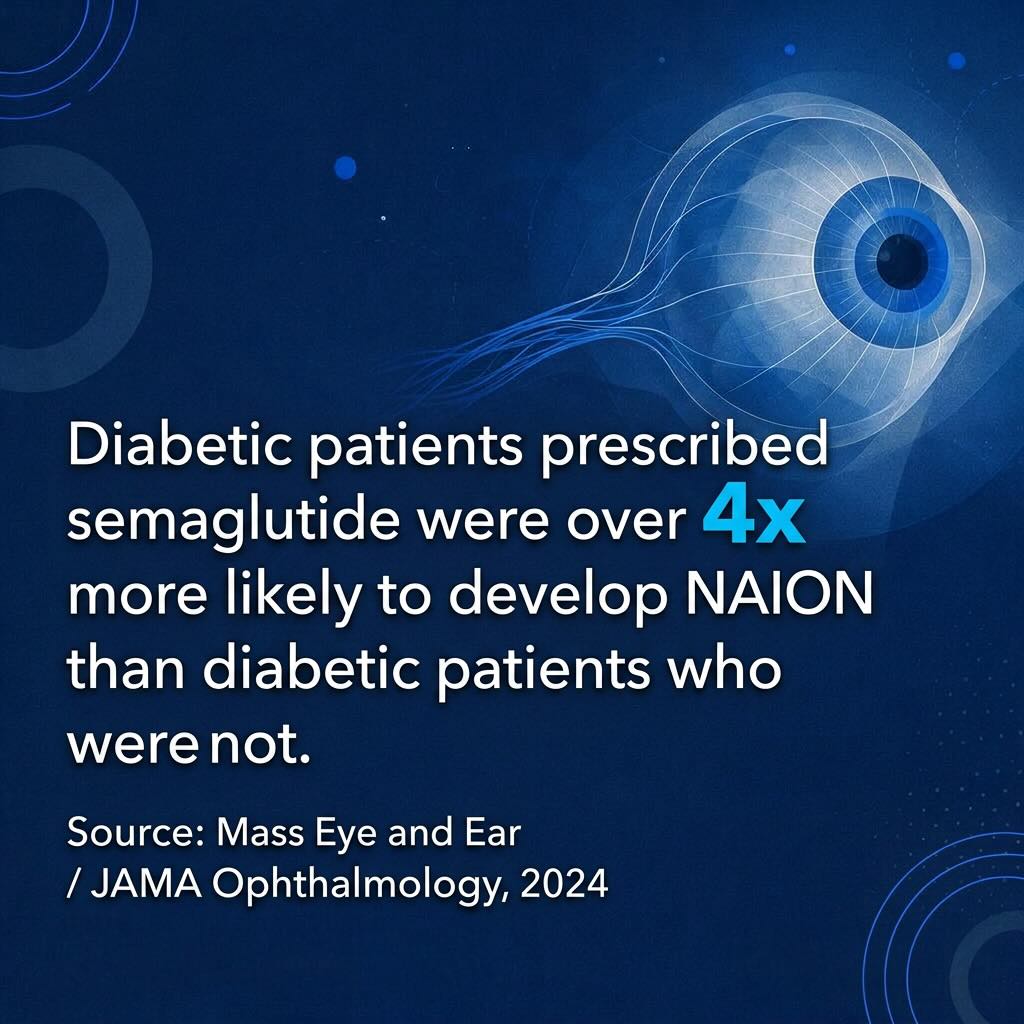
In 2024, researchers at Massachusetts Eye and Ear published a study in JAMA Ophthalmology that looked closely at this question. Among patients with type 2 diabetes, those prescribed semaglutide were found to be more than four times more likely to be diagnosed with NAION than similar diabetic patients who were not taking the drug. Among patients being treated for overweight or obesity rather than diabetes, the increased likelihood was even higher.
Since then, additional research, including a large Danish national cohort study of more than 400,000 people with type 2 diabetes, has found a similar association, with semaglutide users facing roughly double the risk of NAION compared with those on other diabetes therapies. Newer research has also started to look at differences between formulations and dosing. None of these studies prove that semaglutide directly causes NAION, and the lead researchers on the original study have been clear that this finding should not lead patients to stop their medication on their own. What it does mean is that NAION risk is now a recognized consideration that eye doctors and prescribing physicians are watching closely, especially as more long term data becomes available.
The Diabetic Retinopathy Connection
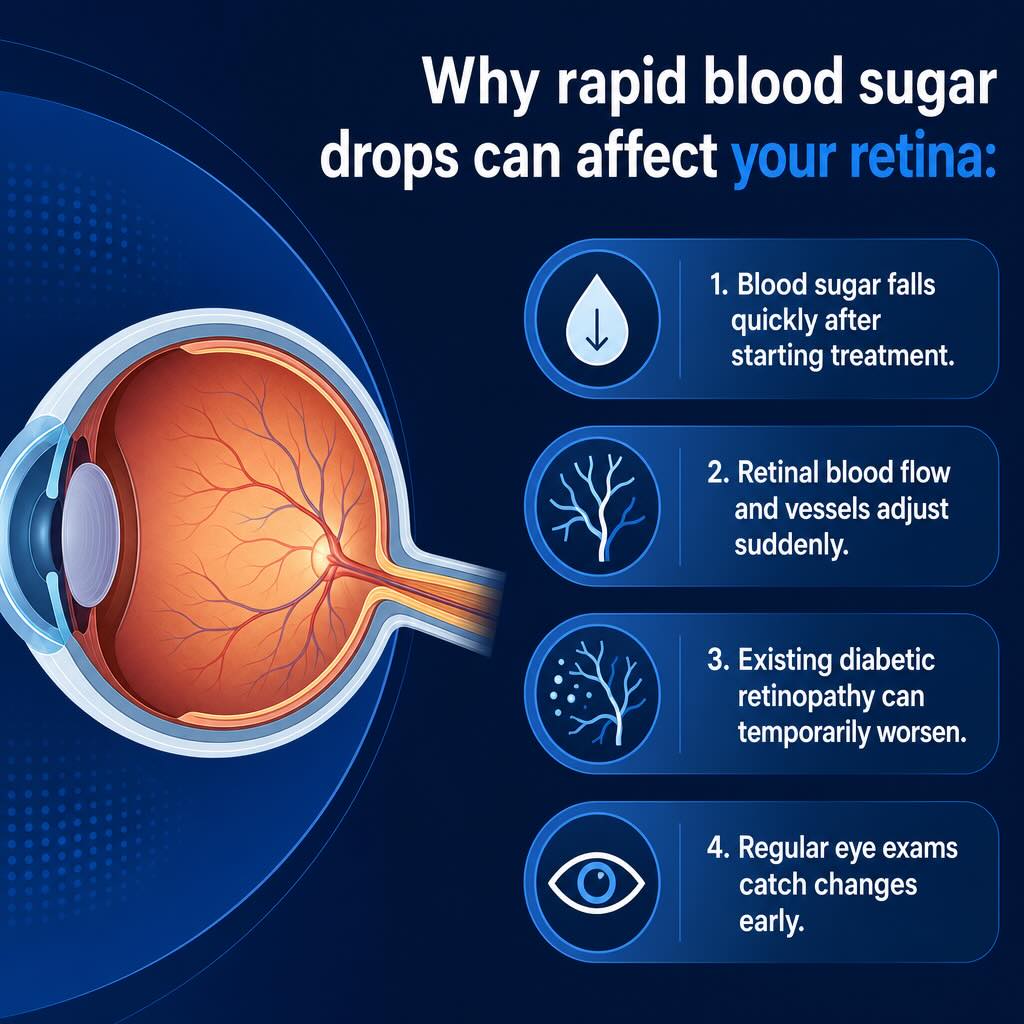
NAION is not the only eye related finding tied to semaglutide. The large SUSTAIN-6 clinical trial, which helped support the drug’s original approval, found that patients taking semaglutide had a meaningfully higher rate of diabetic retinopathy complications than those on placebo. This was not entirely unexpected. Doctors have long known that rapidly improving blood sugar control, whether through insulin, bariatric surgery, or newer medications, can temporarily worsen existing diabetic retinopathy before the long term benefits of better control take hold.
Follow up analyses of that trial data suggest the retinopathy risk was concentrated in patients who already had diabetic retinopathy when they started treatment and who experienced a large, fast drop in their A1C. In other words, the people most likely to see a temporary worsening are those with pre-existing retinal disease, not the general population of GLP-1 users. This is exactly why a dilated eye exam before starting one of these medications, and regular monitoring afterward, is such a valuable safeguard.
Who Should Talk to Their Eye Doctor First
Not everyone taking Ozempic or Wegovy needs to worry equally about these findings. Certain situations call for a more proactive conversation with your eye doctor before or shortly after starting treatment.
Existing diabetic retinopathy: A prior diagnosis raises the chance of temporary worsening with rapid glucose improvement.
Sudden vision changes in one eye: Painless vision loss or dimming should be treated as urgent, not something to wait out.
Poorly controlled blood sugar before starting: A large, fast A1C drop is the pattern most associated with retinal complications.
Additional risk factors: High blood pressure, sleep apnea, or a family history of optic nerve problems add to overall risk.
If any of these apply to you, it does not mean semaglutide is off the table. It simply means your eye doctor and prescribing physician should be coordinating, and that a baseline dilated exam before you start, along with follow up visits in the months after, is a smart and simple precaution.
What This Means for You
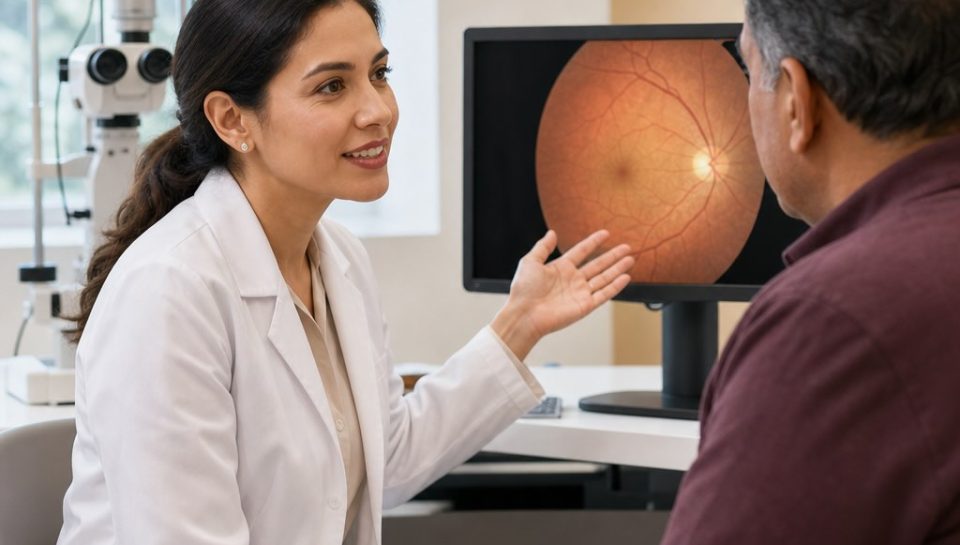
The honest, balanced takeaway from all of this research is reassuring rather than alarming. NAION remains rare, the retinopathy effect appears to be temporary in most cases, and neither finding is a reason to stop a medication that is otherwise helping your health. What the research really points to is the value of good communication and good monitoring. If you are already taking a GLP-1 medication, or considering starting one, a comprehensive dilated eye exam gives your doctor a clear picture of your retina and optic nerve health, so any changes can be caught early rather than discovered after vision loss has already occurred.
This is also a good reminder that a comprehensive eye exam is about far more than checking whether you need new glasses. It is one of the few appointments where a doctor can directly see the blood vessels and nerve tissue in your body without any invasive testing, which makes it uniquely valuable for patients managing diabetes, weight, or metabolic health.
Taking Ozempic, Wegovy, or another GLP-1 medication? Protect your vision with a comprehensive dilated eye exam.
Our doctors can evaluate your retina and optic nerve health and help you and your prescribing physician stay ahead of any changes. We welcome patients at our Addison, Burbank, and Willowbrook locations. Se habla espanol.
Book online: Request an appointment
Call us: 1-888-899-0816
Addison: 1250 W Lake St #19c, (630) 543-0607
Burbank: 8525 S Harlem Ave, (708) 599-0050
Willowbrook: 6300 Kingery Hwy #116, (630) 969-2807
Hours: Mon to Thu 10am to 6pm, Fri 10am to 5pm, Sat 9am to 2pm
Frequently Asked Questions
Does Ozempic or Wegovy cause blindness?
Research has found an association between semaglutide and an increased risk of NAION, a rare condition that can cause sudden vision loss in one eye, but this does not mean the medication causes blindness in most users. The condition remains uncommon, and the increased risk appears strongest in people who already have other risk factors such as diabetes.
What is NAION, and how is it different from typical diabetic eye problems?
NAION affects the optic nerve, the pathway that carries visual signals from the eye to the brain, and it causes sudden, usually painless vision loss. This is different from diabetic retinopathy, which involves gradual damage to blood vessels inside the retina itself. Both are serious, but they involve different structures and different patterns of onset.
Should I stop taking Ozempic or Wegovy because of the eye risk?
You should not stop or change any medication without talking to your prescribing doctor first. The researchers behind the original 2024 study were explicit that their findings should not be used to recommend patients discontinue treatment. Instead, use this research as a reason to schedule a comprehensive eye exam and keep your eye doctor and prescribing physician informed of one another.
Can Wegovy affect my eyes if I do not have diabetes?
The NAION research has included patients treated for weight management as well as diabetes, so the eye risk is not limited to people with diabetes. However, patients with diabetes, especially those with existing diabetic retinopathy, appear to carry additional risk related to rapid blood sugar improvement.
How often should I get an eye exam if I am on a GLP-1 medication?
A dilated eye exam before starting treatment, followed by a follow up exam within the first several months, is a reasonable baseline for most patients. Those with existing diabetic retinopathy or other risk factors may need more frequent monitoring, which your eye doctor can tailor to your specific health history.